




Talking About Women’s History: Three Questions and an Answer with Elizabeth Cobbs
I first discovered Elizabeth Cobbs’ work through her book of historical non-fiction titled The Hello Girls. I enjoyed it enough that I set out to find out more about her.* I was flabbergasted to learn that she also writes smart, entertaining historical fiction.
Here’s the official word:
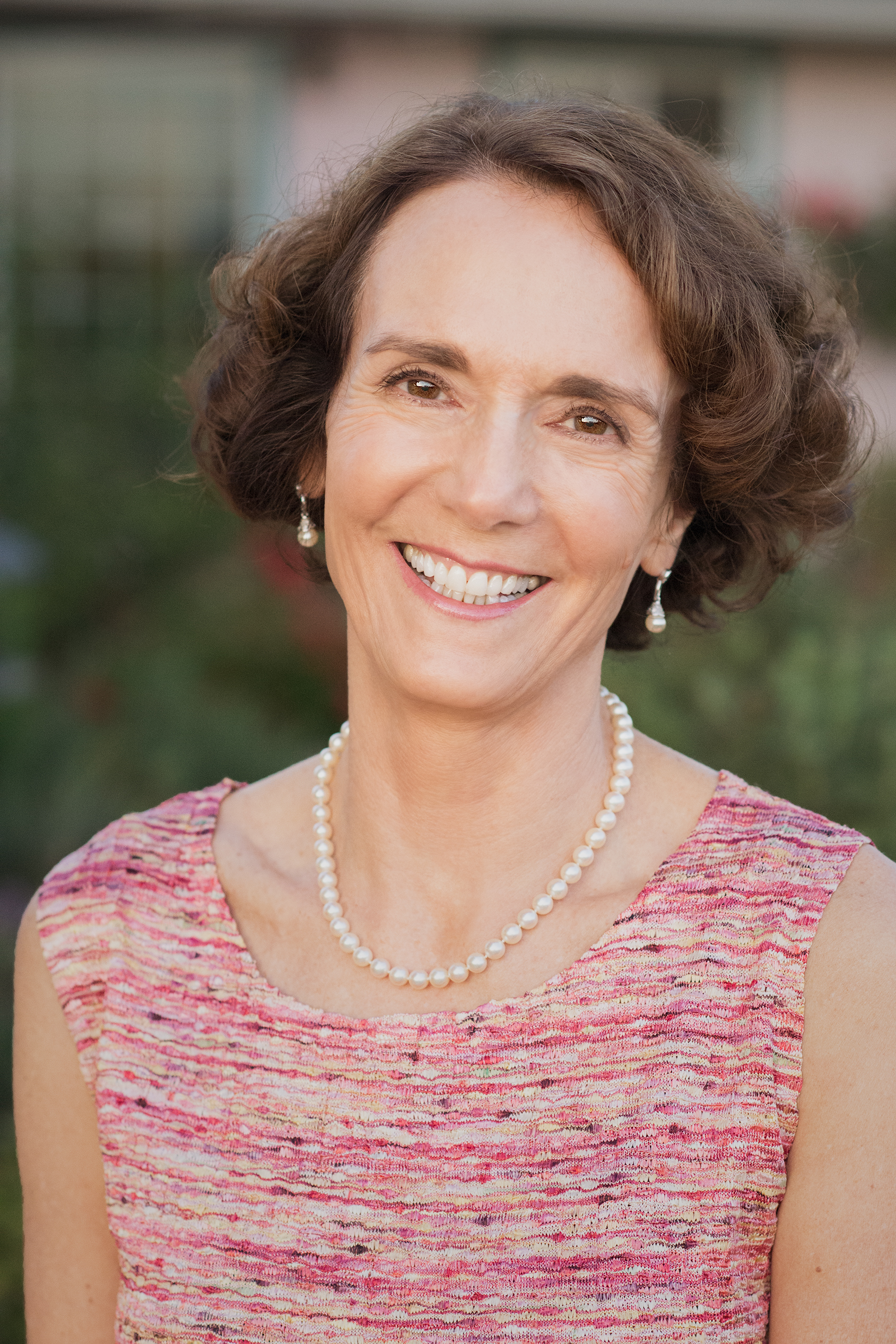
Elizabeth Cobbs brings fresh, unexpected perspectives to our understanding of the past and present. Building upon worldwide research and extraordinary life experiences, Elizabeth writes best selling fiction and non-fiction that is both scholarly and witty. Her path-breaking books and articles reveal a world that is as intriguing and surprising as it is real.
Elizabeth earned her Ph.D. in American history at Stanford University. She now holds the Melbern Glasscock Chair at Texas A&M University and a Senior Fellow at Stanford University’s Hoover Institution. Her books have won four literary prizes, two for American history and two for fiction. Elizabeth has been a Fulbright scholar in Ireland and a Fellow at the Woodrow Wilson International Center for Scholars in Washington, D.C. She has served on the Historical Advisory Committee of the U.S. State Department and on the jury for the Pulitzer Prize in History.
Take it away, Elizabeth!
You write both historical fiction and historical non-fiction. Is your research process different for fiction than for non-fiction?
For me, both types of storytelling require research in primary and secondary sources, but there are differences as well. Nonfiction requires developing a careful paper trail. I scour the documents to pin down every fact. It’s painstaking and I’ll spend hours in far-flung archives. Fiction is more imaginative, and I have to stock my supply of sensations and impressions in addition to my store of knowledge. Writing a novel requires knowing the scent, sound, and exact order of daily events. To the extent possible, I walk the same ground the characters did to see what they saw. I find that sometimes gives me unexpected new insights into facts I initially gleaned from books and letters. For example, to understand how Harriet Tubman could possibly infiltrate 25 miles upriver into the enemy territory of South Carolina, I literally watched how the Combahee moves, put my toes in its quicksand-like mud, and kept a sharp eye out for alligators.
What type of historical figure makes a good base for a historical novel?
I think the richest historical figures are the ones who were conflicted, scared, ready to turn back and yet kept moving forward, tumbling towards the goal that defined them. Personally, I find hand-wringers dull. Give me someone who is all in despite their doubts. The most interesting figures are women and men who run rather than walk towards their destiny–however dangerous or costly the path. I am endlessly curious about characters whose bravery astounds me.
How do you walk the line between historical fact and fiction in a novel?
I will not move or change any fact that we definitely know, regardless of how tempting it might be to do so for the sake of pacing or dramatic effect. As a professional historian, I’m always looking over my shoulder at my university colleagues. Historical fiction, for example, often incorporates sex and romance. When I started writing about Alexander Hamilton, before Lin-Manuel Miranda staged his epic musical, I kept wondering if other professionals would still respect me in the morning. But I felt fairly certain that Alexander and Eliza’s eight children were sufficient evidence of late-night romps. Curiously, Miranda strayed far from certain facts for the sake of the show–but then, he doesn’t have to turn around and teach U.S. history. To me, writing a historical novel is like “connecting the dots.” I get to make up everything in between, so long as events and dialogue are consistent with the fixed points.
My question for you: Were there women warriors who set back the cause of women? How do they fit in our history? Do you avoid writing about them?
There’s a long tradition of collective biographies of notable women, warriors and otherwise, that emphasize the heroic aspects of individual women’s stories. Often they’re written to provide female role models for girls. It’s a worthy goal. I loved those books as a child. (For that matter, I still love them.) But Women Warriors is not that kind of book.
Quite frankly, a lot of the women I wrote about could not be considered a role model for anyone. I wrote about women whose stories included lying, cheating, murder and revenge, as well women who performed acts of astonishing heroism and national heroines. Not to mention national heroines who lied, cheated and murdered in the name of defending their home, nation or religious convictions.
*This, writer friends, is why you need an on-line presence of some kind.
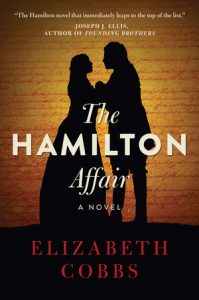
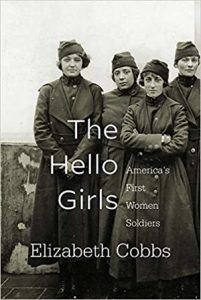
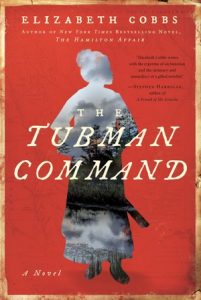
Want to know more about Elizabeth Cobbs and her work?
Check out her website: www.elizabethcobbs.com
Follow her on Twitter: @Elizabeth_Cobbs
* * *
Come back tomorrow for three questions and an answer with music historian Angela Mace Christian, who asked me a doozy of a question.
Reading Your Way Through Women’s History Month, Part 2.
Two weeks ago I posted a list of reviews of books about women’s history for your amusement. Since then, the world’s gotten weird and scary. Most of us are carrying on as best we can. (If you want to know what life in the world of social distancing looks like here in the Margins, you can read my newsletter on the subject, which came out earlier today. Here’s the link: https://mailchi.mp/23d920b1c446/writing-from-a-social-distance. )
Personally, I have not yet experienced the great flood of free time that some of my friends are reporting. However, I am eye-ing my To-Be-Read stacks in anticipation.
Here are links to a dozen books about women’s history that I am eager to dive into: *
1. Hallie Rubenhold. The Five: The Untold Lives of the Women Killed by Jack the Ripper
2. Mikki Kendall and A. D’Amico. Amazons, Abolitionists and Activists: A Graphic History of Women’s Fight for Their Rights
3. Nathalia Holt. The Queens of Animation: The Untold Story of the Women who Transformed the World of Disney and Made Cinematic History
4. Elizabeth Wein. A Thousand Sisters: The Heroic Airwomen of the Soviet Union in World War II
5. Caroline Fraser. Prairie Fires: The American Dreams of Laura Ingalls Wilder.**
6. Caroline Moorhead. A House in the Mountains: The Women Who Liberated Italy From Fascism
7. Janice Kaplan. The Genius of Women: From Overlooked to Changing the World
8. Gemma Hollman. Royal Witches: Witchcraft and the Nobility in Fifteenth-Century England.
9. Nicolla Tallis. Uncrowned Queen: the Life of Margaret Beaufort, Mother of the Tudors
10. Jason Fagone. The Woman Who Smashed Codes: A True Story of Love, Spies and the Unlikely Heroine Who Outwitted America’s Enemies.
11. Nancy Goldstone. Daughters of the Winter Queen: Four Remarkable Sisters, the Crown of Bohemia, and the Enduring Legacy of Mary, Queen of Scots
12. Denise Kiernan. The Girls of Atomic City: The Untold Story of the Women Who Helped Win World War II.
The only question is, where to start?
* The links are to my local independent bookseller, rather than to Amazon. A writer would be a fool to bad-mouth the Big A because they sell lots and lots of books. ( At the same time, if readers don’t patronize independent bookstores, we won’t have independent bookstores. Now is a harder time than usual for small businesses of all kinds. If you want to order books, I urge you to order them from your independent bookstore. If there isn’t an independent bookstore in your town, adopt one. (Mine is shipping for free through April 15.)
**I realize many of you have either already read this one, or have it sitting in your own TBR pile. But just in case.
* * *
A Public Service Announcement
I’ve already said this in a couple of other places: One of the social side effects of the corona virus is that authors of new books have had to cancel book launch events, book signings, and talks. This doesn’t cause chaos on the level of, say, closing schools. But for a writer who has spent years on a book it’s pretty devastating, whether it’s her first book or her fiftieth.
These are my people, so I’m doing my best to spread the word about new books, here on the Margins and in the other places where I hang out on line. One way you can find out about new books as they come out is to subscribe to Shelf Awareness for Readers: a free semi-weekly newsletter that reviews new books. (Total transparency here: I’m a regular Shelf reviewer.) Here’s the link: https://www.shelf-awareness.com/
Talking About Women’s History: Three Questions and an Answer with Devoney Looser
Read the following bio carefully. (SPOILER ALERT: Devoney Looser has one biographical element that has never appeared on History in the Margins before and which I suspect will never appear again. )
Devoney Looser is Foundation Professor of English at Arizona State University. She’s the author or editor of nine books, including The Making of Jane Austen and The Daily Jane Austen: A Year in Quotes. Devoney’s essays have appeared in The Atlantic, the Los Angeles Review of Books, the New York Times, Salon, Slate, The TLS, and Entertainment Weekly, and she’s had the pleasure of talking about Austen on CNN. She was named a Guggenheim Fellow and National Endowment for the Humanities Public Scholar in support of her next book, Sister Novelists, a biography of the pioneering historical novelists, Jane and Anna Maria Porter. It’s slated for publication by Bloomsbury in fall. Fun fact: Devoney has also played roller derby under the name “Stone Cold Jane Austen,” is faculty adviser to the ASU roller derby team, and is a fellow at ASU’s Global Sport Institute. You can follow Devoney’s latest on Austen, women’s history, and women in sport by signing up for her newsletter at https://tinyletter.com/DevoneyLooser
Take it away, Devoney!

Why Jane Austen?
As you might guess, I have lots of thoughts about that question. Most people would probably say I overthink it. Ha! But from my perspective, there really can’t be too much Austen in any given day. So that’s a major “why Austen” for me—because I haven’t yet gotten tired of reading her or studying her or her era. The reason Austen continues to resonate that way for me, and for so many of us, I think, is because her work is eminently re-readable on the level of the plot, the character, and the sentence. You could open any one of her novels almost anywhere, point to a sentence, and be pretty sure of being pleased. Chances are that whatever it is will be a terrific word morsel—or at least it will make you want to read another sentence. I teach literature for a living, and I love to read all kinds of things, but the impulse to reread certainly doesn’t happen to me with every author or book.
Last year, I had the chance to revisit all of Austen’s writings in one fell swoop. I went over them with a fine-tooth comb, because I’d been charged with selecting 378 quotes for the edited book that would become The Daily Jane Austen (University of Chicago Press, 2019). [https://www.amazon.com/Daily-Jane-Austen-Year-Quotes/dp/022665544X] I knew I needed to choose one quote for every day of the year, plus leap year, plus a longer quote to begin each month. I found it difficult to narrow it down to just 378, believe it or not! I’ve been telling people that the book contains their recommended daily minimum dose of Austen. I’ll stand by that quip.
I realize that doesn’t get at the “why” of your question entirely, Pamela, so I’ll try to push further here. In The Making of Jane Austen [https://www.amazon.com/Making-Jane-Austen-Devoney-Looser/dp/1421422824 ], I suggested that another way to consider the impact of her legacy would be to ask, “Whose Jane Austen?” The Jane Austen I admire has turned out to be not only a figure who created many pleasurable reading experiences but she’s also proven, for me, a way to affiliate with others who love strong women, snarky humor, sneaky irony, and trenchant social criticism. Readers obviously turn to her books for other reasons, and that’s fine. We don’t all have to love her (or hate her, or find ourselves indifferent to her) for the same reasons. But I continue to find Austen’s fiction an incredibly fertile place not only to start pleasant conversations but to provoke really interesting arguments about how to lead a meaningful life in a world that’s often deeply unfair.
What’s your next book about and when will we see it?
My next book is a biography of Jane Porter (1775-1850) and Anna Maria Porter (1778-1832), the most famous sister novelists active before the Brontës. I think the book is going to appeal to people who love gripping, true stories about strong women, especially those who lived simultaneously inspiring, troubling, and tumultuous lives. Sister Novelists is slated to come out with Bloomsbury in fall 2021 [https://www.publishersweekly.com/pw/by-topic/industry-news/book-deals/article/80713-book-deals-week-of-july-22-2019.html]. I’ve been working in the archives to piece together the untold story of the Porter sisters for almost fifteen years now. There isn’t yet a full-length biography of them. It’s been an amazing journey, completing this book, with the support of a Guggenheim Fellowship [https://www.youtube.com/watch?v=aqlFVP9vM4M] and a National Endowment for the Humanities Public Scholar Award.
Sister Novelists also just feels like a natural next book for me to write, after The Making of Jane Austen [https://twitter.com/Making_Jane] and The Daily Jane Austen [https://twitter.com/thedailyausten] As much as I love Austen, I’m really taken with her contemporaries, too—the hundreds of late eighteenth-and early nineteenth-century British women writers who were active at a time of profound literary growth and social change. The Porter sisters were once among the most celebrated of that group, but they gradually became among the most neglected and forgotten.
Jane and Maria lived in the era of the French Revolution, the Industrial Revolution, the early years of activism seeking the abolition of slavery and the slave trade, and the pivotal struggle for women’s rights, sometimes called “the longest revolution.” The sisters were thrust into the middle of it all. For a time, they ended up at the center of it. They’d struggled to gain fame and to make a living as writers without any of the usual advantages. They were largely self-educated. They weren’t born into wealth or with access to powerful connections. What they did have was talent, drive, and a sense of humor. The Misses Porter eventually became household names, only to discover that the men they loved didn’t want to risk marrying famous women without fortunes. Their lives alternated between triumph and heartbreak.
Several of their novels became bestsellers, including Jane’s Thaddeus of Warsaw (1803) and The Scottish Chiefs (1810). Much of their fiction presents perfect, pious heroes and heroines, without fault or flaw. These too-good-to-be-true characters haven’t stood the test of time as Austen’s have. What ought to endure, however, are the Porters’ remarkable and never-before-published letters to each other. These moving letters document their private struggles. They talk about what it’s like to come into their own as powerful public women, and to set out to use their voices, at a time when most of the world wasn’t very willing to give intelligent, independent women their due. I can’t wait to share Jane and Anna Maria’s fascinating lives with readers.
What do you find most challenging or most exciting about researching historical women?
I’ve found that researching historical women can be challenging whether you’ve got too little information or too much! For Austen, there’s relatively little. We’ve had to deal with the reality that just 161 of her letters that survive, out of the thousands that she must have written. When you find one small thing that’s new about Austen (as I did recently, with an unearthed piece of 1823 fan fiction, which I got to describe in the Times Literary Supplement [https://www.the-tls.co.uk/articles/fan-fiction-or-fan-fact/]), you want to shout, “Eureka!” It’s like discovering the proverbial needle in a historical haystack.
With the Porter sisters, it’s exactly the opposite problem. Jane and Maria saved seemingly every scrap of their writing. There are around ten thousand unpublished manuscript items, many of them heart-rending private letters. The family’s papers were sold off at auction after Jane Porter’s death. These documents came to be spread out at libraries all over the world. Thousands of items made their way to the United States, so that’s been fortunate for me. I’ve had the benefit of closer proximity and the scholarly privilege of gaining access to them. But the Porter sisters’ haystack is enormous. I’ve tried to make my way through this mass of material for many years. It’s been like piecing together a puzzle of people, places, and events. I like to joke that I know more secrets about the Porter sisters than I do about many members of my own family! The first time I read their letters, I had literally no idea what was going on or who was who. It’s difficult to piece together one complicated life, much less two, but it feels like a great honor to me to try, as well as a feminist responsibility.
The most difficult part about researching Sister Novelists, then, has been the sheer mass of archival material. I’m trying to get a handle on the sweep of the sisters’ story, to do it justice, as well as to handle its brilliant minutiae. I hope readers will decide that all of the trouble I’m taking was worth it. I’m absolutely confident that this book is righting a historical wrong that’s been done to the Porters’ legacy—a wrong so many important women of past centuries continue to face. I’m proud to be among the non-fiction writers seeking to turn that trend around.
As a final aside, I’ve also really grown to love paleography—the study of old handwriting. For some of it, it’s addicting! Give it a try. [https://www.nationalarchives.gov.uk/palaeography/]
Question for you: Who is your go-to author, or favorite re-readable book of the moment, and why?
I am a dedicated re-reader. There are literally dozens of books that I return to again and again. But there are a solid core of books that I return to at least annually , none of which are taught in English departments!
In the order in which I read them:
Francis Hodgson Burnett’s The Secret Garden, which I think is fundamentally about hope. I tend to re-read it at that bleak point in mid-February when it feels like spring will never come again. It is such a comfort to watch the garden come alive alongside Mary and Colin. (I also love Hodgson’s much maligned Little Lord Fauntleroy. )
Louisa May Alcott’s Eight Cousins and its sequel Rose in Bloom. I love Little Women, but Rose’s story is the one that draws me back year after year.
All of Dorothy Sayers mysteries (with the exception of The Nine Tailors. *yawn*) and Mary Stewart’s early romantic thrillers. Together they gave me a broader vision of what a woman’s life could look like.
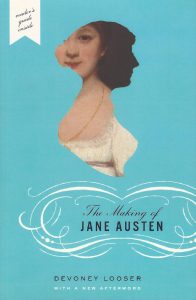
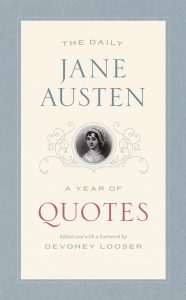
Want to know more about Devoney Looser and her work?
Check out her website: http://www.devoneylooser.com/
Follow her on Twitter: @devoneylooser
* * *
Tomorrow it will be business as usual here on the Margins with a blog post from me. But we’ve still got more people talking about women’s history from a lot of different angles next week. Don’t touch that dial!