




Word with a Past: Muckrakers
While I was writing about Rebecca Harding Davis (1831-1910), I started off thinking of her as a proto-muckraker, working a generation before people like Ray Stannard Baker (1870-1946),* Lincoln Steffens (1866-1936), Ida Tarbell (1857-1944) and Ida B. Wells (1862-1931). But the closer I looked, the more I realized that the realism for which she was known was not the same as the investigative reporting which earned the muckrakers their name. They exposed political and economic corruption–and related social hardships–that resulted from the growing power of big business in the Second Industrial Revolution. Corporate monopolies, political machines, unsafe working conditions, urban poverty, and child labor were all fair targets. Davis described the hardships, but she didn’t dig for the, well, muck.
-
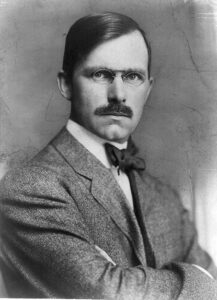
- Ray Stannard Baker
-
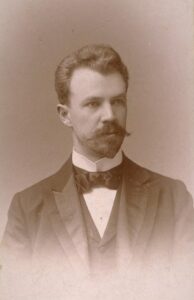
- Lincoln Steffens
-
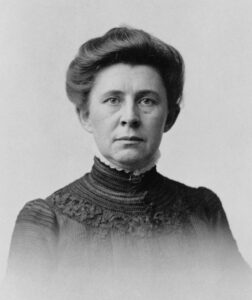
- Ida Tarbell
-

- Ida B. Wells
I sadly abandoned several lovely but incorrect sentences about Davis, and then treated myself to a little rabbit-holing. Here are the high, or possible low, points:
- The word muckrake entered English in 1366 as the name for a rake designed to collect and spread muck, referring to manure, not filth in general.
- John Bunyan was first the first to use the implement in a literary metaphor, noting in Pilgrim’s Progress that “The Man with the Muckrake could look no way but downward”—and that he consequently was unable to look up when offered a spiritual crown.

- Theodore Roosevelt used Bunyan’s words and imagery in a 1906 speech in which he exhorted the investigative journalists of his time to show moderation: “The men with the muck rakes are often indispensable to society; but only if they know when to stop raking the muck, and to look upward to the celestial crown above them, to the crowd of worthy endeavor. There are beautiful things above and round about them; and if they gradually grow to feel that the whole world is nothing but muck, their power of usefulness is gone.” (You can read the entire speech here . Personally, I think Roosevelt makes some good points.)
Roosevelt did not mean the term as a compliment, but many of the journalists of the time embraced it.
Muckraking as a movement disappeared between 1910 and 1912. The need for journalists willing to look down and the stir the, ahem, muck, did not.
*Who also wrote work that was the antithesis of muckraking using the name David Grayson. As Grayson, he wrote books of personal essays with titles like Adventures in Contentment, Adventures in Friendship, and The Friendly Road. He not only took on a different name for these books, he created an entirely different persona. Baker was an Amherst family man; Grayson a well-read bachelor who left the city to live on a modest farm. (Think an intellectual version of the 1960s television comedy Green Acres,** minus the glamorous wife and, presumably, Arnold Ziffel, the pig.) Grayson had serious fans: they formed clubs named after him and called themselves Graysonians, claiming to be dedicated to the simple life. On the other hand, as Baker he won a Pulitzer for his biography of Woodrow Wilson. Best of both writing worlds?
**My apologies to any of you who now can’t get the theme song out of your head.
Rebecca Harding Davis: Making Things Real

Rebecca Harding Davis, ca 1865
One of the joys of writing this blog is that when things are going well one post leads to another idea, another story, another question. It feels like my list of possible topics bubbles and fizzes* and I can hardly decide which story to tell you next.** This is one of the times when the ideas are flowing.
Which brings me to Rebecca Harding Davis (1831-1910) , with a hat tip to Helena Luna who (very politely) pointed out on Bluesky that I had barely scratched the surface of Davis’s story when I mentioned her in my post on her son ,Richard Harding Davis. I scuttled off to find out more.
Rebecca Harding grew up in Wheeling, Virginia,*** which was then a booming factory town, with an economy based on iron and steel mills. Originally home-schooled by her parents, she went away to boarding school at fourteen. After graduating at the top of her class, she returned home to Wheeling, where she joined the staff of the local newspaper.
Back home, she began to write stories and publish them anonymously. (Not an unusual choice for women writers at the time.) She became famous in literary circles with the publication of her novella, Life in the Iron Mills, which appeared in The Atlantic Monthly in April 1861.**** The novella impressed contemporary readers with its detailed and dark depictions of the conditions under which mine workers and their families existed. A few months later, The Atlantic Monthly began publishing Margret Howth: A Story of To-Day, her novel about a young woman working in the mills to support her family, as a serial. (It was later published in book form.) At much the same time, she also began publishing in Peterson’s Magazine, a women’s magazine that was less prestigious than The Atlantic, but paid its authors more. (Don’t get me started.)
In June, 1862, Rebecca traveled to Boston to meet the editor of The Atlantic Monthly. While there she met several prominent New England authors, both those who had praised her work as a brave new voice and those whose work she had long admired. (I picture mutual fan-girl squealing when she met Louisa May Alcott.) From there she went on to Baltimore, New York, and Philadelphia. In Philadelphia she met journalist Lemuel Clarke Davis, who had sent her a fan letter praising Life in the Iron-Mills. They had corresponded during the months that followed. A week after they met In Real Life, they became engaged. (Do not underestimate the power of correspondence as courtship.) They married a year later and settled in Philadelphia.
For several years, while Lemuel established himself in his career, Rebecca was the primary breadwinner of the family. In addition to writing for Peterson’s Magazine, she contributed stories and articles for national magazines like Harper’s New Monthly, Putnam’s Magazine, Saturday Evening Post, and Scribner’s Monthly, as well as children’s magazines like Youth Companion. She published six more novels and an autobiography, which were well received at the time but largely forgotten today, except in the academic circles that study forgotten women writers. In 1869, she became a regular contributor to and editor of the New York Tribune, where she remained for almost twenty years.
She published more than 500 works over the course of her lifetime. ( A number that makes me tired just thinking about it.) But she was almost forgotten at the time of her death in 1910. She was rediscovered in 1972 when feminist author Tillie Olsen republished Life in the Iron Mills in the Feminist Press.
Today Rebecca Harding Davis is considered a pioneer of literary realism in American literature.
*Or maybe I’m the one bubbling and fizzing. It’s always exciting when the work flows. Sometimes I actually have to stand up and walk away from the computer because I get so excited that I can’t keep up. (Yes, I am a nerd. Your point?)
**As opposed to the days when I look at the list of ideas for blog posts and wonder why I thought any of them were worth writing about. I’ve learned to walk away from that feeling as well, because while some of the ideas in fact turn out to be duds, the real problem in that moment is me. (Apparently the answer is always to get up and walk away.)
***Now West Virginia—a fact which led me down a little rabbit hole. Short version: Many people in the area that is now West Virginia had wanted to secede from Virginia since 1829 for what boils down to insufficient representation in the state legislature , over-taxation, and not enough state funds coming back into the region. When Virginia voted to secede from the United States in 1861, western leaders chose not to follow the state’s lead and remained loyal to the Union. In other words, they seceded from the secession.
****The same month the American Civil War began, and shortly before West Virginia became West Virginia.
Corsets for Victory?

And speaking of lady’s undergarments, as I believe we were, I can’t resist sharing this tidbit:
When America entered World War I in 1917, chairman of the War Industries board Bernard Baruch asked women to stop buying corsets to conserve steel, part of the wider program of rationing, conserving and allocating materials important to the war effort. Thanks to the cooperation of patriotic women, some 28,000 tons of steel was diverted from corset manufacturers to wartime industry. Enough to build two battleships.
Some things you can’t make up.