




Talking About Women’s History: Three Questions and an Answer with Sarah Percy
Sarah Percy is associate professor at the University of Queensland. The author of Mercenaries and Forgotten Warriors: The Long History of Women in Combat, she completed her MPhil and DPhil as a Commonwealth Scholar at Balliol College, Oxford. She lives in Brisbane, Australia.
Take it away, Sarah!
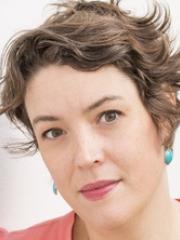
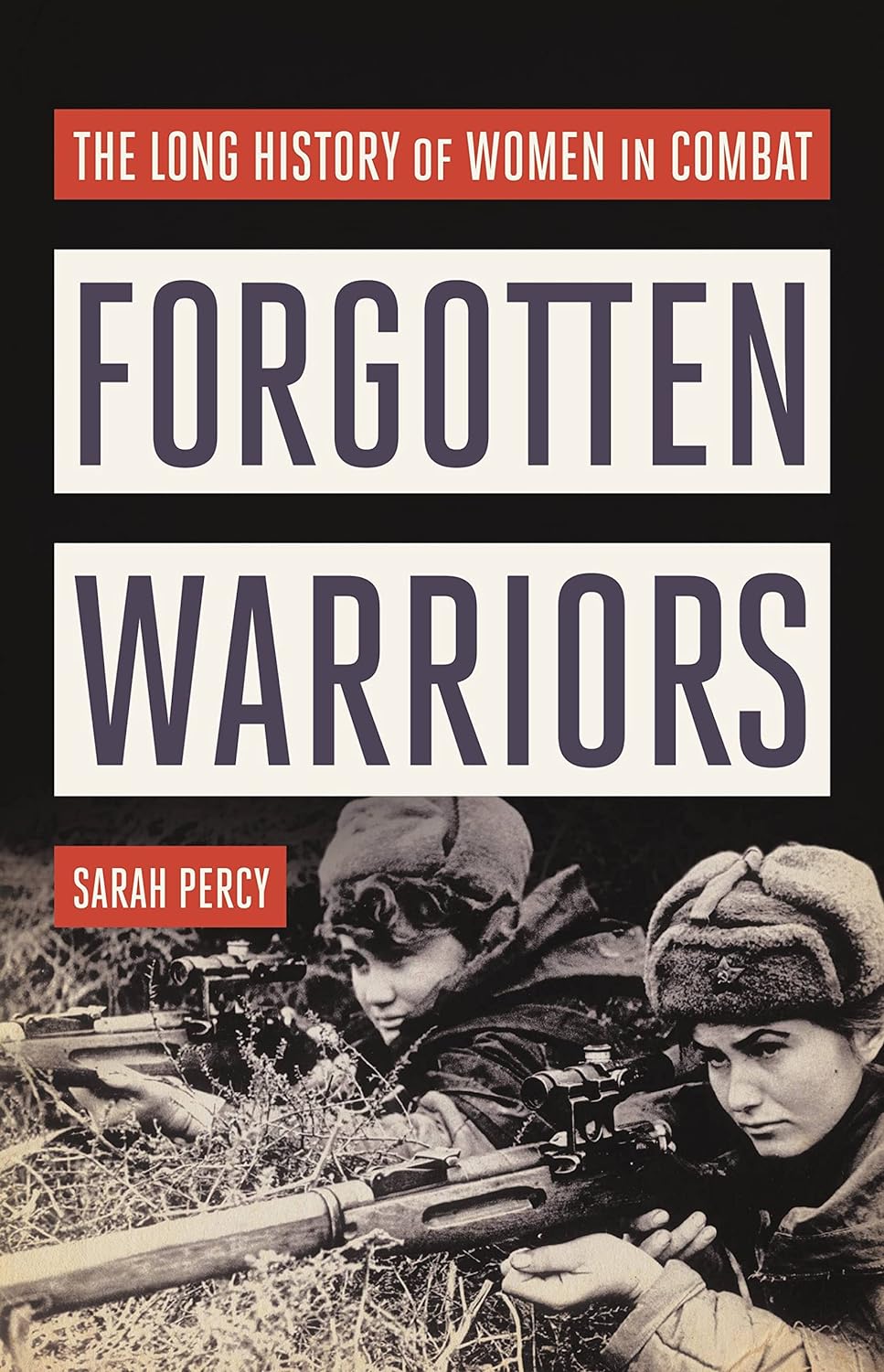
What inspired you to write Forgotten Warriors?
A historical puzzle got me thinking about the role women had played in combat in history. The first one is that the US had female astronauts thirty years before they had women in combat. Women were allowed to be armed police officers (and therefore shoot to kill) and were allowed into a variety of dangerous or previously all male jobs in the 1970s. But for some reason, combat remained about the only profession you can think of from which women were actually banned in the 21st century! I wanted to know why this was the case – especially in a context where a powerful women’s rights movement, including many lawsuits to break down barriers for women, had opened doors everywhere else. What was special about combat? To find out the answer to this puzzle, I had to understand what women had done on the battlefields of the past, which only made the puzzle more interesting – because there is plenty of evidence that women engaged in combat with great success. So the book became about finding out the answer to my puzzle, and telling the story of women in combat.
In Forgotten Warriors, you literally explore “the long history of women in combat. ” How did you decide which women to include?
One of the great joys of researching this book was finding out about all the amazing women combat fighters of the past. There are so many it wasn’t easy to choose, especially because Forgotten Warriors is not a compendium of women fighters (other people, including you, have done this so well!). But in a way, this made it easier. My goal with the book is to demonstrate that women fighters have been an integral part of broader military history, and consider how understanding their stories illuminates this conventional history in different ways. So I chose women whose stories helped me demonstrate the key arguments of the book: that women have always fought, but often been overlooked or even had their service deliberately forgotten, and that women’s military contributions have often been belittled because for whatever reason they are not considered to be fighting in ‘proper’ wars or on ‘real’ battlefields. One of the things I found most interesting was that many of the women in the book were actually pretty ordinary. They weren’t, in their pre-war lives, notably physically imposing. But when given the opportunity to fight, they excelled. I loved the stories of the ordinary British women who were recruited for the Special Operation Executive, and sent to fight behind enemy lines in occupied France. These women were chosen because they spoke French fluently and could go undetected while on operations. But they proved to be not only fierce fighters but also commanders of men. Pearl Witherington, one of these recruits, turned out to be the best shot her trainers had seen go through the course, and ended up leading a force of several thousand French resistance fighters after D-Day. But because she was a woman, she wasn’t considered to be a combatant, and she was only eligible for civilian honours at the end of the war. She returned her civilian honour and remarked that there was nothing civil about what she’d done during the war!
What was the most surprising thing you’ve found doing historical research for your work?
So many things! I hope my family were entertained when I would sit at the dinner table and tell them, “you’ll never believe what I found out today!!”. But probably the thing that ended up having the biggest impact on the book and surprised me the most was how important World War I is to understanding the history of women in combat roles. I was surprised because World War I is a really masculine war, and in fact it’s the most all-male war that I write about. While women were a relatively commonplace feature on 18th and 19th century battlefields (not always fighting, but often right at the front and in the thick of the action providing essential support services) by the early 20th century they’d been pushed out of European armies. So I thought that World War I would be a pretty dull period in a history of really rich examples of female fighting. But I found actually that it’s such a crucial turning point in the story. The advent of total war presented governments with a problem: they needed to have total social mobilization to win the war, but they’d done a very good job convincing their populations that women couldn’t be anywhere near the frontline (in fact the term “home front” is invented in World War I). So this meant that governments and militaries had to devise rules to keep women out of combat – and these rules persist throughout the 20th century. So World War I is a crucial turning point in the story – and, even more interesting, is what the women were actually doing! It’s true that women didn’t fight much in the war (although there are some great exceptions, including women who dressed as men and snuck into the military in Russia, and a Russian all-female military battalion, and quite a few other extraordinary women!). Women were however very significantly involved, because in almost every European state, women had organized themselves as auxiliaries long before governments realized they’d need women – and these auxiliaries became the nucleus of official women’s military service.
A question from Sarah: if you could travel back in time to visit one of the places you’ve written about (or meet one of the people) – who, when, why?? What would you talk about?
At the moment, I would chose Weimar Berlin.
The third-largest city in the world, with a population of four million, Kaiser Wilhelm’s stodgy, rather provincial capital became an international crossroads in the years after the war. Lillian Mowrer, wife of the Berlin bureau chief for the Chicago Daily News and a journalist in her own right, wrote in her memoir that Weimar Berlin reminded her “of a huge railway station; it was the stopping-off place between eastern and western Europe; everyone traveling from Paris to Moscow, sooner or later, came there.”
Weimar Berlin was politically tense, bawdy, and creative: the darker counterpart of interwar Paris. With the well-earned reputation of being the most licentious city in Europe, Berlin drew an international community of artists, political dissidents, journalists, intellectuals, and members of the Lost Generation engaged in what a later generation would term “finding themselves.” It was a period of enormous, almost hyperactive, creativity. Artists of all types—in film, music, photography, the visual arts, and the many forms of theater that flourished in the city—drew energy from the prevailing sense that the social norms had been broken twice, first by the war and later by the revolution. As a result, anything seemed possible–until it all fell apart.
I’d like to think I would talk to everyone, gone everywhere, seen everything. In reality, I would probably nurse a drink in a corner.
***
Come back tomorrow for three questions and an answer with scientist Richard Miller, author of The Rise and Fall of Animal Experimentation: Empathy, Science and the Future of Research, a story in which women play a surprisingly large role.
Wise Women
 One of the things I enjoy most about Women’s History Month is the fact that people share interesting programs about women’s history that I would never have found on my own. Programs that I can then share with you.
Today’s unexpected treasure is Wise Women, a sixteen-episode podcast series about women in philosophy, put on by Philosophy Talk, a radio program and series of podcasts produced by Stanford. The first season focuses on women from the fifth through the 19th centuries. I’ve heard of five of the eight women. Three are totally new to me.
The second season will focus on contemporary philosophers—I’m embarrassed to admit that not a single name comes to mind. Thought now that I think of it, I can’t name any contemporary male philosophers either.
Half the episodes of the first series have dropped. I’m part way through the first episode and I’m hooked. Both the narration and the graphics are excellent.
Here’s the link: https://www.philosophytalk.org/wisewomen
****
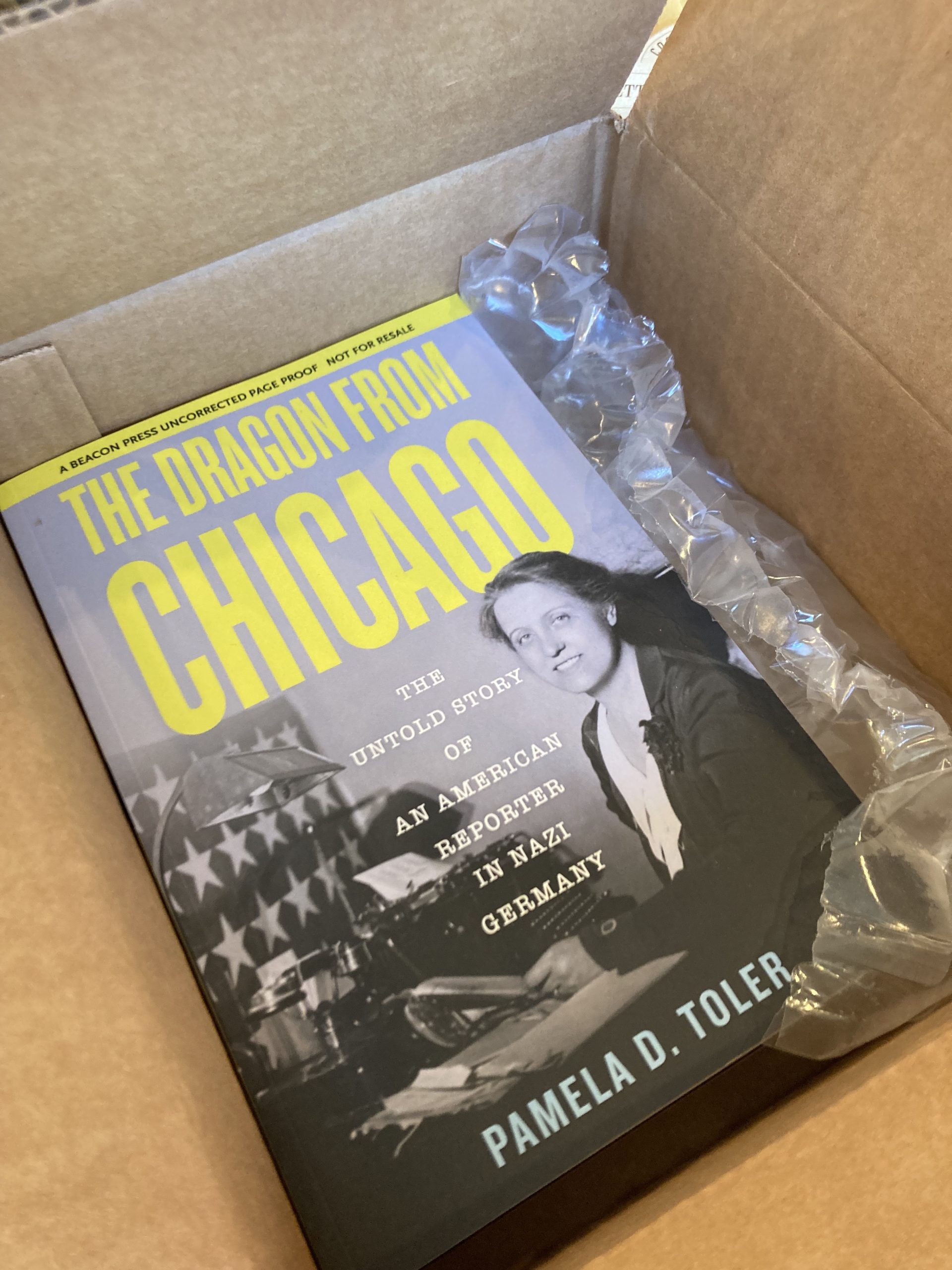
On another topic, I received galleys of The Dragon From Chicago a couple of days ago. They are gorgeous, and I am beside myself with delight, and maybe a little bit of terror, that this book is one step closer to going out into the world.
For those of you who missed it: the book releases August 6 but is available for pre-order now.
Talking About Women’s History: Three Questions and an Answer with Carolyn Whitzman
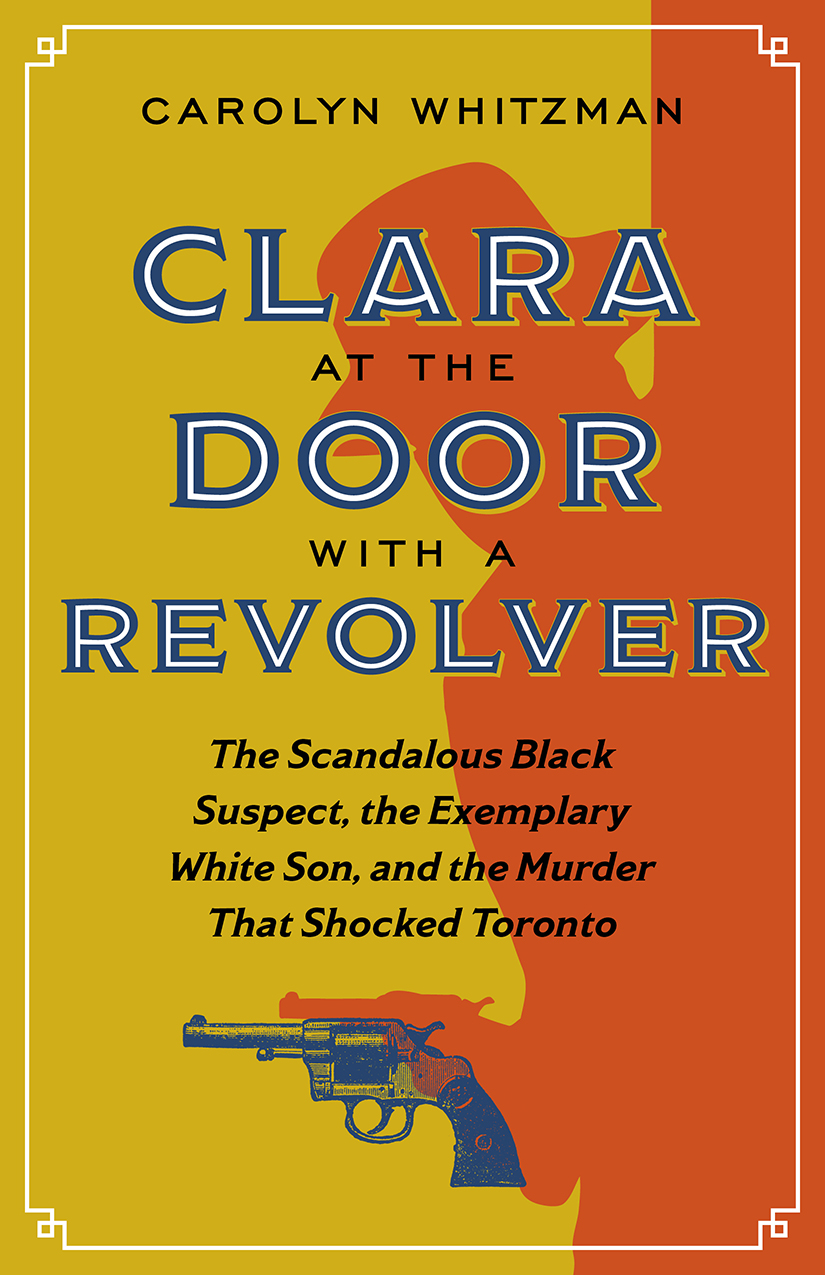
Carolyn Whitzman is a writer and housing policy researcher who lives in Ottawa, Canada. She is the author of Clara at the Door with a Revolver: the scandalous Black suspect, the exemplary white son, and the murder that shocked Toronto (UBC/ On Point Press, 2023) a riveting true-crime story centered on a courageous Black woman living in nineteenth-century Toronto who was charged with murdering the son of a well-do white family and the trial that followed. Her forthcoming book is Home Truths: Fixing Canada’s Housing Crisis (UBC/ On Point Press, September 2024).
Take it away, Carolyn!
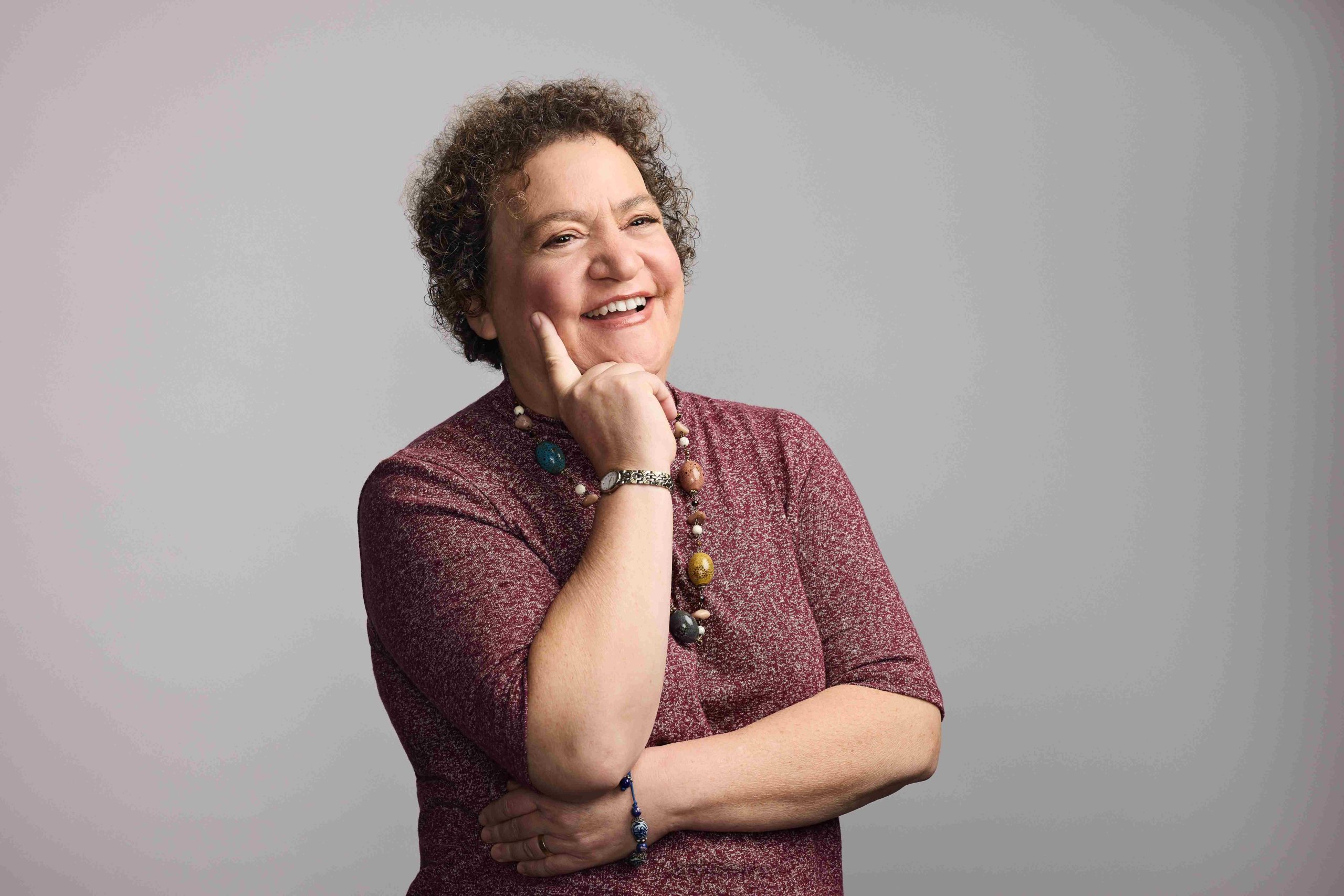
What path led you to Clara Ford’s story? Why do you think it is important to tell her story today?
I first came across Clara Ford’s story while working on my PhD over 25 years ago, whose topic was the relationship between stereotypes, social conditions, and housing policies in Toronto’s inner city Parkdale neighbourhood over two centuries. One of the lies told about Parkdale when it was gentrifying in the late 20th century was that it had been a stable, middle-class, residential suburb when it was developed in the late 19th century. But all you needed to do was walk around the neighbourhood and look at old industrial buildings and tiny workers’ cottages to get a sense of social mix – and potential tensions between residents.
I turned to newspapers of the time and quickly came across the story of an impoverished mixed-race tailor, Clara Ford, who was accused of having murdered her former next-door neighbour, the son of a wealthy white manufacturer, in 1894. The more I read about the trial, the more I became obsessed with Clara. Clara was the first person I have found to be described as a “homosexual” in a North American newspaper. Her adventures as a cross-dressing traveller (who passed as a man but not as a white person) contributed to newspaper coverage that made her out as a ‘monster’, even as other newspapers painted her as a ‘tragic mulatto girl’ seduced by a boy almost half her age. Clara was also the first woman and second person in Canada to testify on her own behalf in a trial. She told a story of police harassment into a false confession, which was, remarkably, believed by a jury of twelve white men.
The themes of the book – working class Black life in Canada, sexual violence, police harassment, fake news – continue to be timely today, in a world of #BlackLivesMatter and #MeToo. I hope that Clara, like many women of her time and class only written about when she got into trouble, emerges from the book as a strong, brave, and very funny heroine of her own story.
What type of sources do you rely on in writing about a non-elite woman from the past?
What a good wonky question! I used two sets of primary sources and one set of secondary sources.
First off, I used newspaper articles. There were seven daily newspapers in Toronto at the time of Clara’s arrest and trial. They were engaged in a furious circulation war and cared very little about verified truth – the most important thing was a ‘scoop’. I see certain similarities with 24-hour news cycles and social media today.
My second set of sources was official documents of the time – census, directory, assessment, birth and death records… but Clara is remarkably absent from the official record. She only appears in the Canadian census once, as a 7-year-old in 1871 (although she was almost certainly close to 10 years old). There is no birth certificate for her or for her daughters, even though they were, again, almost certainly born in Canada. But I was able to track her white mother, Jessie McKay, through a set of falling down shacks and professions such as laundress and housecleaner.
The third set of sources are some excellent recent works on Canadian women’s history, Black history, legal history, and queer history that helped me put Clara’s story in context. Just about every trope that is still out there, particularly Angry Black Woman, was thrown at Clara. I kept on falling into rabbit holes. For instance, when Clara was acquitted, she joined a famous Black vaudeville troupe as a dancer (at the age of 33!). So I had to know more about late 19th century theatre and the development of the musical. My reference list is quite varied, because Clara lived a rich and complex life in several cities, always trying to stay under the radar.
What work of women’s history have you read lately that you loved? (Or for that matter, what work of women’s history have you loved in any format? )
There are a couple of women’s history books that have rocked my socks in recent years. One is Beautiful Lives, Wayward Experiments: Intimate Stories of Social Upheaval by Saidiya Hartman (Penguin, 2019). Like Clara, Hartman focuses on the lives of 19th century Black women in Philadelphia whose histories are only recorded because they encountered police and other authorities. Hartman writes about vibrant but forgotten women with a poetic sensibility that creates ravishing prose.
Square Haunting: Five writers in London between the wars, by Francesca Wade (Random House, 2021) focuses on a single street in the Bloomsbury neighbourhood, where relatively privileged and educated women in the early 20th century were trying to create new lives as independent writers. Wade’s sense of place, detail, and character lingers in my mind.
I also want to shout out to my favourite podcast, What’s Her Name, created by sister historians Katie Nelson and Olivia Meikle. They are gifted storytellers and I always enjoy travelling with them to re-discover cool women who have been forgotten!
[Pamela butting in here: I, too, am a big fan of the What’s Her Name podcast and the women who created it. In fact, they’ve participated in Three Questions and an Answer several times. You can find their Q & As here, here, and here ]
A question from Carolyn: Can you tell me something surprising you have found about South Asian women’s history, please?
My most recent surprises from South Asian women’s history have not been large scale cultural issues, but stories about individual women who did not show up in my graduate student course work. One of my favorites of these is Raziya Sultan (1205-1240 CE), who was the only female ruler of the Delhi Sultanate in India—a Muslim empire that ruled over a large portion of India for several centuries prior to the Mughals.
Although she had several brothers, her father named her his successor to the throne. It probably will not surprise you to learn that neither her brothers nor the Muslim nobles in the sultanate were pleased with his choice. At his death in April, 1236, they attempted to put one of her brothers on the throne. He was described in the chronicles as being “incompetent”—which could mean many things. His mother was in control of the throne during his brief reign, which ended six months later when mother and son were assassinated.
Raziya then ascended to the throne. (It is unclear to me if she was involved in the assassination, but I would not be surprised if that were the case, family politics in medieval kingdoms, Muslim and otherwise, being what they were.) She was by all accounts an effective ruler, but the Turkish nobility, led by one of her brothers, rose up against her. She was defeated in 1240 and died soon thereafter, though accounts of her death vary.
A contemporary chronicler summed up her career with words that could be applied to that of many women who attempted to hold a throne at the time: “She was endowed with all the qualities befitting a king, but she was not born of the right sex, and so in the estimation of men all these virtues were useless.”
***
Want to know more about Carolyn Whitzman and her work?
Check out her Google scholar profile:
Follower her on the platform previously known as Twitter: @CWhitzman
***
Tomorrow it will be business as usual here on the Margins with a blog post from me. Then we’ll be back on Monday with an interview with Sarah Percy, author of Forgotten Warriors: The Long History of Women in Combat, a subject dear to my heart.