




Helping to Write Women’s History
One of the greatest challenges in writing history is reading handwritten documents from the past. Many times over the last few years I found myself cursing struggling with Sigrid Schultz’s letters.* Her handwriting was not great. Her use of punctuation was erratic. (I blame this on years of writing stories in cablese and sending telegrams. Punctuation cost money, which meant you only used it when it was essential.) I managed her letters and notes in English and even French with minimal teeth gnashing. Banging my way through her letters in German was much much harder. So hard that I struggled with one letter for well over an hour before I realized it was in Norwegian, not German.**

All of which leads me to the National Women’s History Museum’s Women’s History Month project. Over the course of March they are urging people to help transcribed Clara Barton’s papers at the Library of Congress.*** The Barton transcribe-a-thon is part of the Library’s By the People public history transcription project. Here’s the link to the Women’s History Museum’s call to arms: https://events.womenshistory.org/events/transcribe-clara/ . It includes tips on transcribing and links to the campaign to transcribe Barton’s papers and the larger By the People project.
Future historians will thank you.
*I hear snickers, maybe even guffaws, from those of you who have suffered with my handwriting over the years. You may have noticed that, thanks to my experience with Sigrid’s letters, I type most of my letters now.
**I do not read Norwegian.
***Barton was more than “just” a nurse. (Not that “just” should ever be applied to nurses as far as I’m concerned. The more I’ve learned about nurses over the years, the more impressed I become.) If you would like a quick introduction to or refresher on Barton’s life, you can find it here, here and here.
***
Come back on Monday for three questions and an answer with Dr. Catherine Musemeche, author of Lethal Tides: Mary Sears and the Marine Scientists Who Helped Win World War II.
***
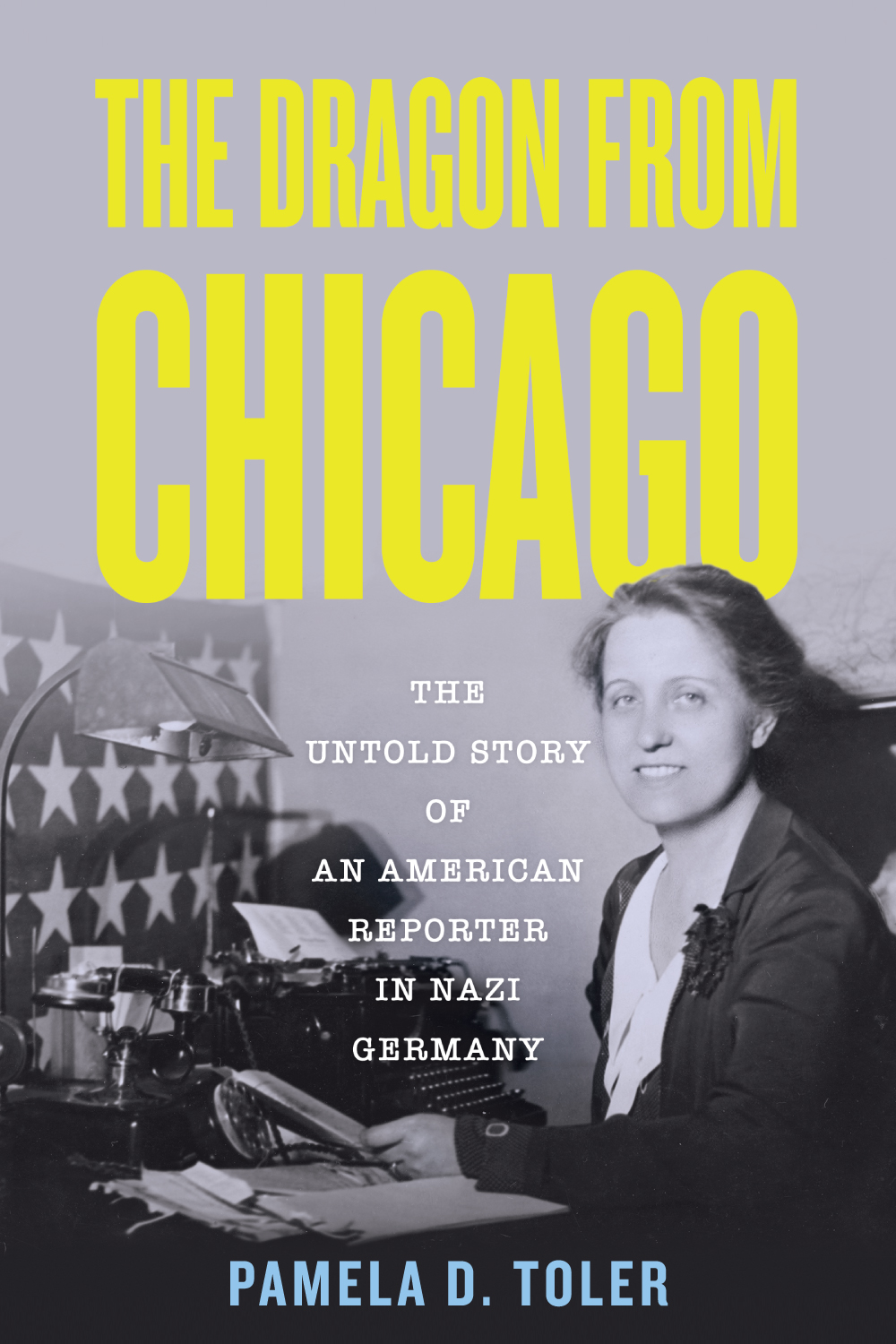
Just a reminder that The Dragon for Chicago is now available for preorder wherever you buy your books. If you want a signed copy, you can order it through my local independent bookstore here: https://www.semcoop.com/dragon-chicago-untold-story-american-reporter-nazi-germany Use the special instructions block at the bottom on the order page to request a signed copy and tell me how you want it signed.
Many thanks to those of you who chose to pre-order. It makes a difference.
Talking About Women’s History: Three Questions and an Answer with Kip Wilson
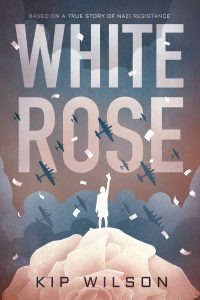
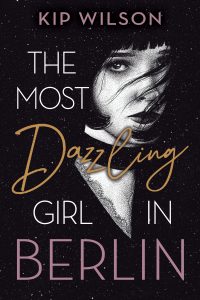
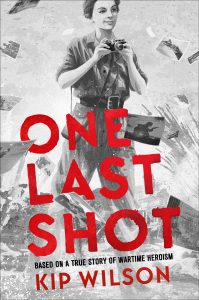
Kip Wilson is the author of critically-acclaimed young adult verse novels White Rose (Versify, 2019), about anti-Nazi political activist Sophie Scholl, The Most Dazzling Girl in Berlin (Versify, 2022), set in a queer club in Berlin during the last days of the Weimar Republic, and One Last Shot (Versify, 2023), about anti-fascist Spanish Civil War photojournalist Gerda Taro. Kip holds a Ph.D. in German Literature and spends her days as a Library Technician at the Concord-Carlisle Regional High School.
I’ve been looking forward to reading One Last Shot ever since Kip announced she was writing the book, and I am so pleased to have her back on the Margins to talk about it.
Take it away, Kip!
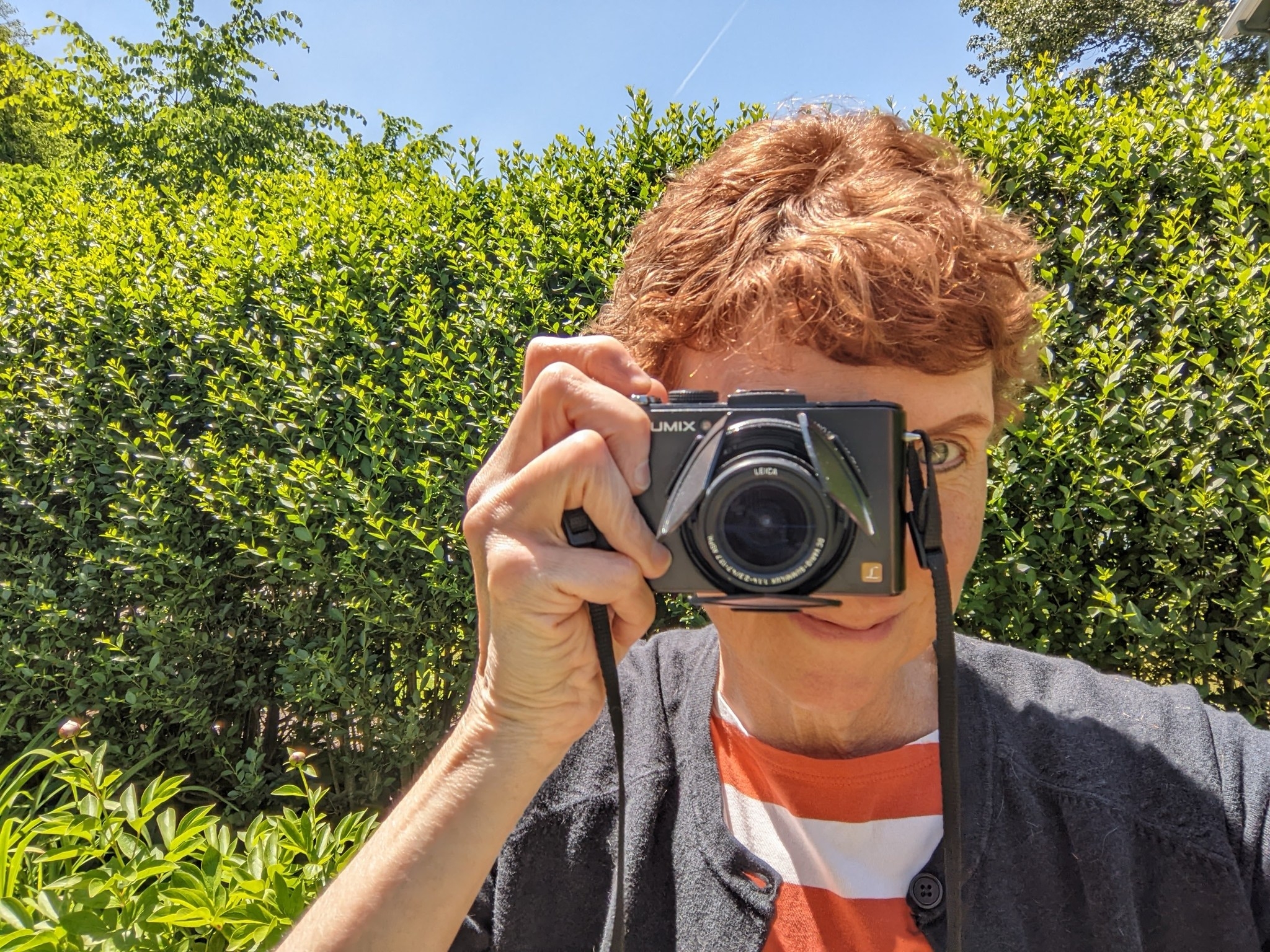
What path led you to Gerda Taro? And why do you think it is important to tell her story today?
I’ve long been interested in the interwar period (The Most Dazzling Girl in Berlin also takes place in the 1930s), and I’m married to a Spaniard, so I’ve been learning about the turbulent history of Spain at that time for a while. But I didn’t connect to a protagonist until August 1, 2018, when I saw an impish girl holding a camera on the Google Doodle. I clicked on the image right away of course, and was intrigued enough by what I saw about Gerda Taro at first glance that I quickly ordered several books about her and her more famous partner, André Friedman (aka Robert Capa).
Writing about a historical figure like Gerda Taro requires living with her over a period of years. What was it like to have her as a constant companion?
You know, it was pretty amazing. The more I knew her, the more I loved her. What a firecracker! I wish I could hang out with her, truly. But that’s not to say she was a perfect individual or had a fantastic life. She lived through incredibly difficult times and did what she had to do to survive. Photographs of her show a goofy personality, a thirst for adventure, and an unrivaled self-confidence I certainly wish I had. “What would Gerda do?” is certainly a question I sometimes ask myself since getting to know her that delivers much more interesting results.
What types of sources do you rely on to create rich fictional characters from obscure, or poorly documented historical figures?
Gerda Taro unfortunately falls into this category, because she left behind no surviving letters or diaries–just a single telegram! But I’m so lucky that many of Gerda’s photographs are available online through the International Center of Photography (ICP): https://www.icp.org/browse/archive/collections/gerda-taro-september-26-2007-january-6-2008. It’s amazing how much you can tell about Gerda from photographs of her as well as by her.
I’m also lucky that Gerda’s biographers were meticulous in their research–interviewing surviving friends and acquaintances when they were still alive, and digging deep in the archives to find all kinds of incredible historical details.
A question from Kip: Who or what initially sparked your interest in women’s history? I’m curious to hear what started you along this path.
One of my favorite things to do when I was small was curl up next to my grandmother and ask her, “What did you do when you were a little girl?” From there it was a short step to reading biographies about historical women who ignored social boundaries and accomplished things—the kind that are written with the intention of inspiring young girls. My grade school’s revolving library owned a whole series of them. Each volume started with the woman as a little girl who didn’t quite fit in. Every week a new one arrived and I snatched it before anyone else could get it, eager to read about Clara Barton, Madame Curie or Julia Ward Howe. They were undoubtedly whitewashed accounts of complicated lives, but I loved them.
***
Want to know more about Kip Wilson and her work?
Visit her website: kipwilsonwrites.com
Check out her Instagram account: @kipwilsonwrites.
***
Tomorrow it will be business as usual here on the Margins with a blog post from me. Then we’ll be back on Monday with an interview with Dr. Catherine Musemeche, author of Lethal Tide
Talking About Women’s History: A Bunch of Questions and an Answer with Dr. Emma Southon
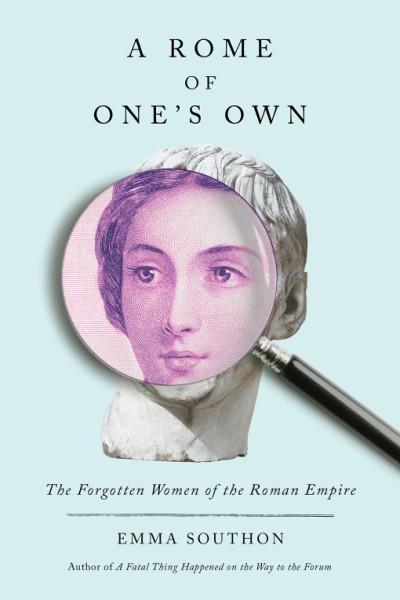
Back in November at least half a dozen of my friends sent me the link to an essay by Emma Southon, titled “Why We Need a Women’s History of the Roman Empire.” I read it and was hooked by the voice and the ideas. I immediately ordered her delightfully titled book, A Rome of One’s Own and invited her to join us here for what turned out to be a whole bunch of questions and an answer.
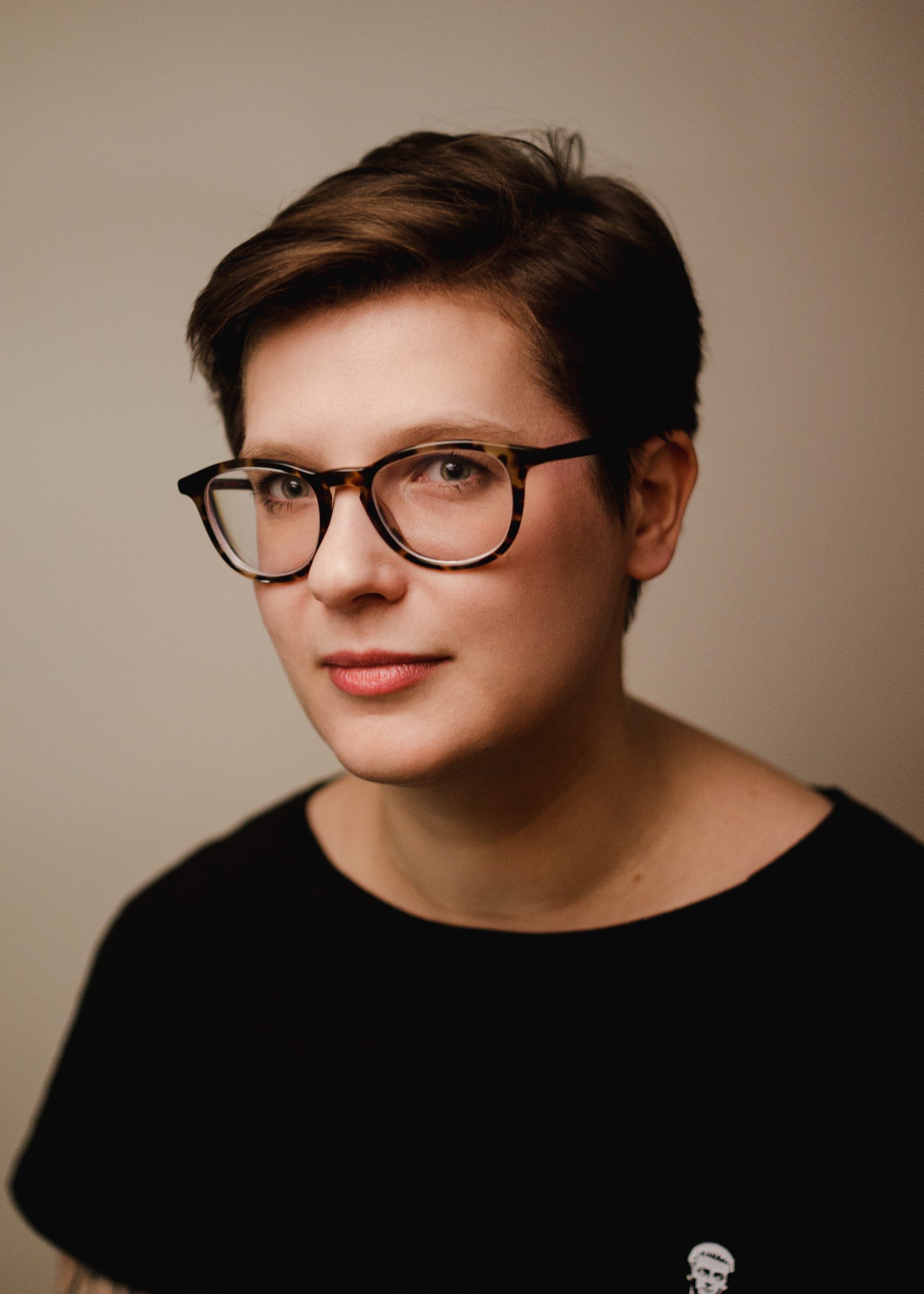
Dr. Emma Southon holds a PhD in ancient history from the University of Birmingham. The author of A Fatal Thing Happened on the Way to the Forum, Marriage, Sex and Death: The Family and the Fall of the Roman West and Agrippina, she co-hosts a history podcast with writer Janina Matthewson called History Is Sexy and works as a bookseller at Waterstones Belfast.
Take it away, Emma.
What inspired you to write A Rome of One’s Own? How does looking at classical Rome through the lens of women’s lives change the story?
Mostly I wanted to add to the conversation about ancient women that had started to happen in fiction; after Madeleine Miller’s Circe, this wave of novels about Greek goddesses came out, retelling their stories to centre female narratives. I work in a bookstore and I saw them come in and the little contrary Romanist in me wanted to remind readers that Romans exist (and are, imo, cooler!) And even better, Roman women are real!
When I started compiling lists of women to include in the books and thinking about how to do it, I decided to tell the story of the rise and fall of the empire through women’s stories and lives and found that it mostly removes all the traditional narratives. There’s hardly any battles, no senatorial speeches. It think it makes the Roman empire more real and more clearly a thing that happened to people. The masculine narrative of war and expansion and more war always comes from the perspective of the Romans themselves and it feels so high minded. The female perspective means you have the space to include more stories of people experiencing the Roman empire changing their lives.
In A Rome of One’s Own, you look well beyond the stories of empresses and elite women to talk about slaves, business women, professional women, and women from distant parts of the empire. How difficult is to find sources for women whose lives are not well documented in traditional sources?
The real challenge is finding significant evidence for women beyond a couple of sentences! When I started making lists of potential women, they got overwhelmingly long because there are hundreds of stories that I could include. The problem was that so many of them are documented in just a line or an epitaph and nothing else is known about them. We know one thing about their life, such as that they were married to the commander of an auxiliary cohort that was stationed in Britain for a while in 100 CE, or that they owned a complex of buildings in Pompeii but nothing else. But that’s true for most men too. Most of the traditional literary sources are interested in a tiny minority of men at the tippiest top of the Roman tree and their experiences don’t really reflect the millions of other men who lived in the empire.
You look at a wide range of Roman women. How did you decide which women to include?
With great difficulty! I went through a lot of different lineups. It was dictated in the end by chronology. I knew I wanted women from every phase of Rome’s history until the abdication of Romulus Augustulus and I didn’t want there to be lots of chapters clustered around certain periods (*cough* the julio-claudians *cough*). So I lost a lot of great stories because they just happened to be too close in time to another woman that I included. I would have to make a decision between two or three women and I usually told the story that I thought had been told less, or was less Imperial. For example, Calvia Crispinilla was one that I had in until quite late because she just has a fun Roman story of excess. She’s an African woman who becomes prominent in Nero’s court, and he made her a “mistress of the wardrobe” to his enslaved “husband” Sporus. When Nero was overthrown, she cut off the food supply to Rome in order to try and force the Senate to choose her pick for emperor. Despite all this, she went on to marry a consul, run a wildly successful wine and olive oil business and live rich and happy. It’s a great story! But it’s too familiar, and overlapped with Boudicca and Cartimandua, which I decided were stories that were more surprising and gave a wider view of what living in or with the Roman empire was actually like.
Was there a woman you were sad to leave out?
I was devastated to cut out Babatha, a Jewish woman who lived in the Roman province of Arabia, on the modern border between Jordan and Israel. She died 132 CE because she fled the Bar Kokba rebellion in Judea and holed up in a cave near En-Gedi with various other friends and family to escape the fighting. Unfortunately, none of them ever left that cave but she obviously assumed she would because she took with her a bag full of documents detailing her marriages, her husbands’ other wives, her property disputes, her fights with the Roman governor about a pension for her son, the fist fights she had with the Roman woman who represented her in court, her fig trees. It’s such a glorious archive of a woman’s life! I chose Julia Balbilla instead because I love her but I do sometimes wish I had included Babatha.
You introduce readers to a lot of fascinating and unexpected women. Do you have a favorite, or two?
I’m a big fan of Julia Balbilla! Which is why she won over Babatha. I love her combination of boastfulness and desperation to be remembered; of being hugely educated and smart and rich and royal and also deeply mediocre at poetry! I also love that she has this triple identity as Greek and Roman and Seleucid; royal and not-royal at the same time and that she makes such a big deal about how SHE is descended from gods too, just like Hadrian! I find her so fascinating.
The other is Julia Felix, who we know about only from the fact that she just happened to be renting out her entertainment complex at the exact time that Vesuvius erupted. She’s running this great business, she’s persuading the authorities to move a road for her, she’s showing her customers themselves as epic artwork and giving them a taste of luxury. She’s great.
What work of women’s history have you read lately that you loved? (Or for that matter, what work of women’s history have you loved in any format? )
I recently loved Jane Draycott’s book about Cleopatra Selena Cleopatra’s Daughter. Her reconstruction of her life and reign after the death of her parents is entertaining and brilliant. The one I recommend to everyone is The Five by Hallie Rubenhold, which blew my mind. I had no idea so much information about Jack the Ripper’s victims existed and it made me totally reevaluate that whole story. One that I love and plunder regularly is Emily Hemelrijk’s Women and society in the Roman world: A Sourcebook of Inscriptions from the Roman West. A collection of women’s lives in epigraphy and graffiti, it contains so many tiny stories.
[Note from Pamela: Look for three questions and an answer with Jane Draycott later this month.]
What do you find most challenging or most exciting about researching historical women?
Challenging is the lack of their actual words. When you get to read the letters of Pliny the Younger or Cicero or Fronto, you get such a thrilling insight into their minds and personalities that we never have for women and it’s infuriating to know they all wrote letters and they were all lost. On the other hand, the lack of big texts means that there are hundreds of fragmentary female stories to be discovered and it is thrilling every time you find a new one. The first time I read Claudia Severa’s letter from Vindolanda it was AMAZING. And when I first read the female-authored sapphic graffiti in Pompeii, I wanted to tell everyone I knew about it. You don’t often get that excitement with a Cicero letter!
You also co-host a history podcast, History is Sexy, which Radio Times describes as “amiably daft.” How would you describe the purpose of the podcast? What types of stories do you discuss?
History is Sexy aims to answer questions that listeners have that they don’t have time to research themselves, in a kind of friendly chatty way. So we are guided by our listeners! Sometimes we do big topics like the history of red heads, or or how men’s clothing got boring or whether matriarchal societies were real (and what a matriarchal society even is). We just did a big two-parter running through the whole Ptolemaic dynasty and then did one on debutante ball culture in the UK and US. It’s always different and usually fun!
You’ve successfully made the jump that many academics dream of, from writing purely academic work to writing books of rock-solid scholarship with a popular audience in mind. Do you have any advice for readers who dream of doing the same?
The main advice I give academics who want to write for non-academic audiences is to stop being defensive in your writing. When you are writing for academics, you know that the first three readers are going to read it looking for holes and everyone else is going to try and mine it for their work/disagree with it. So you become defensive and try to cover every angle. When you’re writing for non-academics, you get to assume that the person reading it already wants to agree with you and learn from you, and they want to be entertained or moved or made to go wow or to learn something cool they can tell their friends. I was lucky that I taught academic writing and writing across the genres for a few years which taught me to break down writing for different audiences but it is hard work to shift from everything you know about writing your subject. Assume you are writing for a friend rather than an enemy!
A question from Emma: Do you think Women’s History Month is important and why?
The answer I come back to every year is that I think it’s important, I love celebrating it, and I wish we didn’t need it.
If you look back at Lori Davis’s mini-interview yesterday, you’ll read a story about a professor who squeezed in an obligatory, uninspired, and unsatisfactory moment of women’s history at the end of each unit in a History of Civilization course. Until we reach the point that women are included in history classes, historical museum exhibits, and living history programs as a matter of course we need Women’s History Month.
In the meantime, I will continue to enjoy the annual carnival feeling of celebrating historical women, well-known and otherwise, with my people across the Internet and in real life
***
Want to know more about Emma Southon and her work?
Visit her website: https://www.emmasouthon.com/
Listen to her podcast: https://historyissexy.com/
***
Come back tomorrow for three questions and an answer with novelist Kip Wilson.