




History on Display: The Anne Frank Pen Pal Museum
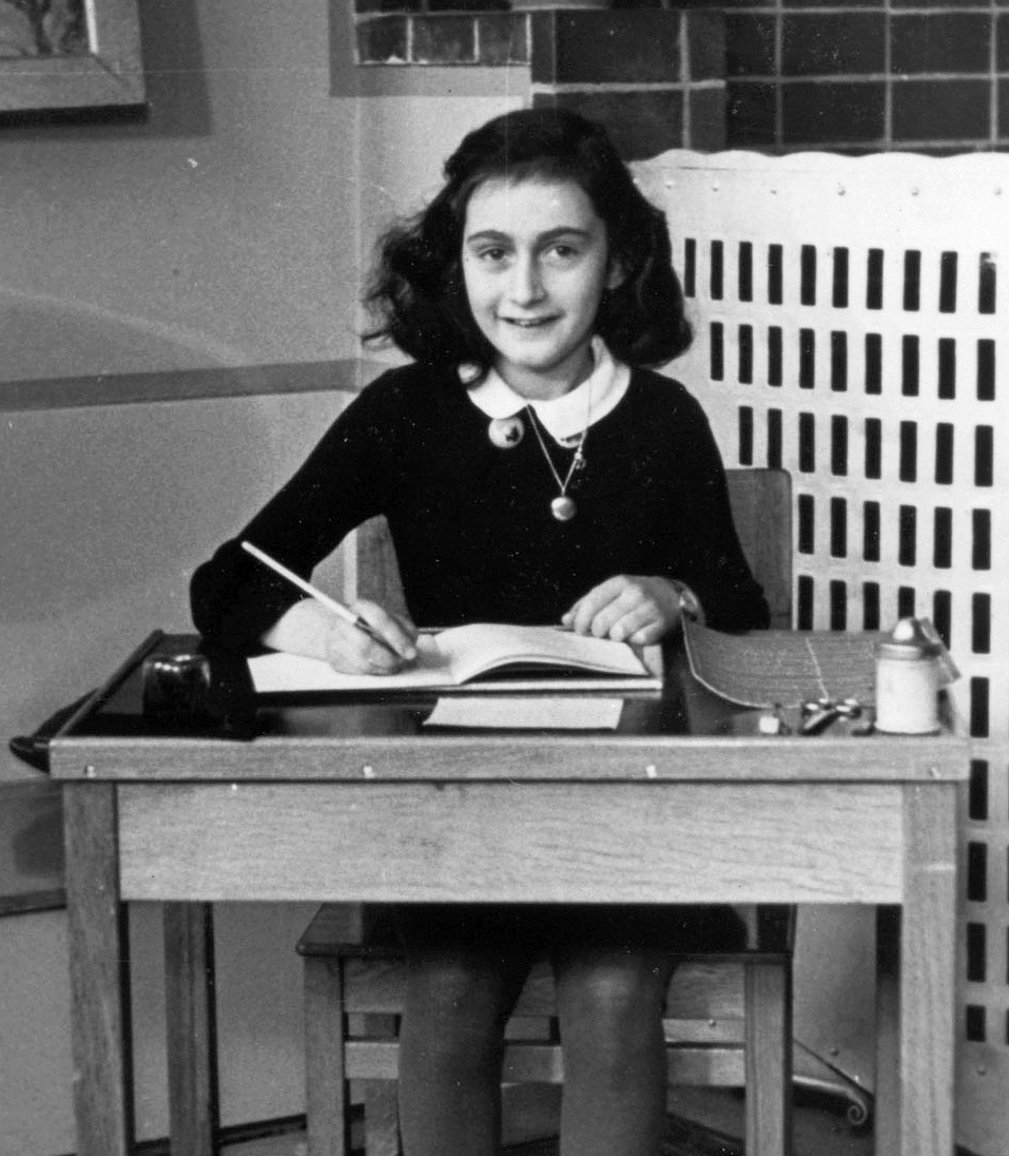
Anne Frank, 1940, at the 6th Montessori School, Amsterdam
One of the delights of a road trip is seeing a sign advertising an unexpected attraction. The kind that makes you go “What??!!” and immediately pull out your phone because you can’t believe you read it correctly.
One of the frustrations of a road trip is missing something you would like to see because the timing does not work.
The Anne Frank Pen Pal Museum in Danville, Iowa, fits both categories.
The story behind the museum is little more than a footnote in the larger Anne Frank story.
Every summer Danville school teacher Miss Birdie Matthews traveled to Europe. Every fall, she would have her students write letters to European pen pals from an interested school that she had contacted during her summer travels. In January 1940, she gave her students a a list of names and addresses of Dutch children who attended the 6h Montessori School in Amsterdam, where Anne Frank was a student.
Ten-year-old Juanita Jane Wagner picked Anne Frank from the list. In her first letter to Anne, she told her about Danville, her family, particularly her sister Betty Anne, and life on an Iowa farm. Then she waited eagerly for a return letter.
A few weeks later, Juanita received her first and only letter from her pen pal, dated April 29 1940. There was a second letter in the envelope, from Anne’s fourteen-year-old sister Margot to Juanita’s sister Betty Ann, who was also fourteen. Anne wrote about her school and her family. She told Juanita that she collected postcards and asked her to send a photo. Margot wrote about what was happening in Europe and the fact that they listened to the news on the radio. She told Betty Ann that “we never feel safe’ because the Netherlands shared a border with Germany. Neither girl mentioned that they were Jewish. Both letters were written in English—the assumption is that they drafted them in Dutch and their father translated them into English for the girls to copy. The Frank sisters also sent small photographs of themselves and a picture postcard of Amsterdam.
The Wagner girls wrote back immediately, and sent snapshots of themselves in return.
They did not hear from their Dutch pen pals again. Germany invaded the Netherlands on May 10, the Dutch surrendered four days later, and the Frank family went into hiding.
In an interview late in her life, Betty Wagner said that she and her sister often wondered if their Dutch pen pals were safe. When the war was over, Betty wrote to the address they had used before. Otto Frank answered, telling them what the family had gone through and what had happened to his daughters. Betty said later that after she read the letter, she “just sat and cried.” It was the first time the Wagners learned that their pen pals were Jewish.
The original letters are now in the Simon Wiesenthal Center in Los Angeles. The museum in Danville has copies of the letters on display. It also tells the stories of Holocaust survivors who settled in Iowa. Or so reviews of the museum say. We drove past too late in the day to stop. It’s on my list of places to go back to.
***
Come back on Monday for three questions and an answer with somebody about women’s history.