




Empresses of Seventh Avenue
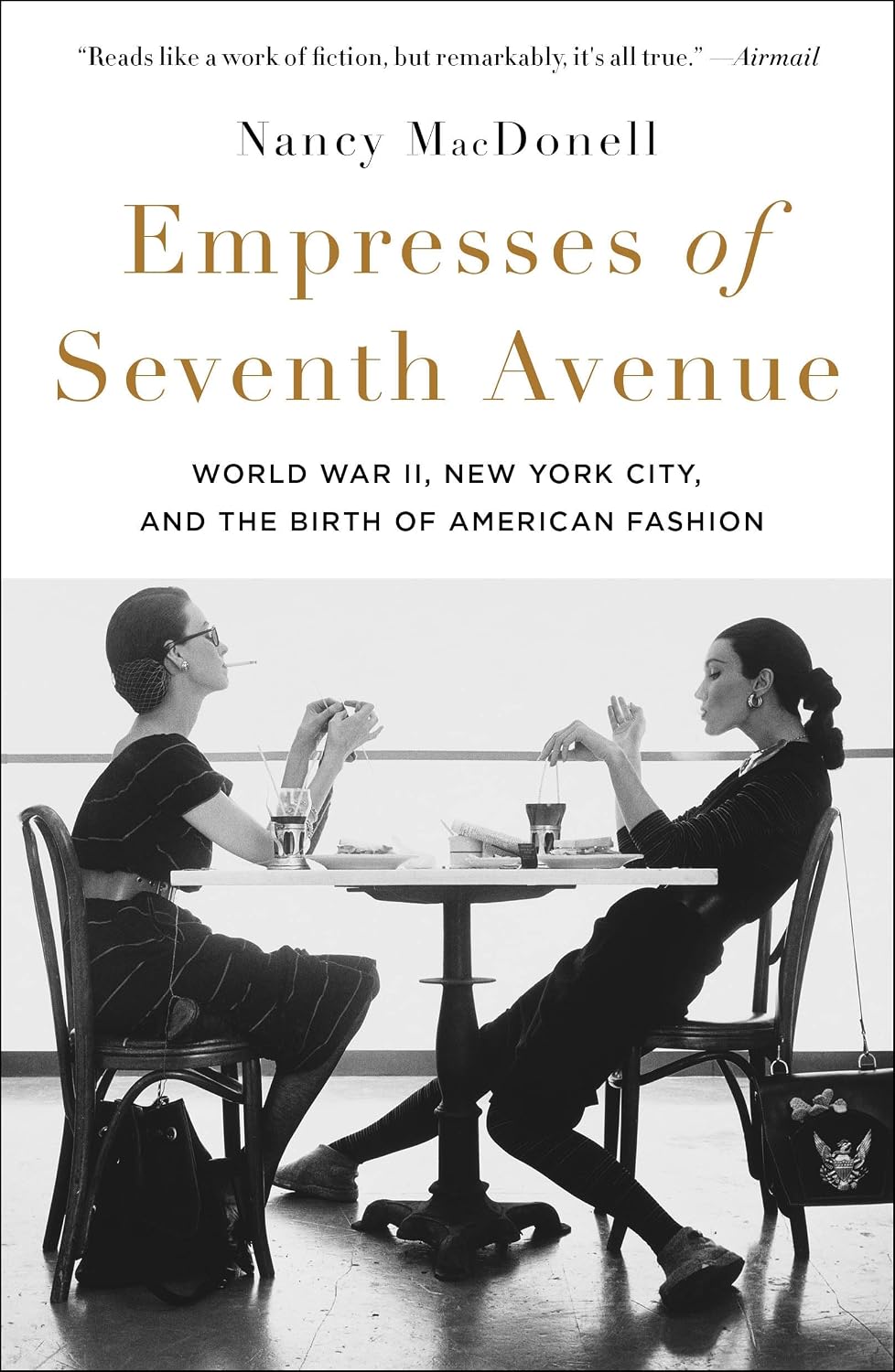
I will admit that I resisted reading Empresses of Seventh Avenue: World War II, New York City and the Birth of American Fashion by fashion journalist Nancy MacDonnell, despite the fact that several people I admire recommended it.
I’m not sure why. Over the years I have happily gone down rabbit holes related to the social impact of sewing machines, the development of aniline dyes, and the rise of that astonishing new institution, the department store. This time last year I took you with me on an unintentional series of posts on changes in ladies’ lingerie.[1] I’m as big a sucker as anyone for beautiful historical clothing, beautifully displayed—especially if it comes with a side of historical context.
I finally picked up Empresses of Seventh Avenue because of the reading I am doing around 1) female entrepreneurs and 2) life in early 20th century New York City. It turned out that the book was not on-point for either subject, but MacDonnell caught my attention from page one with a short introduction that sets the stage with French dominance in the fashion industry, and the blunt statement “Then the Nazis invaded Paris, and everything changed.” I kept reading.
MacDonnell devotes a chapter to Louis XIV’s deliberate decision, aided by his powerful finance minister Jean-Baptiste Colbert, to reshape the damaged French economy by making France the arbiter of fashion and center of the luxury trades related to it.[2] She outlines the growth of fashion reporting from the fashion dolls of the seventeenth century to the illustrated women’s magazines that appeared as a result of new printing technologies in the mid-nineteenth century. She describes the industry of Parisian haute couture , the workings of the fashion industry in United States before World War II, and how the two intersected. I found all of it fascinating.
The heart of the book, however, is the designers who created the American Look during World War II and the journalists who, almost against their will, helped make New York a fashion capital that would rival Paris. She introduces vivid personalities with the skill of a novelist: the dueling editors of Vogue and Harper’s Bazaar, journalists who were enamored with French fashion and journalists who crusaded for American design, and American designers, who were often personalities in their own right. She describes the distinctive work of each designer, turning me into a Claire McCardell fan in the process.[3]
The Empresses of Seventh Avenue lost my attention after Dior introduced the New Look in 1947—not enough history and too many spot biographies of the designers of my teen years and young adulthood for my tastes. Nonetheless, I am glad I read the book and recommend it to anyone interested in clothes, fashion history, or stories of smart women making things happen.
[1] In case you missed them: The Secret Behind the Gibson Girl’s Shape. Ida Rosenthal: Dressmaker Turned Underwear Tycoon, and Lady Duff Gordon aka Lucile
[2] Fairy tale writer Charles Perrault and his version of Sleeping Beauty make a cameo appearance. I love it when old interests unexpectedly collide with new.
[3] The cape coats!. The suits! The practical pockets!