




Shin-Kickers from History: Mary McLeod Bethune.
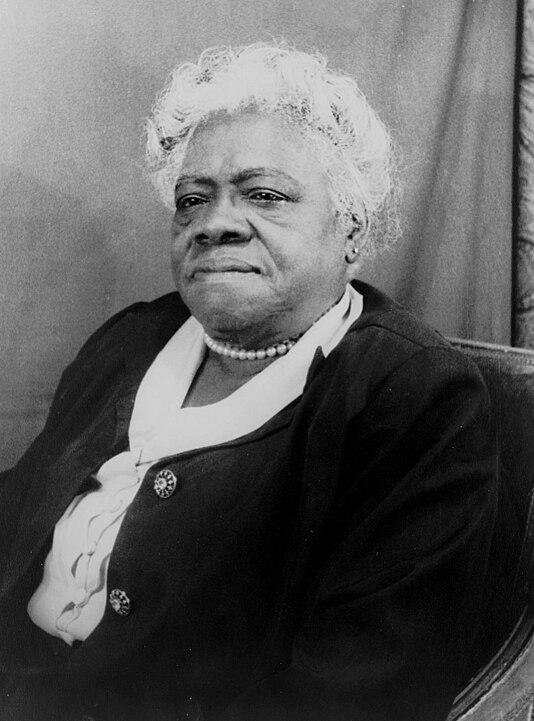
Photo credit : Carl Van Vechten. 1949 courtesy of Library of Congress
Several blog posts ago, political activist Mary McLeod Bethune (1875- 1955) stepped onto the page (okay, screen) for a moment. I realized that though I was familiar with her name, I didn’t really know anything about her. Turns out that there is a lot to know. Here are some of the highlights:
The daughter of formerly enslaved parents, Bethune was the first person in her family born into freedom and the first to receive a formal education. She went on to spend sixty years in public service, wearing many different hats but all of them in pursuit of one goal: “unalienable rights of the citizenship for Black Americans.”
After graduating from the Scotia Seminary, a boarding school established after the Civil War to educate Black girls , she attended Dwight Moody’s Institute for Home and Foreign Missions in Chicago. Unable to find a church to sponsor her as a missionary, she became an educator, teaching at schools in Georgia and South Carolina. In 1904 she opened a school in Florida, the Daytona Literary and Industrial School for Training Negro Girls. The school eventually became a women’s college and then merged with the all-male Cookman Institute to form the four-year coeducational Bethune-Cookman College in 1923. Bethune became the first Black woman in America to serve as a college president. She remained it president until 1947. The college remains once of the top historically Black colleges and universities.
While leading the college, Bethune found her way to the national political stage** through her involvement in organizations devoted to issues important to Black women in America, including voting rights. She served as an advisor to both Calvin Coolidge and Herbert Hoover. In 1935, she became the first Black woman to head a federal agency when President Franklin Roosevelt named her director of Negro Affairs of the National Youth Administration, a position she held until 1944. She established and led the Federal Council on Negro Affairs, which served as Roosevelt’s unofficial “black cabinet” on issues facing Black communities. During World War II, she was active in mobilizing Black support for the war effort and in advocating for equal opportunity in defense industries and in the armed forces—a two-pronged campaign that she summed up in a 1941 speech as “we must not fail America, and as Americans, we must not let American fail us.”
After the war, Bethune served as a consultant to the American delegation to the founding conference of the United Nations in 1945 . (In a more equal world, she would have been a member of that delegation.)
Today the Mary McLeod Bethune Council House is a national historical landmark and home to the National Archives for Black Women’s History.
From the Archives: The Nile
In Empress of the Nile, Lynn Olson referred a number of times to a book that I enjoyed in the past: Toby Wilkinson’s The Nile:A Journey Downriver Through Egypt’s Past and Present. In fact, she led me to pull it off the shelf and dip in and out.
I’m pleased to report that it’s still a good book. Here’s what I had to say about it when I first read it in 2014:
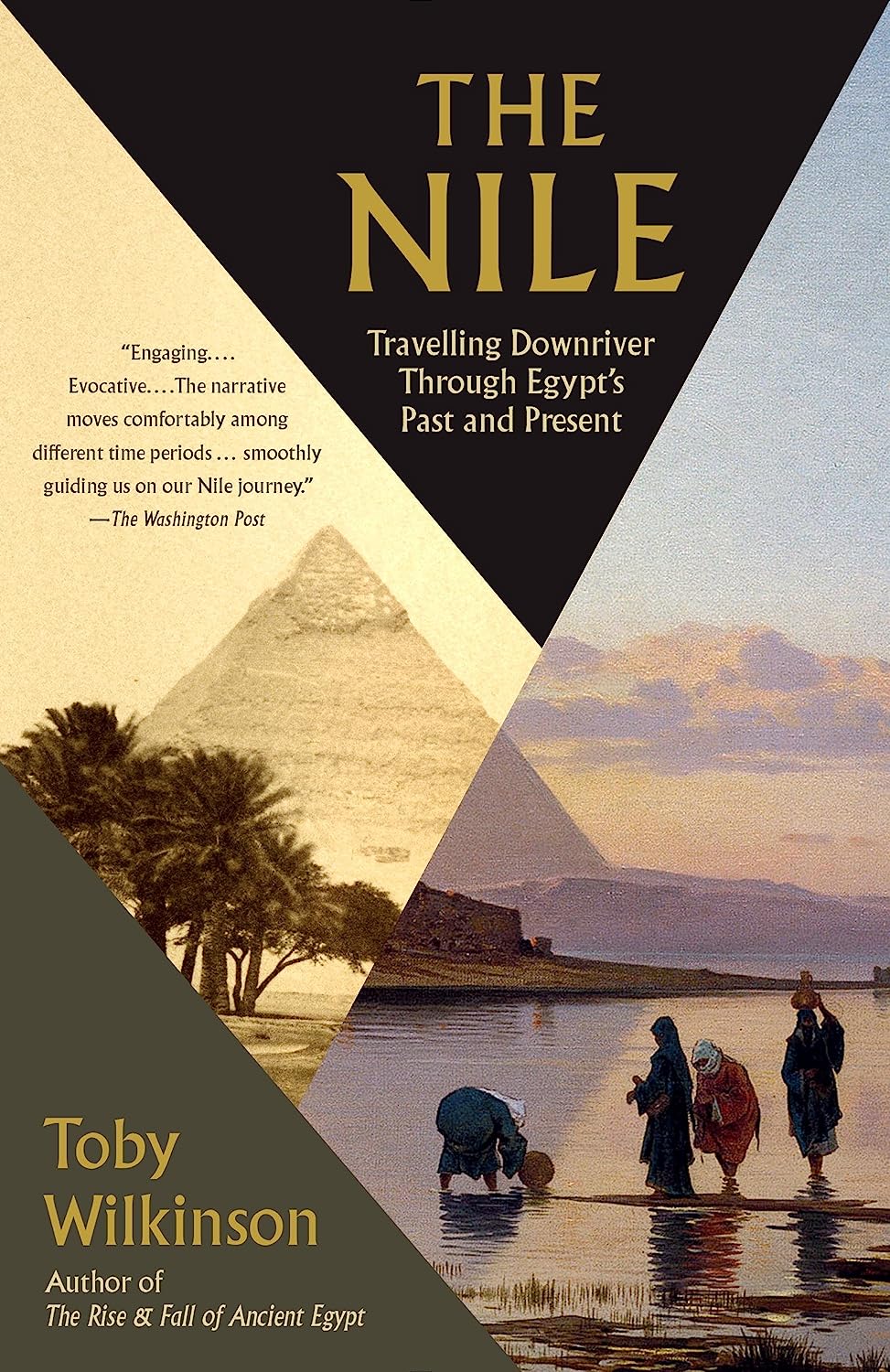 In The Nile:A Journey Downriver Through Egypt’s Past and Present, popular Egyptologist Toby Wilkinson leads the reader on a historical travelogue that moves from Aswan, home of the river’s First Cataract, to Cairo’s Gezira Island, from Paleolithic rock drawings to the Arab Spring.
The voyage that shapes The Nile is not simply metaphorical. Wilkinson floats down the river on a dahabiyah–a large luxury boat descended from the royal barges of the pharaohs. Aware that he is simply the latest in the historical line of travelers drawn to Egypt by its climate and its ancient civilizations, Wilkinson engages with their commentary as well as his own observations, creating a palimpsest of Nile voyages in the process. (Ancient Greek historian Herodotus and 19th-century British journalist Amelia Edwards are particular favorites.)
Because Wilkinson organizes his work by geography rather than chronology, his narrative is anecdotal almost to the point of stream of consciousness. His combination of scholarship and storytelling allows him to draw unexpected relationships through time. The ruins at Kom Ombo lead to a discussion of the crocodile god, Sobek, then on to ancient Egyptian tales about the dangers of crocodiles, a modern Crocodile Museum, and the impact of both 19th-century Western tourism and the Aswan Dam on the crocodile population in Egypt. Occasionally such temporal leaps are disorienting, but for the most part they are illuminating. Once a reader has learned to navigate the rapids, The Nile is worth the effort.
Empress of the Nile
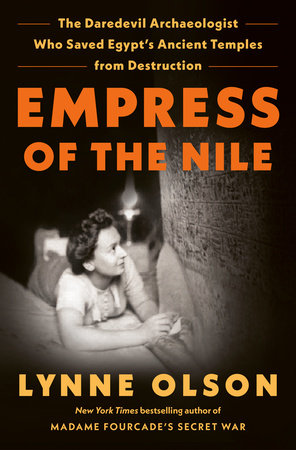
I am a fan of Lynne Olson’s work. I am also a lifelong archeology nerd. So when I first saw an notice about Olson’s newest book, Empress of the Nile: the Daredevil Archeaologist* Who Saved Egypt’s Ancient Temples from Destruction, it was an automatic pre-order.**
Empress of the Nile was also the first book I picked to read from the ever-growing To-Be-Read pile once I had some time to read non-fiction that was not related to the book I am working on.
I must admit, I have mixed feelings about the book. As always, Olson does an excellent job of weaving her story into its historical background, in this case, the history of Egyptology in France,*** ancient Egyptian history, the French resistance in World War II, Egyptian nationalism, and the early years of UNESCO.
At the same time, the book doesn’t entirely deliver on the story promised in the title.
The first section of the book deals with Christiane Desroches-Noblecourt’s early career as an Egyptologist. This section included her challenges as a woman in the man’s world of French archaeology, her work in the field in Egypt, her involvement in an unlikely resistance network during the German occupation of France, and her role in saving the Louvre’s art and artifacts from the Nazis during World War II. This was exactly the type of material I expected from the title and Olson had me turning pages as fast as I could go.
The second, and largest, section covers the international effort to save Egyptian monuments in Nubia, particularly the temples at Abu Simbel, from being destroyed by the construction of the Aswan High Dam. The story is interesting. Olson traces the diplomatic games required to fund the rescue project and the related infighting between various archaeological organizations and museums and describes the heroic blend of engineering and archeaology involved in relocating the monuments. But she loses track of Noblecourt for much of the story. She tells how Noblecourt kicked off the effort, refusing to simply accept that the structures must be lost. Moving forward, Olson repeatedly states that Noblecourt was a critical player in saving the structures. But she doesn’t really show the archaeologist’s involvement. Instead she focuses on Jacqueline Kennedy’s role in getting the United States to commit to the UNESCO project. Definitely interesting, and it made want to know about the former first lady.
In the final section, Olson returns to Noblecourt’s career.
Each of the sections is interesting, but the narrative structure doesn’t hold together because of Noblecourt’s repeated absence in the middle.
Bottom line, I enjoyed the book, but not as much as I expected. Dang.
*Spell check doesn’t like that extra a, but the books about archaeology that I read as a nerdy little girl who dreamed of working on digs all spelled it that way and I do, too. (And in this case, so does Random House.)
** For those of you who don’t know, publishing industry wisdom is that pre-orders are good for books and authors. Pre-orders tell publishers and retailers that people are interested in the book, in theory generating early buzz which help sells more books. If you plan on buying a book anyway, pre-ordering it from your preferred book purveyor is a way to help the author. (Does it actually work? I don’t know.) I also think of it as buying future Pamela a surprise present because I often forget I’ve ordered it. (And yes, this does mean I occasionally pre-order a book twice, thereby getting an unintended step forward on Christmas shopping.)
***A fascinating story with ties to Napoleon’s attempts to conquer Egypt.