




Wire Services and Carrier Pigeons
Over the last few years, I’ve spent time learning about the larger history of journalism in order to understand Sigrid Schultz in context.
The growth of the wire services was an important part of that story. The services were predecessors to the foreign news bureaus that developed after World War I and then their competitors.
As the name implies, the wire services were founded in the mid-nineteenth century in response to the development of the telegraph (i.e. the wire). But I was surprised to learn that that one of the earliest series, Reuters, began as a “bird service” rather than a wire service.
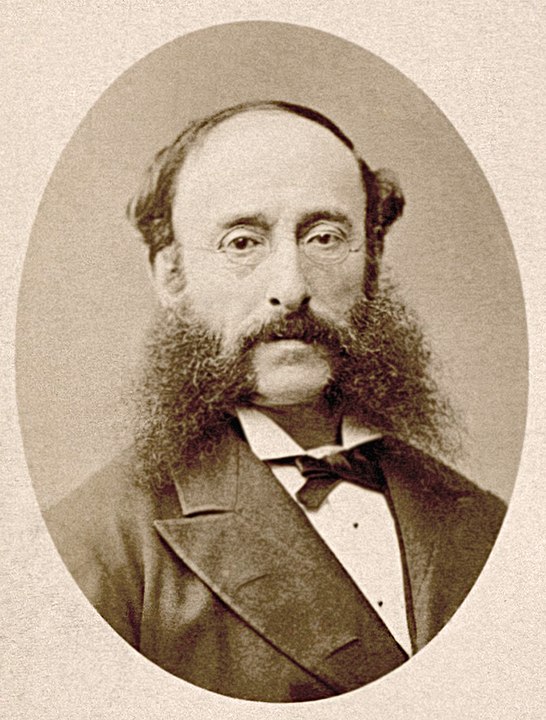
In 1848, when Europe was torn by revolutions, German-born Paul Julius Reuter worked in a Paris-based news agency, where he translated extracted from French publications to send to papers in Germany. He noticed an opportunity in the form of a gap in telegraph service between Brussels and Aachen, the terminal points between the French-Belgian and German telegraph lines. News traveled between the two cities by mail train. Anyone who could find a faster way to send financial news would have a serious advantage. Reuters left Paris and set up his own news agency in Aachen, using carrier pigeons to fill the gap and send information from the Paris stock exchange to Berlin.
The advantage only lasted until the telegraph connected the two cities a year later, but it was long enough to establish Reuter as a player in the news agency game. When the new Dover-Calais line opened in 1851, he relocated to London, where his company grew into one of the great European news services.
Constance Harvey Indulges in a Bit of Monkey Business
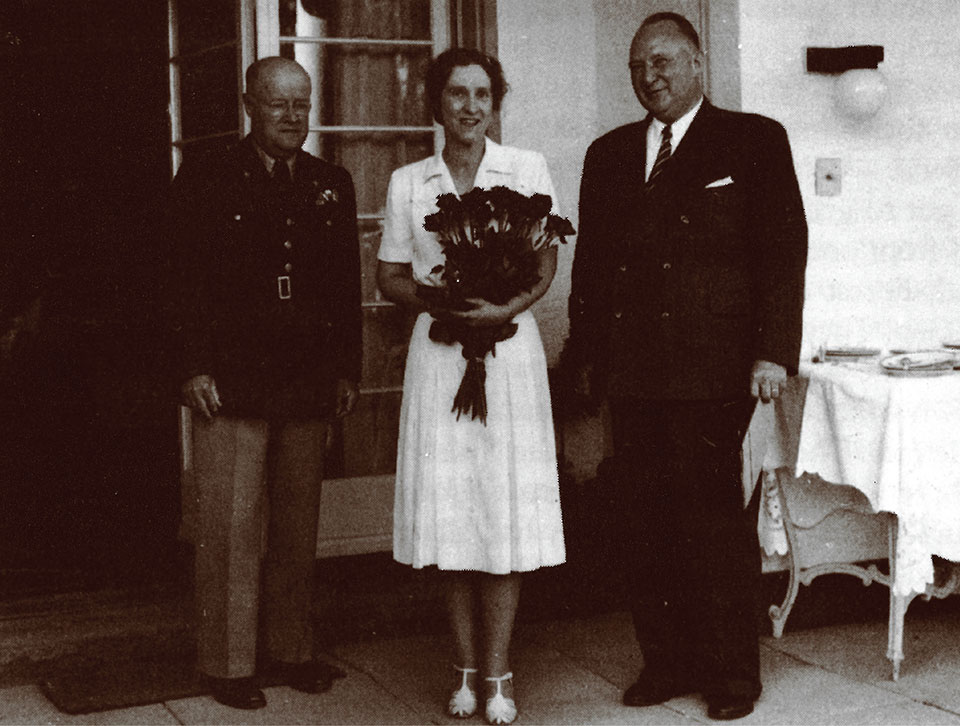
Constance Ray Harvey was an American Foreign Service Officer at the beginning of World War II—one of the first women to hold that position.* She was assigned to the U.S. Consulate in Lyon, in Vichy France, in January 1941. Once there, she used her position as Vice Consul to gather information and smuggle it out of France to the United States to General Barnwell Legge, the U.S. military attaché who ran a successful information network out of Bern, Switzerland.
Harvey’s personal contacts in occupied France gave her access to information about the war. Her role as Vice Consul gave her access to diplomatic correspondence pouches. The pouch traveled from Lyon to Bern, and then across Spain and Portugal to Washington, with a stop in General Legge’s office in Bern. Harvey was the last person to handle the bag in Bern, so she was able to add information without fear of another consular employee knowing what she was forwarding to Legge.
More than once, she delivered the diplomatic pouch to Legge herself, driving from Lyon to Switzerland—a trip that required her to deal with Vichy French and German Gestapo officers at the border. One of the most important, and dangerous, documents she carried personally was a plan that showed all the German anti-aircraft posts around Paris. She later remembered that when she handed it to Legge, he went white and said “Oh, for goodness sake, you just brought this in by hand?” She had used one of her favorite tricks to get it through—a variation on the magician’s principle of misdirection. Her car’s glove box had a separate key—an unusual feature. She would lock the documents in the glove box and tuck the key into the bosom of her dress. When she got out of the car to talk to the customs’ officials, she would leave the car keys dangling in the ignition—nothing up her sleeves!
In addition to smuggling information to Legge, she was part of a network that helped prominent Belgians escape, some of whom carried counterfeit Belgian passports signed by C.R. Harvey.
In November, 1942,—almost a year after the United States entered the war* and two years after Harvey began her intelligence collecting activities—Constance Harvey and the other employees of the American consulate in Lyon were interned by the Vichy government. They were housed in h hotels in Lourdes until the Germans took them into custody and relocated them to Baden-Baden, where they were held until February, 1944.
Harvey received the Medal of Freedom in 1947 for her service to the French underground. Talking about her experiences later, she minimized the importance of her role: “Quite a few people were [given the Medal of Freedom] who had been up to some monkey business—just to help out.”
*Her first post was in Italy in 1931. From there she was transferred to Switzerland after the Munich Conference in 1939.
*I will never be able to type that phrase again without hearing Sigrid Schultz saying indignantly “Germany declared war on us first!”
In Memory of Jack French
A reader informed me last week that long time reader and occasional contributor of guest posts Jack French recently died after a short illness.

One of the best parts of writing this blog is getting acquainted with readers. You send me emails commenting on posts, pointing out typos,* recommending books, and sharing ideas. We end up in conversation over time. Sometimes I even get to meet you in real life.
Jack French took things one step further. He didn’t just share stories and links to interesting stuff. He wrote occasional guest posts on topics that were very much on point for the blog.
Here are links to his posts over the last few years:
The Lady Who Invented Monopoly
In Which a History in the Margin’s Reader Recommends a Book
Two WASP Pilots Show the Men How It’s Done
Thank you for the stories, Jack. I will miss you.
*Which I go back and fix, because people find blogs long after the fact.