




Happy Fourth of July
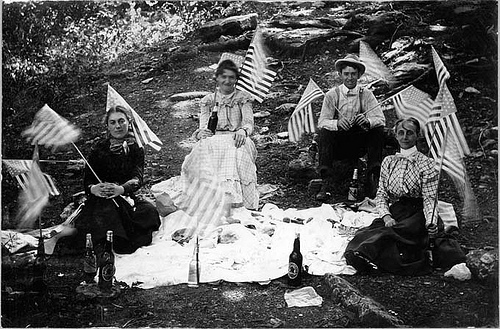
Here in the United States, we are celebrating the Fourth of July: one of those holidays where the point is often lost in the trappings.
Take a moment in your celebrations to remember what we’re celebrating:
“We hold these truths to be self-evident, that all men are created equal, that they are endowed by their Creator with certain unalienable Rights, that among these are Life, Liberty and the pursuit of Happiness.”
As a society, we’ve never managed to live up to it. That doesn’t mean we shouldn’t try.
Uncle Sam Wants You, Too–Pt 2
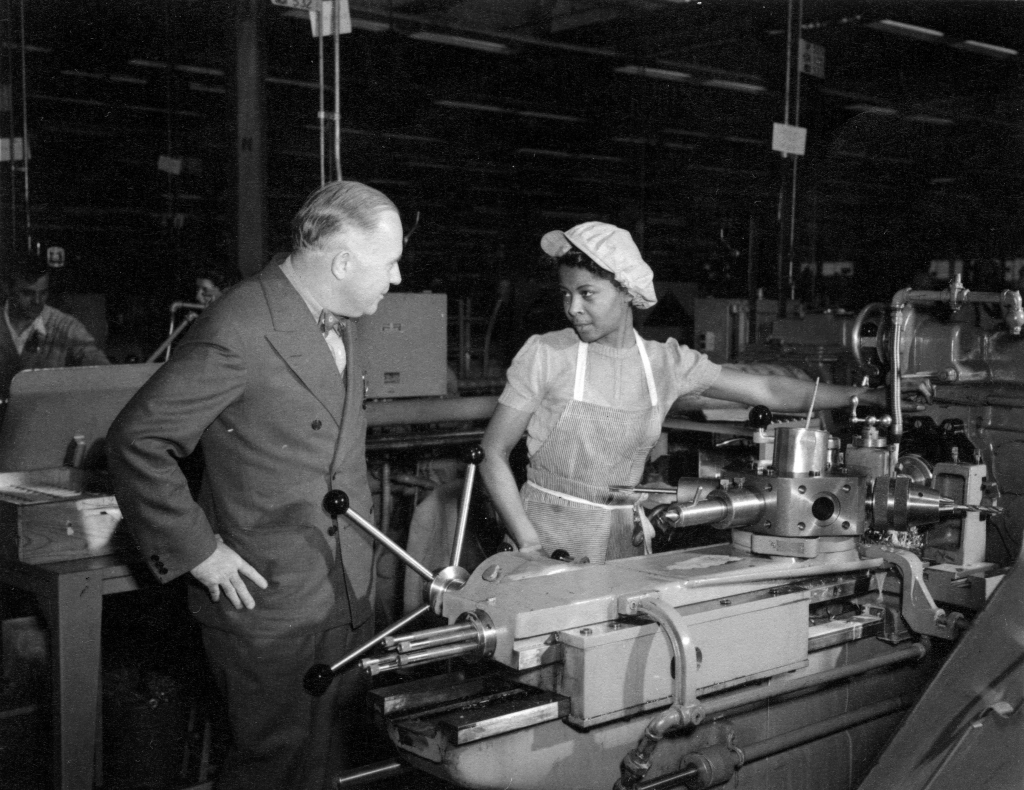
Sayde R. Carter working a lathe at the Sperry Gyroscope plant on Long Island, New York. Hagley Museum and Library.
After my last blog post, about how women were recruited for war work during World War II, a dear friend and regular reader asked me whether similar ads were run in publications read by minorities. It’s a good question, and one I’m slightly ashamed that I didn’t ask. Certainly the women in the recruiting posters that I found all had white faces.*
I don’t have a solid answer, but here’s what I found in a first pass:**
- I found nothing about ads in magazines aimed at Black women, though such magazines existed. I found references to ads for women in the Army in black newspapers. Applications were available in all post offices, but Black women were often turned away when they tried to apply. Even when Black women were given applications, the number accepted was small. The Women’s Army Auxiliary Corps (WAAC) , later the Women’s Army Corps (WAC), had a policy limiting the number of Black women to ten percent of the whole. Those who were allowed to enlist were often given menial jobs regardless of their qualifications. Initially no Black units were assigned overseas. The one exception to this was 6888th Central Postal Directory Battalion, which was sent first to England and then to France to deal with a huge backlog of mail.
- The other U.S. military services did not accept any Black women initially, and never accepted many.
- Black women (and men) were initially turned away from factory jobs by managers who preferred to hire white men, and failing that white women. In the summer 1941, President Roosevelt became aware of the widespread hiring discrimination thanks to activists Mary McLeod Bethune and A. Phillip Randolph. He signed an executive order banning racial discrimination. Ultimately, more than half a million “Black Rosies” worked in shipyards and factories, though my guess is that they continued to face discrimination on the job.
- If the National Archives excellent blog, The Unwritten Record,*** is to be believed, I didn’t find images of Black women in war work recruiting posters because they weren’t included in war materials produced by the Office of War Information—erasing them from the story even as it happened. ****
None of which answers the original question, which would require some nitty gritty academic work in original sources.
If any of you have something to add to the story, I would love to hear it.
* Asking “Who’s not in the picture?” is as important as “Who’s telling the story?” The learning curve continues. Please, please, ask me the hard questions when I fail to ask them myself.
**I limited my search specifically to Black women, rather than looking for minorities as a whole.
***The Unwritten Record is produced by the Special Media Records Division of the National Archive. I learn something new with every post.
****Again, for those sitting in the back: “Who’s telling the story?” is a good question to ask.
Uncle Sam Wants You, Too
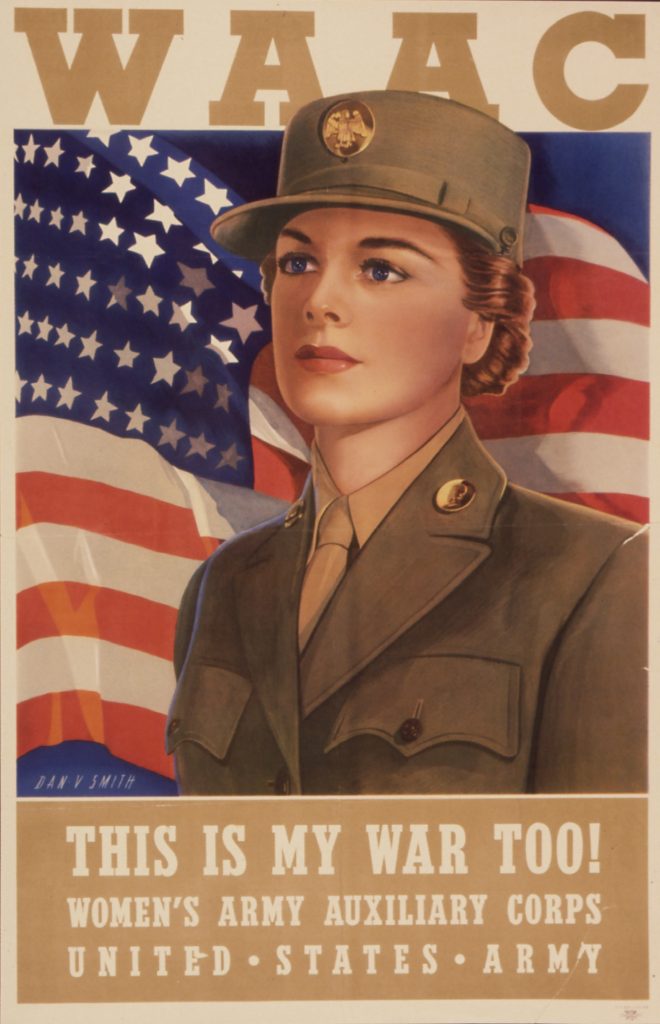
As I’ve mentioned before, in the course of working on Sigrid Schultz’s life, I’ve made an effort to track down women whose names appear in her correspondence.* I’ve found some interesting stories in the process.
I was scanning the Chicago Tribune looking for information on a woman named Ann (or Anne) Bruyere, who was reportedly filing stories from the front for the Tribune,** when I saw a boxed notice in the middle of a list of casualties in the February 4, 1945 paper. It read:
ARMY NEEDS WOMEN Lengthening lists of wounded have intensified the army’s immediate need of women to learn to be medical technicians, the army recruiting station here has announced. Women desiring information on the army’s medical technician program were urged to call Harrision 4390
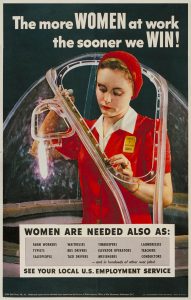
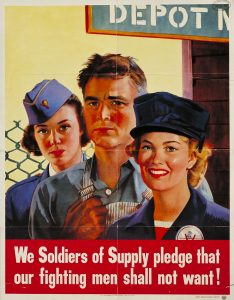
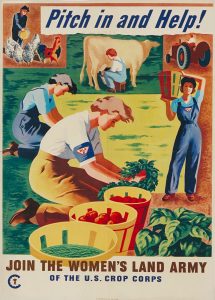
I knew women had served in many capacities in the war, in and out of the military. But I had never thought about efforts to actively recruit women for jobs outside of the military.*** But of course, Rosie the Riveter didn’t just show up at the factory door and ask for work, did she?
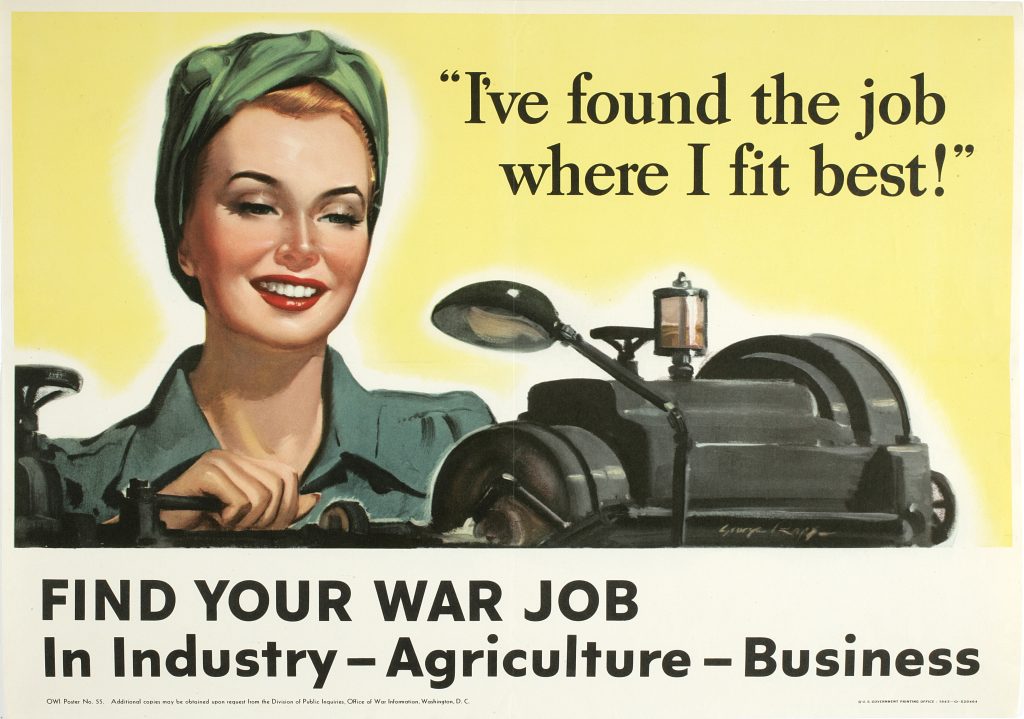
In fact, that small ad in the Tribune was part of a major campaign coordinated through the Office of War Information to recruit women into the wartime labor force. Posters urged women to find their war jobs. Government flyers explained the types of jobs that were available and told women how to register for them In particular, magazines aimed at women encouraged women to enter male fields that were short of workers, directly in advertisements**** and indirectly in fiction with working women as heroines. The choice of the verb “recruit” was deliberate: women’s war work was portrayed as national service—and rightly so.
* I plan to discuss the why and the therefore what of this tactic in my newsletter in coming weeks. If this sounds like the kind of thing you’re interested in, you can subscribed here: http://eepurl.com/dIft-b
**Stay tuned for more on Anne Bruyere and other lesser known women reporters in later posts.
***And yes, I realize this ad is for an army program, but it seems to be for a program other than the Women’s Army Corps (WAC).
**** Ads for jobs ran alongside ads run by corporations to encourage women to join the war effort. For example, an ad run Eureka vacuum cleaners proclaimed “You’re a Good Soldier, Mrs. America.”