




Home for Christmas, the 2021 Edition

Last year, like much of the world, My Own True Love and I stayed home for Christmas. This year, we’re heading out to visit my family. I’m pretty excited. It’s been more than two years since I’ve seen them. (Also like much of the world, alas.)
As I have done over the last several years, I’m giving myself a holiday from blogging.* I’ll be back in January with some stories from the margins of history (I have a list!), some books you ought to read, and some glimpses of things I’m thinking about related to the new book.
In the meantime, have a merry/jolly/happy/blessed time as you celebrate the victory of light over the darkness in the tradition of your choice.
*I must admit that it feels a bit like cheating this year since I shared old posts from the archives for all of October and part of November.
1921: A Year in Review (With a brief nod to 1941)
For my last substantive post of 2021, I was torn between looking at 1921 and 1941. I finally decided that 1941 had received lots of attention in Historyland, at least in the United States, thanks to the 80th anniversary of the bombing of Pearl Harbor. Every major media source, and a lot of minor ones, found a version of the story to tell. (I had a chance to get into the act on Bloomberg Radio’s Balance of Power program, talking about new roles for women in World War II and the influence of those roles on the feminist movement of the late 1960s and 1970s. ) * So, 1921 it is.

The year was marked by trailing issues from World War I, all of which had consequences for the future:
- Allied representatives in Paris set the precise terms of German war reparations, with a payment schedule that extended to 1988. (You can see why Germans might have been cranky about this.)
- A related conference on disarmament in Washington DC, resulted in stringent limitations on Germany’s right to rebuild its military forces.
- The Russian civil war ended, leaving Lenin and the Bolsheviks in control, and a massive famine underway.
- Great Britain and Irish nationalists signed a treaty establishing four-fifths of Ireland as the Irish Free State and a member of the British Commonwealth, a solution that wasn’t really satisfactory to anyone.
- The United States and Germany finally signed a peace treaty.
At some level you could argue that everyone lost the peace.
Looking beyond the world of peace treaties and tying up loose ends, here are some highs and a lot more lows:
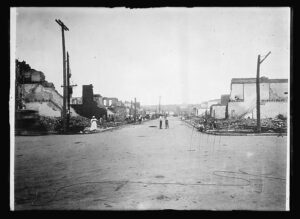
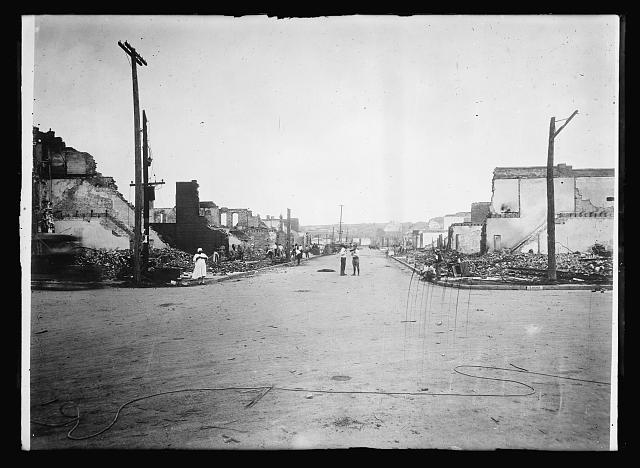
- Race relations in the United States were becoming more violent. The membership in the Ku Klux Klan was on the rise. The riots in Tulsa and the destruction of “Black Wall Street” were just an extreme example of events that occurred in many places across America.**
- Canadian scientists Frederick Banting and Charles Best isolated the hormone insulin and, with the help of a third scientist, James Collip, began the series of experiments that would allow its commercial production as a treatment for diabetes. Banting and Best won a Nobel Prize for their work in 1923.
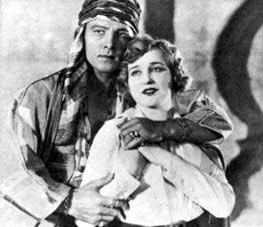
- Rudolf Valentino starred in The Sheik. (Not sure if that’s a high or a low, quite frankly. )
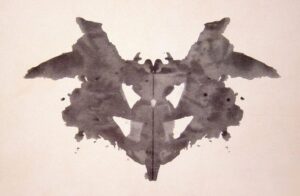
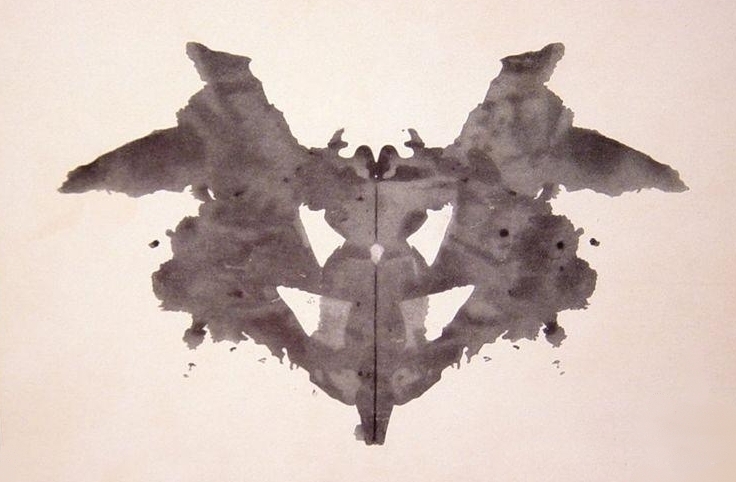
- Swiss psychiatrist Hermann Rorschach introduced what became known as the “Rorschach test,” in which patients are evaluated based on what they see in a series of ten inkblots. It was widely used through the 1960s as a diagnostic tool. The more I think about it, the weirder it seems.
- The Emergency Quota Act, enacted in response to strong anti-immigrant feeling, limited the number of immigrants allowed into the United States. It was mostly aimed at immigrants from Southern and Eastern Europe.
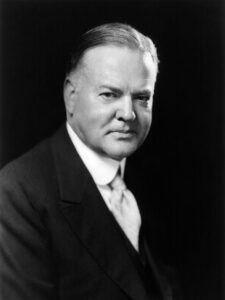
- Herbert Hoover extended the European relief program for which he was responsible into Russia, where millions were starving as a result of the Great Famine. He received a lot of grief for helping, *gasp* communists, but he insisted that starving people needed to be fed without reference to their politics. (Yes, Herbert Hoover, who would fail miserably at providing relief to Americans a few years later during the Great Depression. )
- Adolf Hitler became the chairman of the Nazi Party.
- Coco Chanel introduced “Chanel No. 5”—a definite high point as far as I’m concerned.

Did I miss something important?
*Obviously there are lots of stories from 1941 that didn’t receive the same degree of media attention this year, including General Erwin Rommel’s arrival in North Africa with the Afrika Korps and Hitler’s invasion of Russia.
**If you want a clear example of how the experience of Black Americans has been left out of history as we are taught it: the Tulsa riots do not appear in any of my historical timeline reference books, all of which were printed in the last twenty years. Just to put this in context: one of them includes the winner of that year’s Rose Bowl game and another noted the first use of two way radios by police. The real problem here is that if you don’t already know about the Tulsa riots, you won’t realize that they are missing.
1821: A Year in Review
As far as my mental timeline is concerned, 1821 means the beginning of the Greek War of Independence, which I first became aware of thanks to Lord Byron, the baddest of all the bad boys of Romantic poetry. (This does not make me unique. Byron also introduced many of his European contemporaries to Greek aspirations for independence from the Ottoman Empire. His death at Missolonghi* led to an outpouring of pro-Hellenic support.)

Eugene Delacroix’s Massacre as Chios was used to raise money to fund the rebellion.
By the beginning of the nineteenth century, Greeks had been part of the Ottoman empire for roughly four hundred years. For much of that time, they had enjoyed a privileged position. Educated Greeks dominated the Ottoman administration and Greek merchants had a near monopoly on trade in the Turkish Mediterranean.
Privilege is not the same thing as independence, however.** In the late eighteen century, vague discontent turned into Greek nationalism thanks to two international movements. Romantic Hellenism created an interest in ancient Greek mythology and literature throughout Europe, bringing with it a belief in ancient Greece as the birthplace of democracy, and contemporary Europe.*** At the same time, the revolutionary ideals of the American and French revolutions led nationalist groups across Europe to dream of new states based on shared languages and culture rather than imperial provinces shaped by the political maneuvering of the great imperial powers.
The Greek war of independence began on March 25, 1821, with an unsuccessful raid into Moldavia by a group of Greek expatriates who belonged to a secret society dedicated to liberating Greece from Ottoman rule. Two weeks later, a popular uprising convulsed the Peloponnesus. The Turks retaliated viciously.
At first, European governments, which were not by and large supporters of nationalist aspirations on the American and French model , were hostile to the Greek cause. European popular opinion was not. Philhellenes rallied to the cause of Greek independence. They organized balls, breakfasts, and exhibitions to raise money to help the rebels. Women donated their jewels to the cause. Young men followed Lord Byron’s example and volunteered to serve with the rebel army.
Public opinion finally swayed political power. Britain, Russia, and a reluctant France forced the Ottomans to accept Greece as an independent nation in October 1827.
It turns out that Europe’s monarchies had reason to be twitchy about independence movements: it was a hot issue in 1821. Peru, Guatemala, Mexico, Panama, Santo Domingo, El Salvador, and Venezuelan all proclaimed their independence from Spain.
But wars of independence weren’t the only thing that happened in 1821. (What a surprise!) Here are some of the highs and lows, in no particular order:
- Egypt invaded and conquered the Sudan, with a nod of approval from Britain —basically the opposite of a war of independence.
- French linguist Jean-François Champollion published his work on deciphering Egyptian hieroglyphics using the Rosetta Stone. (An event that caught my imagination as a very young history nerd.)
- English scientist Michael Faraday discovered electromagnetic rotation, the principle behind the electrical motor. (An event that did not catch my youthful imagination, alas.) He went on to make other discoveries that allowed electricity to become a powerful new technology rather than a science nerd party trick. Obviously more important than deciphering hieroglyphics in the broader scheme of world history.
*From fever, not on the battlefield. Just so we’re clear.
**Revolutions often begin among the relatively privileged who aspire to more rather than among the poorest of the poor.
****Lots there we could unpack, but we will leave it for the moment.