




History on Display in My Own Backyard: The DuSable Museum of African American History
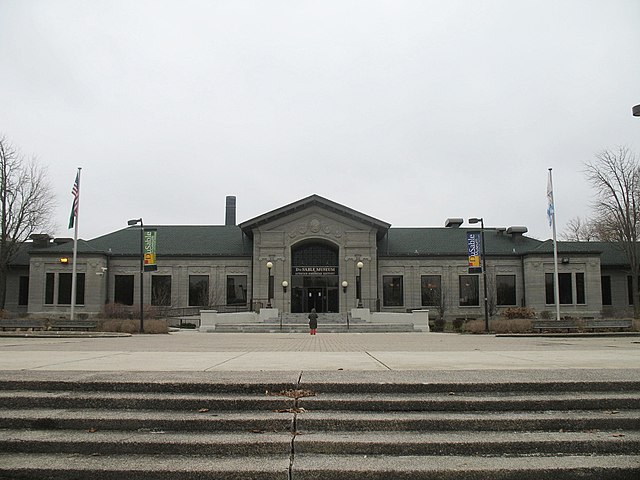
In early December, My Own True Love decided to make a long overdue visit to The DuSable Museum of African-American History, which is located roughly six blocks from our house. * We gave ourselves two hours, with the promise that we would return if necessary. And it will definitely be necessary. We only got through part of one floor, and we missed what looks like a spectacular immersive exhibit on the 1963 march on Washington.**
I had visited the museum thirty years previously, when my undergraduate advisor was in town.*** I had vivid memories of crowded display cases and exhibits with a homemade feel that were both passionate and heartbreaking. And it told the stories that were not told in most (maybe any) historial museums thirty years ago—including the first substantive exhibit I had ever seen about the Middle Passage. As a whole, the museum reminded me of a underfunded small town local history museum, held together by glue sticks and dedication. A lot has changed in thirty years, in terms of the history we tell and the technologies we use to tell it.
We didn’t know it at the time, but the museum was celebrating its 60th anniversary. As a result, the first exhibit we saw was dedicated to the career of artist/educator/activist Margaret Taylor Burroughs, who founded the museum, then the Ebony Museum of Negro History and Art, in her home in Chicago’s Bronzeville in 1961. To my shame, I had never heard of Burroughs, who was a major player in Chicago’s Black Renaissance. I was fascinated, and I intend to seek out more of her artwork. Her black and white prints are powerful.
I made it through two additional exhibits. The first looked at the role of Black soldiers in the United States army from the American Revolution through WWI, focused in part through the experience of Illinois units. It included excerpts from letters from an officer in WWI , which were fascinating and (again) heartbreaking. It took a side trip into the experience of three Black women who were YMCA volunteers in the war, which was worth the visit all by itself. (And possibly a blog post. ) And it ended with Chicago’s experience of the Red Summer of 1919, after the troops came home. The second told the story of Harold Washington’s term as mayor of Chicago, using an animatronic figure of Harold Washington in his mayoral office and news footage from the time. It’s a period of Chicago history that I lived through, and followed avidly . The first exhibit made me angry. The second made me cry, just as I cried at the time of Washington’s death.****
I have no idea what exhibits are located on the lower floor. I don’t plan on waiting another thirty years to find out.
* The museum is named after Jean-Baptiste Pointe DuSable, the Haitian-born son of a French mariner and an enslaved woman of African descent, who was the first non-indigenous person to settle at the site that would become Chicago.
**One of the security guards spoke to each person as they left the exhibit ,“Did you cry?” he asked. “I cry every time I see it.” (As an aside, I’ve never seen such friendly, helpful security guards in a museum. They acted like hosts.)
***I am sure I am not the only one who has been pushed inspired to visit a local attraction by the wishes of an out-of-town visitor.
****Is anyone else finding historical museums deeply moving these days, even when they include slightly creepy animatronic figures? Or is it just me?
Jonathan Spence and My Introduction to Chinese History
I just learned that eminent Chinese historian (or more accurately, historian of China) Jonathan Spence died on December 25. My world feels a little smaller.
I should make it clear that I never took a class with Dr. Spence and never met him personally. Nonetheless, he played a role in my introduction to Chinese history at the hands of fellow graduate student Rob LaFleur* over the course of several years.
For five years in the late 1980s and early 1990s, Rob and I team-taught three of the four units in a course for the University of Chicago’s continuing education program. The continuing education program was (and is) whimsically called the Compleat Gargoyle; our course was grandly titled Asia and the Middle East. Rob was responsible for material dealing with China, Japan, and Korea. I was responsible for South and Southeast Asia and the Islamic world. It was a survey class writ large: 30 weeks in which to introduce our students, and each other, to boiled down versions of complex cultures and thousands of years of history. (As I remember it, Korea and Southeast Asia got short shrift.)
It was also a graduate seminar of two. On the ride home after each class we had intense discussions about not only the material we had covered in class, but about how to teach, and about questions of historiography, epistemology, R.G. Collingswood’s The Idea of History,* and post-modern theory in various forms.** It was, quite frankly, what graduate school should have been and so often was not.
I don’t know about our students, but I learned a lot. In fact, I would argue that Rob’s intellectual fingerprints are all over anything I have written about China in subsequent years.
Which brings me to three books by Jonathan Spence that Rob assigned at various times and that earned a permanent place on my shelves.**** All three are brilliant, not only in their treatment of specific subjects but as master classes in how to write history that is more than just one dang thing after another.*****
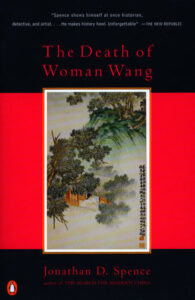
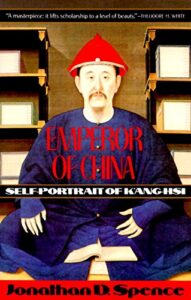
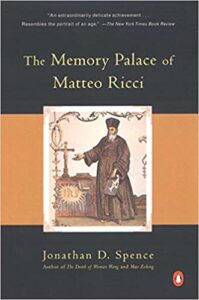
May I suggest for your reading pleasure: The Death of Woman Wang, Emperor of China: Self-Portrait of Kang-hsi, and The Memory Palace of Matteo Ricci.
I’m tempted to re-read them myself.
* Now Dr. Robert LaFleur, professor of history and anthropology at Beloit College, and a great teacher. You don’t have to take my word for it. Check out his work on Confucius’s Analects in The Great Courses.
**A formative book for both of us
*** Unavoidable at the University of Chicago at the time
**** I do not say this lightly. I am currently making hard decisions about what books to keep and what books to pitch. This is not procrastination. This is self preservation. My study shelves runneth over, and the piles on the floor are daunting.
*****At first I typed “one dang think after another. “ That is, in fact, what I aspire to as a writer.
Same Song, New Verse–Another Year of History Nerdery

It’s become a tradition. I devote my first post of the year to writing about the historical topics that I expect will occupy my time in the coming year. It’s a way to put my thoughts in order about the projects ahead. You all are kind to indulge me.
This year I could simply refer you to last year’s post. Nothing much has changed, except that a major archive reopened in October. (And will hopefully stay open. Keep your fingers crossed for me.)
I spent 2021 deep in research on Sigrid Schultz, the realities of being a foreign correspondent,* the rise of Nazi Germany, and related topics. As the blog posts of the last year will attest, I went down lots of rabbit holes in the process. (I love a good rabbit hole!)
As we move into 2022, I am still deep in research mode. It is exhausting and thrilling. I am finding some fabulous stuff, and I am wandering down lots of rabbit holes. Which means lots of stories to share. In fact, there are so many stories to share that I can’t keep up. My growing list includes some kick-ass women you probably haven’t heard of, an unlikely German social organization (think a cross between Boy Scouts and hippies), robots, and rocket science.
My hope is to finish my archival work by the end of January** and then fling myself into the writing. I’ll keep you posted.
What historical rabbit holes are on your list for 2020?
*At some level, the real challenge is not finding the story, it’s getting the story to the editors at home. Sigrid Schultz and her colleagues/competitors spent a lot of time looking for the optimum balance between speed, cost, and reliability.
**I’m not sure this is even possible. But a lady can dream, right?