




Talking About Women’s History: Three Questions and an Answer with Kim Taylor Blakemore
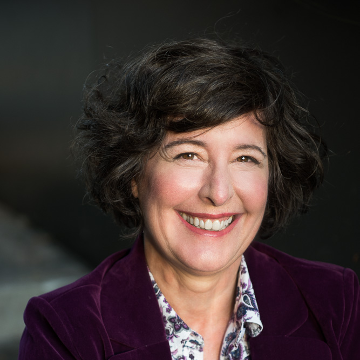
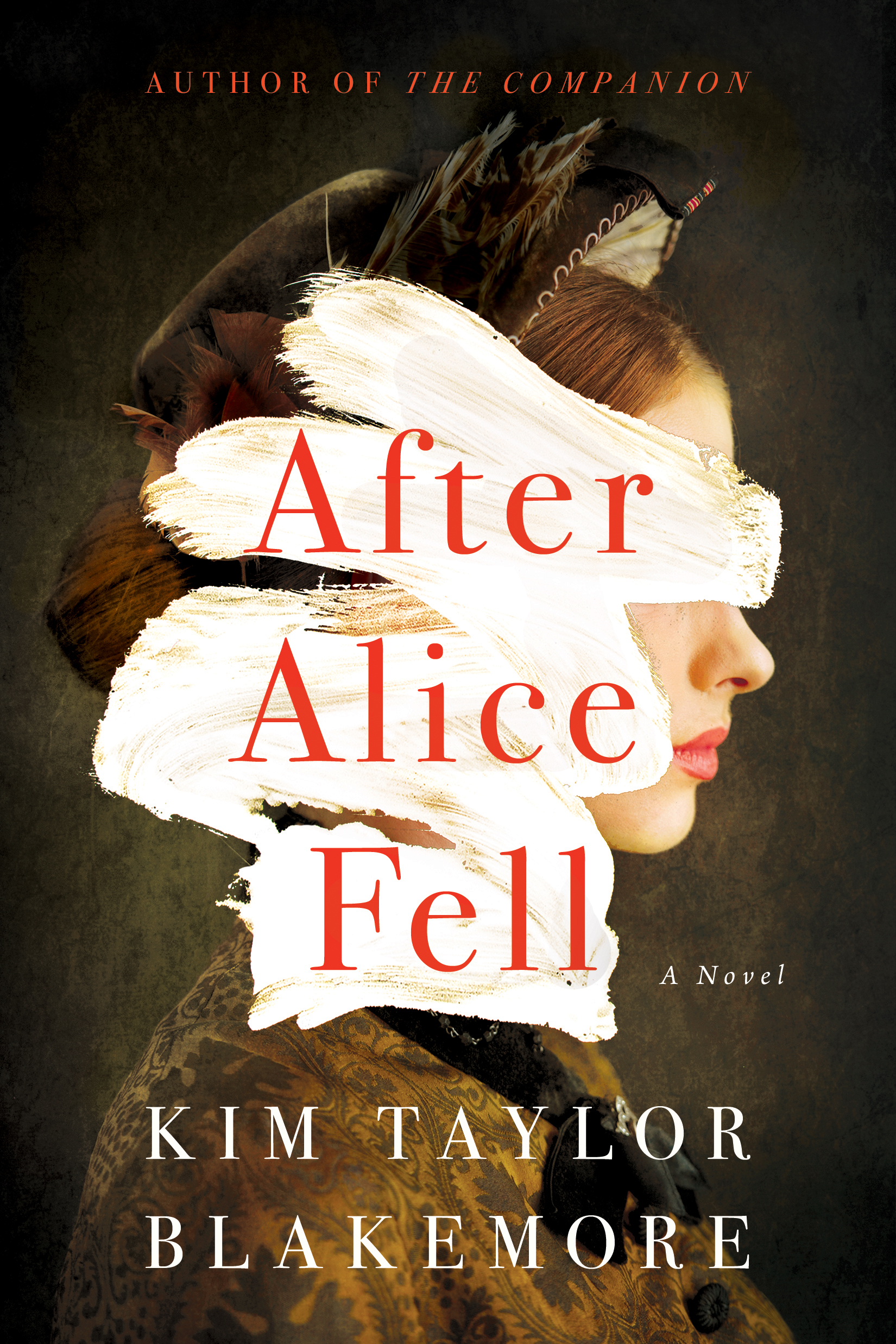
Kim Taylor Blakemore is the author of the bestselling historical thriller AFTER ALICE FELL and THE COMPANION, lauded by Publisher’s Weekly as “a captivating tale of psychological suspense.” She is also the author of BOWERY GIRL and WILLA Literary Award from Women Writing the West* for Best Young Adult novel, CISSY FUNK. Her upcoming historical suspense, THE DECEPTION, is due out Fall 2022 from Lake Union Publishing.
She is the founder of Novelitics, providing developmental editing, writing workshops, master classes and community to writers from around the US and Canada.
Outside of writing and teaching, she is a history nerd and gothic novel lover. She lives with her family in the Pacific Northwest and loves the rain. Truly.
Take it away, Kim!
Unlike many historical novelists, you focus on non-elite, and even criminal, women of the past, what you describe as “the thieves and servants, murderesses and mediums, grifters and frauds.” What types of sources do you rely on to create rich fictional characters drawn from social classes that are even less well documented than historical women in general?
I love writing about the outsiders, about women who live by their wits and ingenuity, whether criminal or not. I am obsessed with learning how common people lived, how the big and small events affected their daily lives. What they ate, how they farmed, what they bought versus made from scratch – and most particularly how a woman without means made her way in the 19th century world that I write about. So, research comes down to putting together a mosaic – mill records with the mill girls’ wages and hours put together with the bill from the dry goods store. A random news article of a crime matched with a map of the alleys and saloons and tenements.
For The Companion I needed to know where women prisoners were housed in New Hampshire in 1855 – and found both the Warden’s Reports in the NH State Library and actual trial records in the NH State Archive. For After Alice Fell, I needed the 1865 Director’s Report for the New Hampshire Asylum for the Insane. For my upcoming book The Deception, I located spiritualist newspapers such as Banner of Light, and read autobiographies of 19th century clairvoyants and those who exposed them as frauds.
A big trick is to get the archivists and historians involved. I will tell them the basic plot of the story, what I’m looking for specifically, say railroad routes, and then say “And anything else you think might be important or interesting.” The material that these professionals come up with is a gold mine – newspapers, diaries, letters, tintypes, poems. Incredible stuff. Detail by detail, I build a world for the women’s story.
The question every writer hates: what inspires your stories? Do you begin with a real-life incident or piece of historical data ?
I love this question! I have too many ideas, so it’s hard to narrow down and settle on what I want to write.
For inspiration, sometimes it’s a character I see or hear first, and I’ll free write a bit on that and see who they are. I write historical mystery/thrillers so there’s a crime, of course. And that can come from reading old newspapers from the period and my eye catches on some small, odd three-line article or a series of articles on a sensational “Trial of the Century” (there were many of those in the 19th century). Sometimes it’s while I’m driving along through the woods or along an isolated road and ask, what the heck would happen if…
Then I think through the what ifs and who and hows and eventually the whys. Though it’s in the writing of the novel that the why is most often revealed. Every character has a reason to do what they do – and the antagonist plays as much cat and mouse with me as they do with the heroine.
My current work in progress, Fragile Things, is inspired by a real event, the murder of a young woman in Connecticut in 1877 and the preacher who was accused of her killing and then acquitted. I say inspired because, as I work through the novel’s beats in my head, it has moved outside the lines of the real crime to become fully fiction. I am still heading back to Connecticut to research the original crime, the area, and get a sense of what happened to this poor girl. It’s very important for me to physically visit locations: walking the streets and woods, smelling the air, feeling the atmosphere, the give of earth beneath my feet, the time it takes to run or ride a horse from one place to another. I’m so glad the world is opening up again and I can replace Google maps and website searches with visits to historical societies and tour historical homes.
How do you walk the line between historical fact and fiction in a novel?
I write fictional characters, so the facts are generally kept to what is going on in their environment, some of which affects them and some which is just a passing article in the morning paper that will bring color and atmosphere and authenticity to the period. I was told once by Ron Hansen, who wrote the Assassination of Jesse James by the Coward Robert Ford (and other amazing historical novels) that you cannot change a fact, no matter the inconvenience to your story. So you can’t move the date of an event to suit, nor put a real life character in a place they were not. Although…there are gray areas, places not written of, and spans of time unaccounted for. And there’s a lot of creative things that can occur during those times.
Another novel I’m working on, The Good Time Girls, features Pearl Hart, an infamous stage robber from 1890s Arizona. Who only robbed one stage and tended to make up her own life story from whole cloth and a more than a few stitches of lies. So, to me, she’s fair game for filling in those gray areas. She dropped off the record at the turn of the last century, so there’s a lot of leeway as to her actions, say, in 1905 Kansas. She was there then. But heck if anyone can determine what she was up to. Thus, the gray area and creative space for fiction. And then again, we write historical fiction, not biographies and textbooks.
Question for Pamela: What historical woman would you like to meet?
No one came to mind immediately. Partly because this isn’t the way I think. And partly because many of the historical women I most admire were prickly at best and absolutely difficult at worst. (Not surprising. As Jane Goodall is often reported to have said: “It actually doesn’t take much to be considered a difficult woman. That’s why there are so many of us.”) Sometimes it’s better to keep your heroes at a distance.
But there are a couple of novelists whose writings shaped my vision of what my life could be like: Dorothy Sayers and Mary Stewart. In some ways I’ve been in conversation with them for a long, long time.
* * *
* In case you haven’t noticed, women writing about the west seems to be an unofficial theme of this year’s Women History Month series. And we have more to come. Here’s a hint:
[If you’re reading this via email, you will need to click through to your browser to see the clip.]
* * *
Want to know more about Kim Taylor Blakemore and her work?
Check out her website: www.kimtaylorblakemore.com
Follow her on Instagram: @kimtaylorblakemorebooks
* * *
Tomorrow it will be business as usual here on the Margins with a women’s-history- relatedblog post from me. But we’ve still got more people talking about women’s history from a lot of different angles next week. Don’t touch that dial!
Talking About Women’s History: Three Questions and an Answer with Patti Loughlin
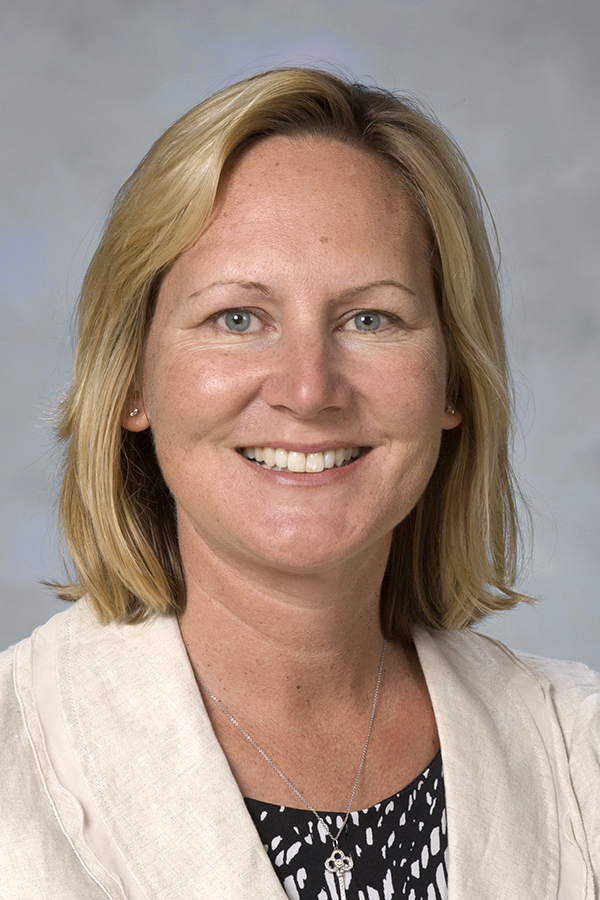
Patti Loughlin is Professor of History at the University of Central Oklahoma. She specializes in the history of the American West, American Indian history, and women’s and gender history. Patti serves on the Oklahoma Historical Society board of directors, the editorial board of The Chronicles of Oklahoma, the Dale Society board at the Western History Collections, and remains active in the Coalition for Western Women’s History and the Western History Association. Her book, Hidden Treasures of the American West: Muriel H. Wright, Angie Debo and Alice Marriott (University of New Mexico Press, 2005), received the Outstanding Book on Oklahoma History from the Oklahoma Historical Society and the Director’s Award and Finalist in Nonfiction from the Oklahoma Center for the Book in 2006. She coauthored Building Traditions, Educating Generations: A History of the University of Central Oklahoma (Oklahoma Heritage Association, 2007) with Bob Burke and co-edited Main Street Oklahoma: An American Story (University of Oklahoma Press, 2013) with Linda Reese. Her latest book Angie Debo, Daughter of the Prairie (Oklahoma Hall of Fame, 2017), received the 2018 Oklahoma Book Award for children/young adult. She co-edited This Land Is Herland: Gendered Activism in Oklahoma from the 1870s to the 2010s with Sarah Eppler Janda (University of Oklahoma Press, 2021) and is currently working with Janda to co-author a high school Oklahoma history textbook. Loughlin’s latest project is a biography of Elizabeth Shepley Sergeant, a journalist and Pueblo sovereignty advocate, and her work with Willa Cather, John Collier, and Edward Dozier.
Take it away, Patti!
You teach a variety of women’s history courses, and many of them include semester-long research projects. How do you help students connect to women’s history narratives?
Thank you so much, Pamela, for the opportunity to talk about women’s history, particularly western women’s history, suffrage, and activism. I am fortunate to teach courses in the history of the American West, Native American and Indigenous Studies, and women’s, gender, and sexuality studies at the University of Central Oklahoma. My work with graduate and undergraduate students informs my research and writing. For example, students in my Women in the American West course worked with curators at the National Cowboy & Western Heritage Museum in Oklahoma City to conduct research for women’s and gender exhibitions to commemorate women’s suffrage in the American West. The special exhibitions, Blazing a Trail and Find Her West were on view at the museum last year.
What are you working on now?
Recently I coedited a contributed volume on women’s activism titled This Land is Herland: Gendered Activism in Oklahoma from the 1870s to the 2010s (University of Oklahoma Press, 2021), with Sarah Eppler Janda. The book features thirteen profiles of women activists written by thirteen women scholars. In anticipation of the book, in partnership with the Oklahoma Historical Society, the Cherokee Strip Regional Heritage Center, and Oklahoma Humanities, we offered a series of virtual programs in 2020 to recognize the 100th anniversary of the 19th Amendment extending voting rights to women and women’s activism more broadly.
Sarah Eppler Janda and I are writing an Oklahoma history textbook for high school students for statewide adoption. This is a challenging project, but we are committed to connecting today’s students to the complexities of Oklahoma’s past and to share these histories in meaningful ways that encourage students to think critically.
What path led you to Elizabeth Shepley Sergeant? And why do you think it is important to tell her story today?
My current project “Elizabeth Shepley Sergeant’s Modern American West” is the first biography to situate journalist Elizabeth Shepley Sergeant, a Bryn Mawr graduate and a war correspondent for the New Republic during the First World War, in conversation with her network of reformers including writers Willa Cather, Mary Austin and Mabel Dodge Luhan, Commissioner of Indian Affairs John Collier, and anthropologist Edward Dozier of Santa Clara Pueblo.
In many ways, this project is an extension of my earlier work looking at the collaboration between anthropologist Alice Marriott and artist Maria Martinez in the publication of Maria, The Potter of San Ildefonso (1948). Marriott conducted daily interviews with Maria Martinez, and through this research, I learned that Elizabeth Shepley Sergeant was one of four founders in the early 1920s of the Indian Arts Fund, today’s Indian Arts Research Center’s collection housed at the School for Advanced Research in Santa Fe.
For fifteen years, I have taken college students to northern New Mexico for a field study course. We visit Marvin and Frances Martinez at the portal of the Palace of the Governors in Santa Fe and observe a traditional firing of black-on-black pottery at their home in San Ildefonso Pueblo. Marvin Martinez has childhood memories of living with his great-grandmother Maria Martinez and learning about pottery making from her. As I learn more about black-on-black pottery and the history of San Ildefonso Pueblo, I am struck by a network of non-Native reformers during the early 1920s such as Elizabeth Shepley Sergeant – journalists, writers, artists, policymakers – who wanted to start the Indian Arts Fund to retain a pottery collection in Santa Fe and share older pottery and designs with Native artists. We must acknowledge, however, that the formation of the Indian Arts Fund by white reformers such as Sergeant and others meant that the collection had been created and managed by non-Native people for decades. In recent years, however, the Indian Arts Research Center at the School for Advanced Research in Santa Fe has been working to build trust and meaningful collaborations with Tribal communities.
By telling Elizabeth Shepley Sergeant’s story in an accessible biography, I am at once recognizing the often overlooked or underreported service of women in the First World War, the network of women writers critical to Willa Cather’s success, and the unsung women researchers and sovereignty rights activists who participated in John Collier’s reform work with Tribal nations during the 1920s and 1930.

Questions for Pamela:
I know you have recently returned from a research trip. What are your essential tools for a day in the archives?
I depend on a combination of my laptop and a scanner. I now have two portable scanners for use in different situations, but the archive I visited most recently wouldn’t let me use either one. Which turned out to be great because they had a fabulous scanner that was faster than either of mine, and took higher quality pictures.
I realize that using a scanner isn’t romantic. But there is something to be said for being able to do the job efficiently and accurately. (For the record, I also have no nostalgia for the typewriter as opposed to a word processing program on my computer. I remember the days when “cut and paste “ were not metaphors. They were brutal.)
Also, fingerless gloves and computer glasses.
Where are your preferred places to write?
I’m lucky enough to have a wonderful home study and most days I’m more than happy to write there. Occasionally, though, I need to print out some pages and go somewhere else just to kickstart my brain.
* * *
Interested in learning more about Patti Loughlin and her work?
Check out her website
Follow her on Twitter: @LoughlinPatti
* * *
Come back tomorrow for three questions and an answer with novelist Kim Taylor Blakemore.
Talking About Women’s History: Three Questions and an Answer from the Working Women’s History Project
The Working Women’s History Project (WWHP) preserves and promotes the stories of historical and living Chicago women who have made contributions toward achieving justice and equality in the areas of labor, women’s, human and civil rights.
WWHP was born at a workshop on Women and Labor History in Chicago chaired by Yolanda “Bobby” Hall at the Fourth Annual Teaching Women’s History Conference for K-12 Teachers. Kathlyn Miles, an actor, had the idea of creating theatrical vignettes that would tell the story of one or more women who had been active in labor history and presenting these vignettes to the public. The first project was “Come Along and Join,” a play written by Miles about union women. A curriculum was also developed around the play for use in schools. The play was shown with great success to the general public, to unions, and to schools and colleges.
Since then, WWHP had researched, written, and produced dramas about historical Chicago women who had made significant contributions on behalf of working people. Created workshops to teach union women to write their own stories, participated in conferences for teachers to bring women’s history into the classroom, and collaborated in holding roundtable discussions on issues affecting working women.
WWHP president Amy Laiken agreed to answer some questions about the project.
Take it away, Amy:

WWHP focuses on women who are not generally included in the history of feminism or the history of the civil rights movement. How does the addition of women of color and working class women change our understanding of the feminist movement?
For too long the mainstream media, when it covered the women’s movement at all, showed images of primarily white women. Many feminist groups had mainly white leadership. That gave the false impression that women of color and working class women were not involved in the feminist movement. Research has taught us that that was (and is) far from the truth. Going back more than a century, for example, there was Frances Ellen Watkins Harper, a Black woman who was an abolitionist and who also fought for women’s suffrage. She died in 1911, 9 years before the 19th Amendment was ratified. In 1913 Ida B. Wells-Barnett, among her other activities, founded the Alpha Suffrage Club, the first Black women’s suffrage club in Chicago. Immigrant garment worker Hannah Shapiro Glick inspired a walkout at a Chicago shop, Hart, Schaffner & Marx in 1910 to protest a pay cut for piece work. A month later, 40,000 garment workers were out on strike. Olgha Sierra Sandman, now retired, came to Chicago from Mexico and worked to help improve wages for farm workers in central Illinois. She was inducted in the Union Hall of Honor by the Illinois Labor History Society in 2015. When the struggles and achievements of women of color and working class women are elevated, our understanding of feminism is broadened to include issues that do not always get widespread coverage, such as the way the lack of equity in public transportation can have a negative effect on women’s job opportunities. Their stories also expand our knowledge of history so that it is more widely known that women of color and working class women have been and are leaders in movements to expand rights for all women.
In addition to promoting the stories of women who have made contributions in the areas of labor, women’s rights and civil rights, you also actively preserve those stories for future generations. What are some of the ways the organization does this?
Our website has the transcripts of interviews WWHP board members conducted with the late Rev. Addie Wyatt, and with one of the founding members of WWHP, the late Yolanda (Bobby) Hall. We also have several years of newsletters on the site, some of which contain interviews with women who are currently making contributions in those arenas. Many of our programs have been video recorded, and links are available on our website. We also have a collection of video tapes of many of our plays. In addition, in 2017, we donated 20 years of our papers to Special Collections at the Richard J. Daley Library of the University of Illinois at Chicago, where researchers can access them.
How can people help if they want to support the Working Women’s History Project?
Check out our website at www.wwhpchicago.org We’re always interested in ideas for stories, or if you’d like to tell a story about a woman or women working for rights on the job or other arenas, please contact us. We currently have someone working with us on social media, but are interested in having more people adept at using it. During this past year, we had to schedule events virtually, and we could use the help of someone who knows how to use the technology to effectively present programs that way. And, of course, for those who are able to donate, we would appreciate contributions. More info on how to volunteer/donate is on this page of our website https://wwhpchicago.org/contact-us.html . WWHP is a 501 (c)(3) tax deductible organization.
My question for you: I read that you received your PhD in South Asian history. Are you still doing research in that area, and if so, on which countries are you concentrating your research?
I’m still fascinated by South Asia, and occasionally I write pieces about its history. But today my goal is to write books about important historical topics that will engage history buffs and nerdy kids and the intelligent general reader. Accessible doesn’t mean easy. The history I write often turns what we think we know about history inside out, or at least looks at the familiar from an unfamiliar angle. In doing so, I ask us to look at the world today from a slightly different angle as well. The impact of this can be profound. If you are able to look at history from someone else’s perspective for even a short time, you are more apt to see her as a person rather than “the other.” When we re-introduce overlooked populations into the story, the historical framework gets a little bigger, a little more complex.
* * *
Interested in learning more about the Working Women’s History Project?
In addition to checking out their website, you can:
Sign up for their free newsletter https://conta.cc/3trqzlm
Visit their Facebook page: Working Women’s History Project
Be one of the first to follow their brand new Twitter account: @WorkingWomensH1
* * *
Check back tomorrow for three questions and an answer with historian Patti Loughlin, who specializes in the history of the American West, American Indian history, and women’s and gender history.