




Talking About Women’s History: Three Questions and an Answer with Eve M. Kahn
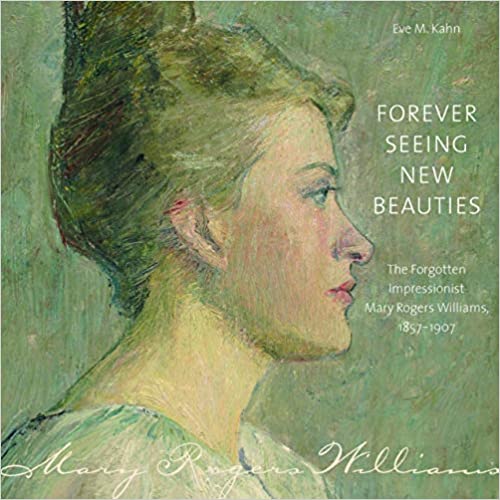
Independent scholar Eve M. Kahn is the former Antiques columnist for The New York Times. Forever Seeing New Beauties: The Forgotten Impressionist Mary Rogers Williams, 1857-1907 (Wesleyan University Press, 2019) won prizes from organizations including the Connecticut League of History Organizations and the Connecticut Center for the Book. Kahn contributes regularly to the Times, The Magazine Antiques, Apollo magazine and Atlas Obscura. Her book in progress is provisionally titled Queen of Bohemia Predicts Own Death: The Forgotten Journalist Zoe Anderson Norris, 1860-1914.
Take it away, Eve!
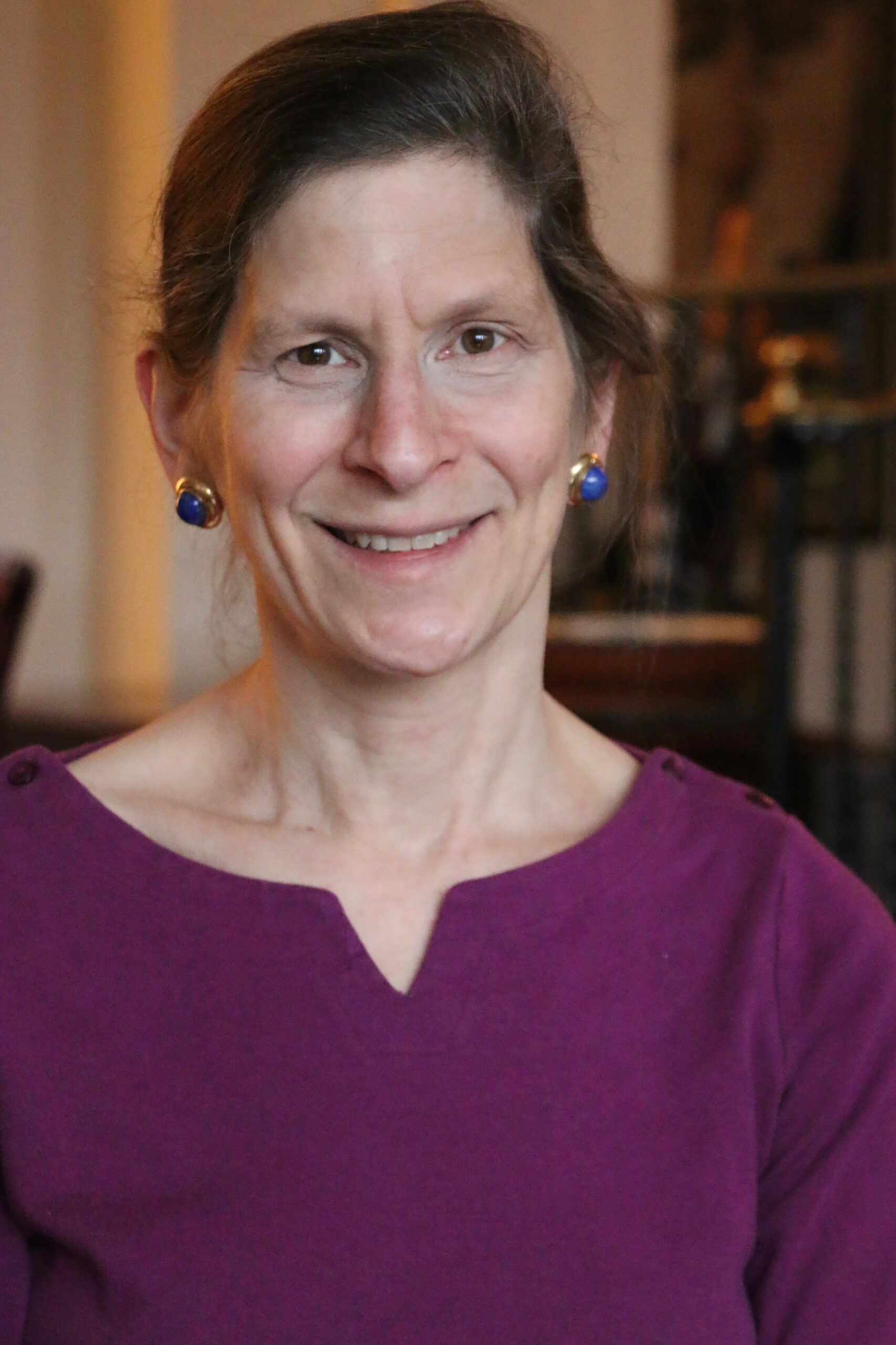
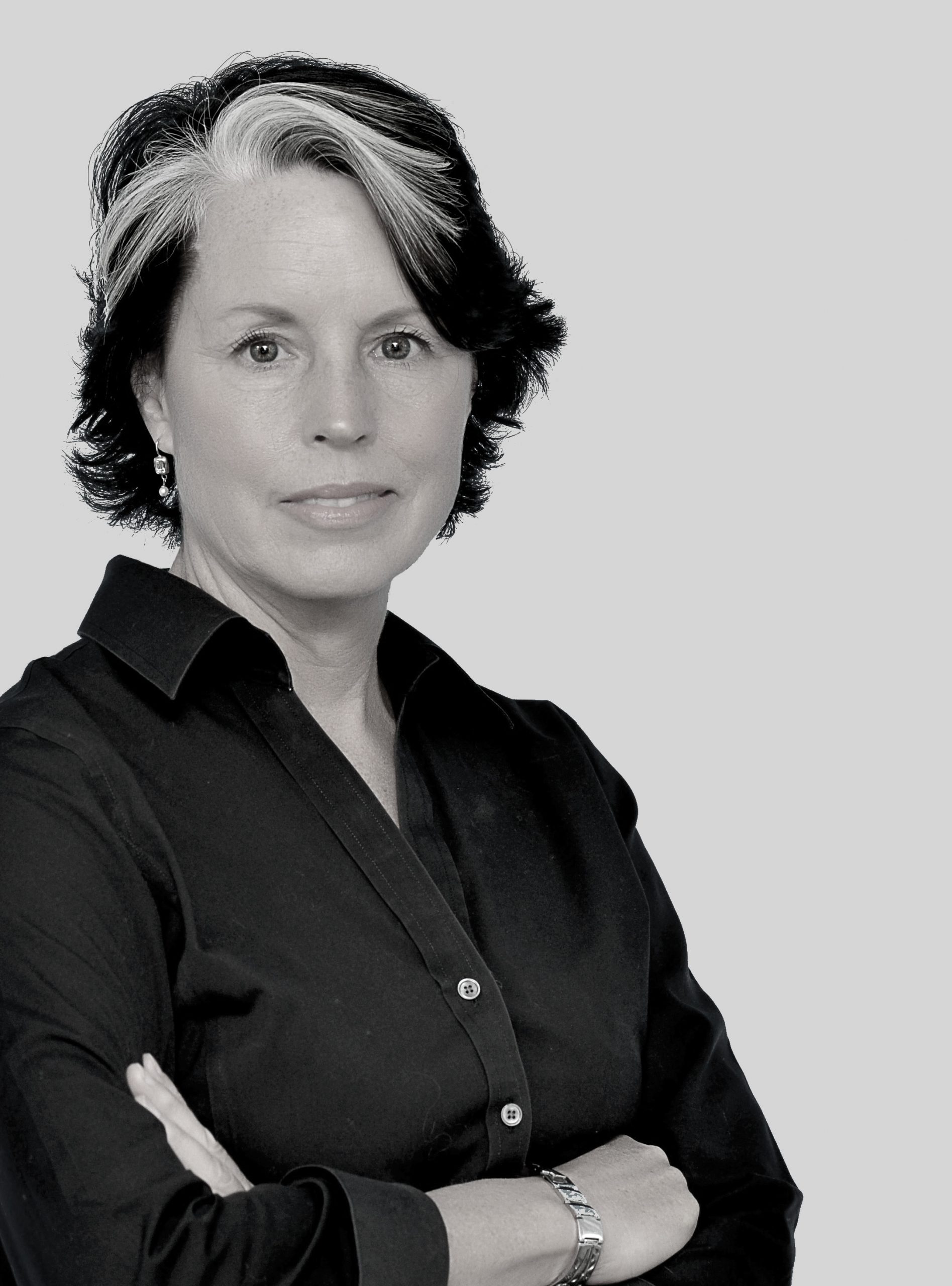
Photograph by Katherine Lanza
Q: Writing about a historical figure like Mary Rogers Williams requires living with them over a period of years. What was it like to have her as your constant companion?
A: One of the funniest moments came right after the book was published—when I first had it hand, with Mary’s luminous painting on the cover and the wonderful heft of the high-quality paper. I vividly dreamed that I was having lunch with Mary. It was just the two of us, outdoors, on some kind of restaurant terrace in Italy, overlooking a flowered hillside. I handed her the book and, blushing a little, told her that I hoped she’d like it. Then I felt my face drain of color: oh no, it tells her she’s going to die young. I started to apologize, stammering, almost rising up in my seat. But she took it all in stride: “Oh, don’t worry; knowing that helped me get a lot done in the short time I had.” Of course it makes no sense—how would my book published 112 years after her death have forewarned her? But I grew to care so much about her feelings, while living amid and poring over her handwritten letters for so many years. And I’ve also had nightmares, while traveling, that some part of her archive has gone missing—I wake up jetlaggedly convinced a sketchbook is gone, a box has been accidentally thrown out. Her papers, just to be clear, are well stewarded. They’re in neat chronological order, boxed on shelves in my bedroom, they’ve been transcribed in backed-up files, and they’re a promised gift to Smith College.
Q: One of the questions I’m fascinated with right now is how biographers name their subjects, particularly when writing about a woman. Did you choose to use Mary or Williams (or something else) in your book, and why?
A: I call her Mary. I alerted readers, however, that her family called her Polly, although I have never dared call her that even after a decade in her company. Even to her closest friends she was Mary or Miss Mary. Polly only appears in my quotes from her family letters, which sometimes give such an intimate look at how a baker’s daughter felt far from home. At one point Mary wrote to her sisters from Paris that she was mastering French: “Si vous pouvez voir votre soeur Polly, la prosaique dans la belle Paris, what would you say?” And “Polly” appears in her sisters’ funny quotes from their travels with her. Mary often longed to wear men’s clothing, especially military uniforms, and during one of her trips, her sister Laura tattled in a letter home: “Polly is again struck by the stunning appearance of the German officers.” For my book’s whole large cast of characters, to make them as vivid as possible to modern readers, I mostly used the first names of people in Mary’s inner circle and sometimes nicknames. Her baby-faced architect friend Alfred Gumaer was known as Gummy. The college professor and administrator Marie Elizabeth Josephine Czarnomska, the imperious daughter of a Polish aristocrat, was nicknamed “the Czar” and sometimes “Czarina.” I’ve tried to capture how much of Mary’s inner life, the casual expressions of her observations and affections, are documented in letters scrawled at a fast pace.
Q: You describe Williams as “the Mary Cassatt you’ve never heard of”. Why was her story and her art forgotten, and what can that tell us about how women artists are erased from history?
A: A Gilded Age woman artist could far more easily make a name for herself if, like Mary Cassatt, she had family money, no need for a day job, a network of wealthy patrons, and a long life with time to try to get her paintings in the hands of institutions and prominent collectors. The more productive a woman artist had time and resources to be, the more she could exhibit, the more reviews appeared in her lifetime, the more of her works survive, the more collectors, curators and dealers now know of her, the higher the prices—it all snowballs. It accounts for the fact that today, Mary Cassatt is one of few women artists people outside the art world can name, along with Georgia O’Keeffe and Frida Kahlo. And there was subtle and unsubtle entrenched misogyny everywhere in the art world that “my” Mary writes about: sneering male critics, exhibitions that women could only attend on “ladies’ days,” male art dealers who publicly praised but privately mocked mediocre paintings by famous men—Mary quotes some great gossip she heard at New York galleries. Mary’s letters also reveal the small dreary demands that reduced women’s productivity. She describes hours spent waxing her floors and getting custom clothes made—ready-to-wear didn’t exist in her day. And after her sudden death, her surviving sisters, one of them a retired teacher and the other a homemaker, with no expertise in maneuvering in the art world, could not do much more for Mary’s legacy than to make sure her letters and paintings were safe and dry. Which is how they were, slumbering away in the hands of a Williams family friend’s descendants, when I stumbled upon them in a funny way in 2012.
Question for Pamela: My current biography subject, the writer and reformer Zoe Anderson Norris (1860-1914), heroically documented desperate immigrant poverty on the Lower East Side. But she also said about a dozen prejudiced things that I for one wish she hadn’t—and which, had she lived longer, she might have regretted as times changed around her and not wanted in her biography. How do you deal with some really unfortunate words or actions in the life of a deeply interesting person you admire enough to write about? How do you ask for some kind of forgiveness and perspective from the reader, without downplaying the missteps too much, what’s the right balance?
I think novelist Hilary Mantel said it best in a talk she gave to the Royal Society of Literature in 2010: ”Learn to tolerate strange worldviews. Don’t pervert the values of the past. Women in former eras were downtrodden and frequently assented to it. Generally speaking, our ancestors were not tolerant, liberal or democratic. Your characters probably did not read The Guardian, and very likely believed in hellfire, beating children and hanging malefactors. Can you live with that?”
As a biographer or a history, I think the most useful thing we can do is state clearly that our subjects held ideas that are troubling from a modern perspective, and often stated them in ways that we find offensive. And then to place those ideas within their historical context—not in an attempt to excuse them, or downplay them, but to explain them.
* * *
Want to know more about Eve Kahn and her work?
Check out her website: Evekahn.com
Read this interview in Vogue: American Impressionist Mary Rogers Williams Is Finally Getting the Recognition She Deserves
* * *
Come back tomorrow for three questions and an answer with author and musician Kathryn Atwood, who writes collective biographies about women in war for younger readers.
Talking About Women’s History: Three Questions and an Answer with Shelley Puhak
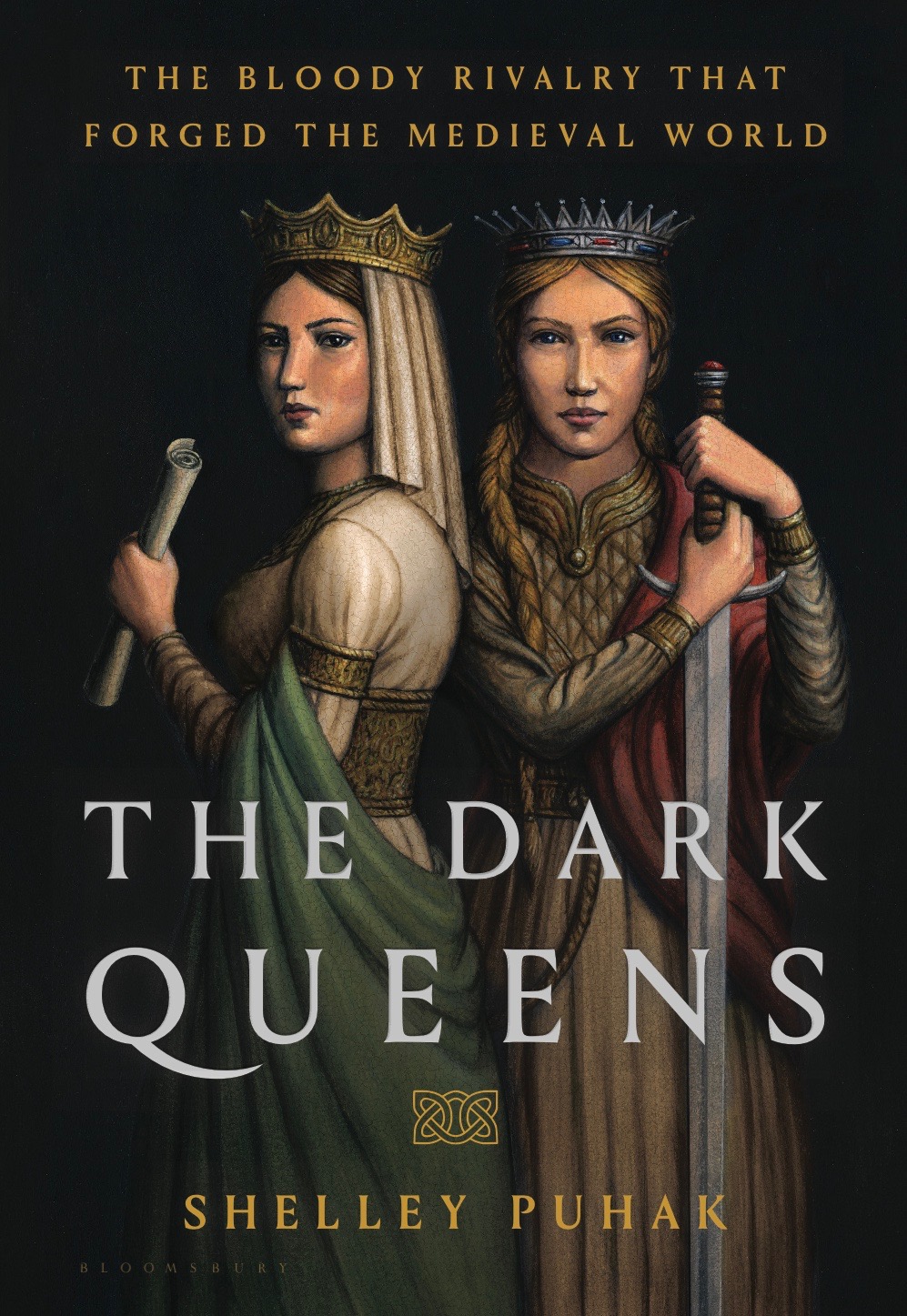
Shelley Puhak is the author of the newly-released The Dark Queens: The Bloody Rivalry that Forged the Medieval World, a dual biography of the early medieval queens Brunhild and Fredegund. Shelley is also a former literature and creative writing professor and the author of three books of poetry, the most recent of which is Harbinger, a National Poetry Series selection.
I met Shelley (only virtually alas) back in September, courtesy of Nancy Marie Brown, who thought we would like each other’s books. As indeed we did. (Actually, I loved her book. Great story-telling, solid research and a significant amount of attitude at the way the two women at the center of her book were intentionally denigrated and effectively erased by their immediate successors and later chroniclers. Good stuff.) I immediately asked her to be part of this year’s Women’s History Month extravaganza here on the Margins.
Take it away, Shelley!
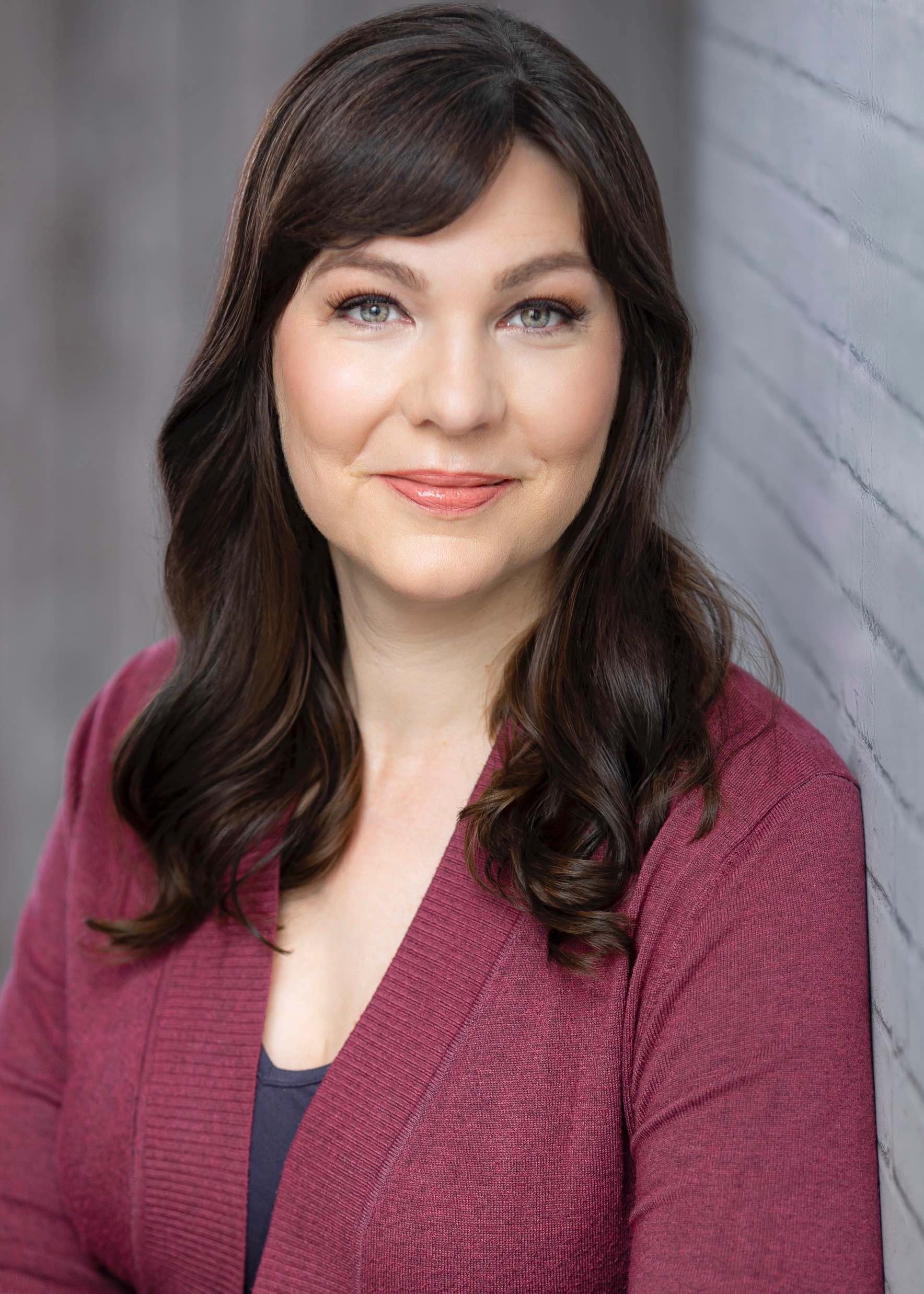
© 2019 | Kristina Sherk Photography | www.Kristinasherk.com
You are an award-winning poet. What inspired you to make the leap to writing a work of historical non-fiction?
You know, I think of it less as a leap and more as a lateral move. My previous books of poetry focused on lesser-known women’s lives and involved considerable research. For my book Stalin in Aruba, for example, I had to read diaries and memoirs and visit archives to be able to write in the voices of the women in Stalin’s inner circle, women like his daughter, sisters-in-law, and the wives of his close advisors.
I also write nonfiction, but prior to this just essays and articles. When I stumbled across the story of Brunhild and Fredegund, I first wrote an article about them for Lapham’s Quarterly. But I felt like the queens weren’t done with me yet. After all, we have yet to have a female head of state. Didn’t people deserve to know that during a time we think of as so much less sophisticated, women were ruling? In an attempt to get these two queens in front of as big an audience as possible, my project morphed into a book.
Brunhild and Fredegund are typically vilified in histories of the Merovingian period. You have turned them into rounded figures who were power players in the, admittedly blood-stained, politics of their times. Were there special challenges in bringing these women out of the historical shadows?
There are always challenges when trying to write about any women, and then there is the additional challenge of trying to write about anyone who lived 1,400 years ago. A major difficulty is the general lack of sources for the era. Some scholars estimate that what survives represents less than 1% of what was produced during that time period– loss on that sort of scale is staggering!
Some works were purposefully suppressed, but most vanished due to plain old bad luck. The Merovingians primarily used papyrus, and while that writing material can survive for tens of thousands of years in a dry climate like Egypt, it doesn’t make it more than a few centuries in the cold and damp of Europe. The sources that do survive are (surprise!) quite misogynist, and then each of these writers had his own individual biases and blindspots that I had to navigate. The research process was a lot like looking through a kaleidoscope— everything was scrambled, fractured, and distorted.
What are the most surprising things you’ve found doing historical research for The Dark Queens?
I was really surprised to discover how many women wielded power in the sixth century. I initially assumed that Brunhild and Fredegund were exceptions to the rule, but there were quite a few female political leaders. There were also women exerting power as abbesses and business owners and healers. We have wives walking out on their husbands, common women engineering political plots, and even nuns participating in armed rebellions. And given how many sources were lost, it is safe to say we don’t even know the half of it.
I was also startled to see how methodically Brunhild and Fredegund were silenced. It is one thing to know that women are often erased from history, and it is another thing altogether to see exactly how that happens. I had a really visceral reaction to reading, side-by-side, successive versions of a chronicle and seeing a few lines inserted here, a slur inserted there, something else conveniently trimmed out, over and over, until the original narrative was completely transformed. As chilling as that experience was, the flip side is a sort of awe at how women have, against the odds, managed to save some of their stories. Here’s one example: a very admiring account of Queen Fredegund’s military prowess survives in one anonymous chronicle. There are all sorts of theories about this chronicler’s identity, but it seems that Anonymous was (once again) a woman: circumstantial evidence links these tales to a nun at a local convent. I love to imagine that nun in her quiet cloister painstakingly preserving the battlefield exploits of a fierce queen. In other cases, these narratives might not have been written down right away but were instead told slant— embedded in a myth or a legend, for example. People will always find ways to resist.
A question for Pamela: Do you see your project about Sigrid Schultz of the Chicago Tribune as more of a continuation of your previous book (warrior to war reporter?) or a complete departure from it? Can you talk about how this research is similar to and different from your previous work?
I definitely see it as a continuation of my last three books, though Sigrid Schultz was a war correspondent for only a small part of her career. In Heroines of Mercy Street, I wrote about women in the American Civil War. In Women Warriors, I wrote about women in many different times and places who actually fought. Across the Minefields tells the story of a woman driver attached to the Free French in World War II. In When I began to look for a new subject, I was worried about pigeon-holing myself as someone who wrote only about women and war. In fact, I was deep in the initial research about a woman who had nothing to do with warfare when Sigrid Schultz elbowed her out of the way.
As far as the research goes, the current book is very different from my previous books. Both Heroines of Mercy Street and Across the Minefields rested heavily on the printed memoirs of a single character. (And both had seriously short deadlines, which made archival research impossible.) Women Warriors by its very nature meant I was dependent on secondary sources and translations of primary sources in languages I can’t read. Often the primary sources available in any language were sparse, not to mention heavily slanted. In the case of Sigrid Schultz, there is substantial archival material, with substantial gaps in the record. It’s been an adventure.
* * *
Want to know more about Shelly Puhak and The Dark Queens?
Check out her website: https://www.shelleypuhak.com/
Read her article in Smithsonian: The Medieval Queens Whose Daring Murderous Reigns Were Quickly Forgotten
* * *
Come back tomorrow for three questions and an answer with independent scholar and art historian Eve Kahn, talking about forgotten American Impressionist Mary Rogers Williams.
Finding the Narrative Thread in History. A Guest Post by Kathleen Stone
Last year, as part of my annual Women’s History Month series, I interviewed Kathleen Stone about her forthcoming book They Called Us Girls: Stories of Female Ambition from Suffrage to Mad Men, which is due out on March 1st. (You can read the interview here.) This year I asked her to lead us into March with an essay about writing the book and what drew her to professional women before “second wave” feminism.
Kathleen Stone knows something about female ambition. As a lawyer, she was a law clerk to a federal judge, a litigation partner in a law firm, and senior counsel at a financial institution. She also taught seminars on American law in six foreign countries, including as a Fulbright Senior Specialist. Her work has appeared in Ploughshares, Arts Fuse, Los Angeles Review of Books, Timberline Review, and The Writer’s Chronicle. She holds graduate degrees from Boston University School of Law and the Bennington Writing Seminars, and lives in Boston.
Take it away, Kathleen!
Don’t you love it when a sudden insight gives fresh perspective to your research? For a long time, you’ve been thinking about a topic, digging for facts and spinning theories, all while not really knowing where you’re headed. Your research is solid, but the individual points don’t hang together. Then, voilà! A newly discovered fact pulls everything together. You have a narrative thread.
That describes my experience of researching and writing my book, They Called Us Girls. My book is about women of my mother’s generation who had careers in male-dominated professions. These women came of age in the mid-20th century, when most women didn’t work outside the home or, if they did, had jobs deemed “appropriate” for them. But these women ignored convention and headed for careers in science, medicine, law and other fields where they would be in a tiny minority and face big hurdles.
I didn’t know it then, but my book journey began when I was a young girl. I’m a baby boomer and grew up in a suburban town west of Boston. My father worked as a lawyer and my mother stayed at home with three children and housework. This arrangement of male breadwinner and female home worker was typical in our neighborhood. Really, it’s all I knew, but I wondered if other paths were possible. My mother had worked at IBM before I was born, training customers on office equipment, but retired when she was pregnant with me. I used to wonder whether a woman could have a job like the one she had had and be a mother too. I knew a small handful of women had been in law school with my father and I was curious about them too. What made them believe they should have a “man’s” jobs?
Fast forward to 2010. I was a lawyer, nearly 30 years into my career, and I still wanted to find out about women like those I had wondered about as a girl. I wasn’t sure I would write a book, but I was determined to talk to some older women. I began to dig into books on women’s history. Some were filled with data and analysis. Others were stories of women who broke barriers in unconventional venues such as the theater and labor unions; still others were oral histories of women who followed Rosie the Riveter into factory jobs during World War II. At the public library, I took notes on census data.
One book that stood out was The Grounding of Modern Feminism by Nancy Cott. One of Cott’s insights into women professionals of the 20th century became my voilà moment. She pointed out that “. . . the high point in women’s share of professional employment (and attainment of advanced degrees) overall occurred by the late 1920s and was followed by stasis and/or decline not reversed to any extent until the 1960s and 1970s.”[1]
This statement struck me in a visceral way. Progress for women in the professions was in “stasis and/or decline” during the very years that interested me. Nevertheless, I was going to talk to women who found opportunities in that negative environment. I would find out why and how they did it. My quest could be more than a personal obsession. It could be an historical exploration of those who swam upstream against what I now knew were stagnant and reversing currents.
And swim upstream they did. There was Cordelia Hood who joined OSS but only after being made to prove she could type, a requirement for women in the intelligence service but not for men. She rose above the clerical ranks, one of the few women to do so, and then she did it again post-war, in the CIA. There was Muriel Petioni, the only woman to graduate from Howard University’s medical school in 1937. She worked at several historically black colleges in the South when Jim Crow segregation was enforced by law. After that she returned home to Harlem where she became an outspoken advocate of change. When Mildred Dresselhaus was hired for her first job, she was one of just two women on a staff of one thousand scientists. Eventually she became the first woman to be a full tenured professor at MIT. When Frieda Garcia moved to Boston, she encountered a city suspicious of Latina women’s abilities. With her talents, she became an executive leader and community activist, inspired cross-cultural connections throughout the city, and advised mayors and governors. Martha Lepow applied to medical school knowing she faced a quota on the number of women students. After working on the polio vaccine, she became one of the country’s leading authorities on pediatric infectious disease. Dahlov Ipcar grew up in Greenwich Village, enmeshed in her parents’ world of early modern art, where she learned that women struggled far more than men to obtain gallery representation and critical acceptance. In rural Maine, she created her own path to critical and commercial success. When Rya Zobel graduated from Harvard Law School in 1956, she could not get a job with a law firm. Twenty years later, she became the first woman judge on the federal court in Massachusetts.
The book tells seven women’s stories. Each is unique, but they do share some characteristics. When they were girls, someone inspired them – parent, teacher, family friend. They loved the work they did, enough to stick with it even when others wanted them to give up. They were intrepid. From them, we learn that “widespread stasis and/or decline” was no excuse to surrender a dream. And that’s how a sentence in a scholarly book helped shape a narrative thread.
[1] Nancy F. Cott, The Grounding of Modern Feminism (New Haven, Conn.: Yale University Press, 1987), 220.

They Called Us Girls: Stories of Female Ambition from Suffrage to Mad Men is a collective biography of women who had “men’s” jobs in the mid-20th century, when sex discrimination was legal and women were expected to stay home. Kathleen meets seven of these unconventional women and renders insightful, personalized portraits that span a half century, uncovering the families, teachers, mentors and historical events that inspired their ambition. Good stuff!
* * *
March 1st is right around the corner and I’ve got a lot of great Women’s History Month interviews lined up for you. First up, Shelley Puhak, author of The Dark Queens, talking about powerful medieval women. Good stuff!