




“The First Lady of Radio”

Mary Margaret McBride, ca 1941
Mary Margaret McBride (1899-1976) was a writer and broadcast journalist in the 1930s to 1950s. She was so famous that she was known as “The First Lady of Radio”.
She started her journalism career as a part-time reporter for her hometown newspaper, the Paris Mercury, in Paris, Missouri, where she covered everything from baby contests to courthouse proceedings. Encouraged by her editor, she moved to Columbia, got a job at the paper there, and enrolled at the University of Missouri, where the first college of journalism in the United States opened in 1908.* She worked nights and went to school during the day, and graduated two years later with a journalism degree in 1918.
For the next twenty-five years, she moved from journalism job to journalism job. When jobs folded under her, as they did more than once, she worked as a freelancer, selling articles to national magazines like the Saturday Evening Post and Cosmopolitan and ghost-writing books in collaboration with others.
In 1934, she auditioned for a job on a women’s program on radio station WOR out of New York. WOR hired her to broadcast in the persona of a grandmother named Martha Deane . It wasn’t a good fit, but it was a job. After three weeks, unable to keep the details of her large fictional family straight, McBride gave up—on the air. She confessed to her listeners, “I’m not a grandmother! I’m not a mother. I’m not even married..The truth is I’m a reporter who would like to come here every day and tell you about places I go, people I meet. Write me if you’d like that. But I can’t be a grandmother anymore!”
Her honesty could have gotten her fired. But her listeners loved it, and wrote in to say so.
At the height of her career, between six and eight million people tuned in to what one of Sigrid Schultz’s friends described as “that chit-chat program of hers” even though she never announced ahead of time who her guests would be. Listeners knew that no matter who her guests were, McBride would make it interesting. She interviewed well-known public figures from politics, entertainment and the arts—including Eleanor Roosevelt, General Omar Bradley, and novelist Pearl Buck—using an unscripted, conversational style.
McBride celebrated her tenth anniversary on the air with a live broadcast from Madison Square Garden. Eighteen thousand people packed the auditorium to celebrate with her. Millions more listen from home. Ten year later, McBride “retired” from network broadcasting. She moved to the Catskills Mountains, where she broadcasted from her living room three days a week and wrote books. (That’s a vision of retirement I could get behind!)
*As a child growing up in Missouri, I was mightily confused by the fact that there was a school of journalism at the University of Missouri in Columbia and a Columbia School of Journalism** in New York.
** Founded in 1912.
* * *
Check back on Monday for three questions and an answer with poet and biographer Iris Jamahl Dunkle, author of Charmian Kittredge London: Trailblazer, Author, Adventurer, the first full-length biography on Jack London’s wife, Charmian London.
Talking About Women’s History: A Whole Bunch of Questions and an Answer with Bridget Quinn
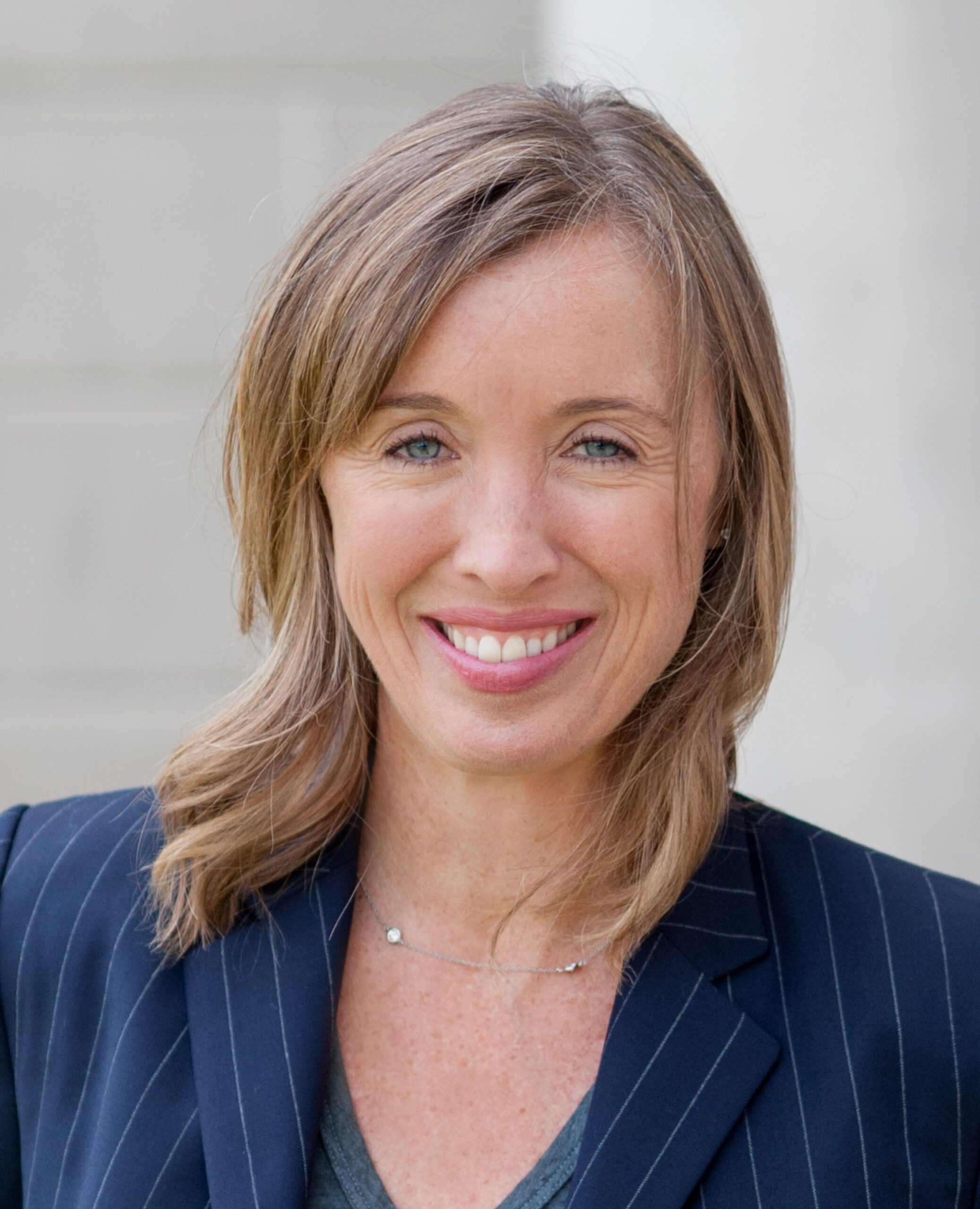
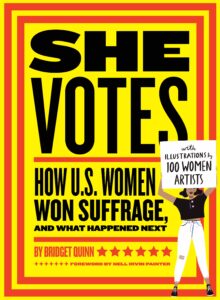
Bridget Quinn is author of the award-winning Broad Strokes: 15 Women Who Made Art and Made History (in That Order), an Amazon pick for Best Art & Photography Books 2017 and a 2018 Amelia Bloomer List selection of recommended feminist literature from the American Library Association. NPR’s Susan Stamberg calls it “a terrific essay collection” with “spunky attitudinal, SMART writing.” In 2020, Quinn published She Votes: How U.S. Women Won Suffrage, and What Happened Next, an Amazon Editors’ pick in Best History books. Published to coincide with the one hundred year anniversary of ratification of the Nineteenth Amendment, She Votes features illustrations by one hundred contemporary women artists. Her next book will have a short subtitle (she hopes).
Take it away, Bridget!
In both She Votes and Broad Strokes, you include profiles of the famous and the not-so famous. How do you chose the women to include in your books?
The choice is partly a biographical one – that is, my own biography and what has called to me over time, for any variety of reasons – and partly an attempt to choose the right representative person/art/event to suit the book’s timeline and overall arc. It’s a bit sculptural in a way. How will the overall piece look and feel; what shape should it take? But mostly it’s about telling a story and doing it with honesty, fun and, I hope, flashes of wit, along with some anger.
Was a there a woman you were sad to leave out?
So many, far too many to name (ugh). But part of writing a book is shaping a narrative, honing, cutting, forming, and that inevitably means you leave more out than you put in. But in particular, for Broad Strokes I decided not to write about Swedish mystic Hilma af Klint, who was on my original list, because I feared she was too much my personal obsession. Then a year after the book came out, the Guggenheim held a show of af Klint’s work that was the most attended exhibition in the museum’s history. So, totally wrong choice on my part! I also originally wrote about Agnes Martin for Broad Strokes and in the end image rights restrictions made it impossible to include her. And I’d wanted to include Maya Lin (land art), and Barbara Kruger or Jenny Holzer (text), but I’d backloaded the story and didn’t have enough room for many contemporary artists. In addition, living artists entail many more rights issues than the other kind, so Broad Strokes leans into history more than contemporary. Finally, we wanted to stick with just a handful of artists – mirroring H. W. Janson’s The History of Art – which when it did include women artists (after several editions) in “The” history of art came up with just sixteen across some 800 pages.
For She Votes, it was even more difficult to choose since it’s all fairly recent history and there are so many amazing stories, women, etc. and we know quite a lot about them. I wish I’d been able to feature San Francisco activist Tye Leung Schulze, who was the first Chinese-American woman to cast a vote, and who worked to free Chinese women from being sex trafficked on the West Coast. And Zitkala-Sa (also called Gertrude Simmons Bonnin), a writer, musician and Dakota activist who embodied so much that I admire in a person: art and ability married to unshakable conviction.
Because you write collective biographies, you’ve written about lots of different women. Do you have a favorite, or two?
I do. Right now I’m working on the biography of French eighteenth-century portraitist Adélaïde Labille-Guiard, who has haunted my life and work since I first encountered her in graduate school in my early twenties. She’s a significant reason why I became a writer. Adélaïde is Chapter 3 in Broad Strokes and now the subject of book number three. In She Votes I finally found a way to write for a broad audience about the Fort Shaw women’s basketball team, a group of native women in Montana who became the first World Champions of basketball in 1904. I grew up near Fort Shaw and my brothers hunted with some of the descendants of those players, so I knew their story for a long time and it was a thrill to tell it in a book.
Last year you wrote an important essay for Hyperallergic titled “What Should We Call the Great Women Artists?” I was already fascinated by, and struggling with, the question of how biographers chose to name their subjects, particularly when writing about women. Your article clarified my thinking, while at the same time making it clear that the question of historical women’s names is complicated. Where do you come down on the first name/last name question, absent any complicating factors?
How to put this? There is no “winning” when it comes to women’s names. I personally prefer to use first names for the reasons I give in the essay: Women are born with one name surname (their father’s name, usually) and if they marry it changes (historically, to her husband’s name). Besides the obvious problematic patriarchal implications, it means that in writing about women we’re referring to them by different names at different points in their lives. It also means women’s lives are sometimes lost due to losing the thread of who they are, especially if a woman remarries or if her husband or father has an “important” name himself. Many women artists, for example, have had their work tucked into the oeuvres of male relations. But on the other hand, using first names implies – so it seems – a lack of seriousness, both on the part of the author and for the subject. A reminder, though, that the “greats” of the Renaissance (and Ninja Turtles) are known by their first names: Raphael, Leonardo, Donatello, Michelangelo. We don’t think it unserious to call those men by their first names (nor Dante, Napoleon, Rembrandt, etc.). So there is something about women’s names themselves that are found unserious, and maybe we need to examine that.
What work of women’s history have you read lately that you loved? (Or for that matter, what work of women’s history have you loved in any format? )
I am quite literally obsessed with Diane Johnson’s recently reissued (well, 2020, but pandemic time is its own thing), The First Mrs. Meredith and Other Lesser Lives, first published in 1972. Johnson unapologetically wields all her considerable novel-writing power in reviving the real reputation of Mary Ellen Peacock Meredith. It opens with ghosts. Enough said. This past year I’ve loved Flower Diary: In Which Mary Hiester Reid Paints, Travels, Marries & Opens a Door by the poet Molly Peacock, and A Ghost in the Throat by poet and essayist Doireann Ní Ghríofa. Biography, it seems, is well served by poets and novelists. I’ve taken notes.
What do you find most challenging or most exciting about researching historical women?
Often the most challenging part is locating their stories in the first place. I sometimes feel a bit like a treasure hunter passing a metal detector over well-trodden fields, just going along, not sure what I’m looking for, when there’s a sudden ping! and I that’s where I want to tunnel down, see what’s there. Sometimes it’s not a lot, as women’s lives have not been taken terribly seriously and so their work and affects – whether paintings, letters, journals, etc. – and so not archived or saved in the same way as with many men. There’s also a double-edged sword in writing about historical women because they are so often figures “no one has heard of” and so drumming up interest in publishers and readers can be a challenge.
When did you first become interested in women’s history? What sparked that interest?
I’m not sure, but I grew up as one of nine children, six of whom were boys, in an Air Force town in Montana during the Cold War. In short, a lot of masculine energy, some of which I admired. Quite early on I see now that I was looking to women in history to find out how to become a different kind of woman than those I knew, who were mostly mothers of large families or nuns, admirable in their own right for sure, but it wasn’t what I could imagine for myself. But I couldn’t imagine much else either, because I didn’t know what it could be. History told me: anything.
What was the most surprising thing you’ve found doing historical research for your work?
It is still incredible to me how much you can find on the internet. When I was a graduate student in the late 80s/early 90s, it took months to assemble a bibliography, track down the books, take notes from them etc. When I began researching the book I’m writing now, it took a single afternoon to locate all the sources I used then.
She Votes is a wonderful combination of art and story, using illustrations from 100 women artists. How deeply were you involved in choosing the artists and how did you weave the two forms together?
I wrote the text first and then most of the artists were found via the wonderful site Women Who Draw (womenwhodraw.com) and the pieces were commissioned directly. That places a lot of trust in artists, which I love. When I first saw the images laid out in a conference room at Chronicle Books I was blown away by their variety, exuberance and excellence. All that original art in one place is deeply thrilling. That it was all in response to something I wrote was incredible, almost unbelievable. It was one of the great experiences of my life for sure.
What are you working on now?
My next book concerns the art and life of French portraitist Adélaïde Labille-Guiard, her artistic rivalry with far better known artist Élisabeth Vigée-Lebrun, royal patrons Marie-Antoinette and the King’s aunts, the French Revolution, 18th-century feminism, and a 21st-century showdown. Includes ghosts.

My question for you is a variation of one you asked me: Is there a woman warrior you want to write about, but haven’t yet? I’m all ears!
How to choose? There are so many women warriors whose stories I didn’t get to tell. When I started writing the book, I had hundreds of examples; I ended with thousands. I was still finding new stories as I finished writing the book. In the four years since I’ve finished book,* I’ve learned about many more. Some of them have made their way to a blog post. But in many cases the information on them is so scanty that it’s hard to tell their story.
I had to make a hard decision about one story that didn’t make the book: Tamar the Great who ruled over the medieval kingdom of Georgia during its golden age at the end of the twelfth century CE. Tamar successfully held her throne against rebellious nobles and clergy after the death of her father—and against a play for the crown by her debauched first husband. She traveled with her troops. She appeared on the battlefield. I really wanted to write her story, putting it in counterpoint to her contemporary, the Empress Maud of England, who was not able to hold her throne in very similar circumstances. But there just weren’t enough sources in a language I could read that allowed me to establish to my satisfaction that she commanded her troops in battle. I’m still sad when I think about it.
* [Stops to count] Yep four years. Time flies when you’re writing history.
* * *
Interested in learning more about Bridget Quinn and her work?
Check out her website: bridgetquinnauthor.com
Follow her on Instagram: @bquinnterest
Follow her onTwitter: @bquinnterest
* * *
Tomorrow it will be business as usual here on the Margins with a blog post from me. But we’ve still got more people talking about women’s history from a lot of different angles next week. Don’t touch that dial!
Talking Abut Women’s History: Three Questions and an Answer with Stephanie Gorton
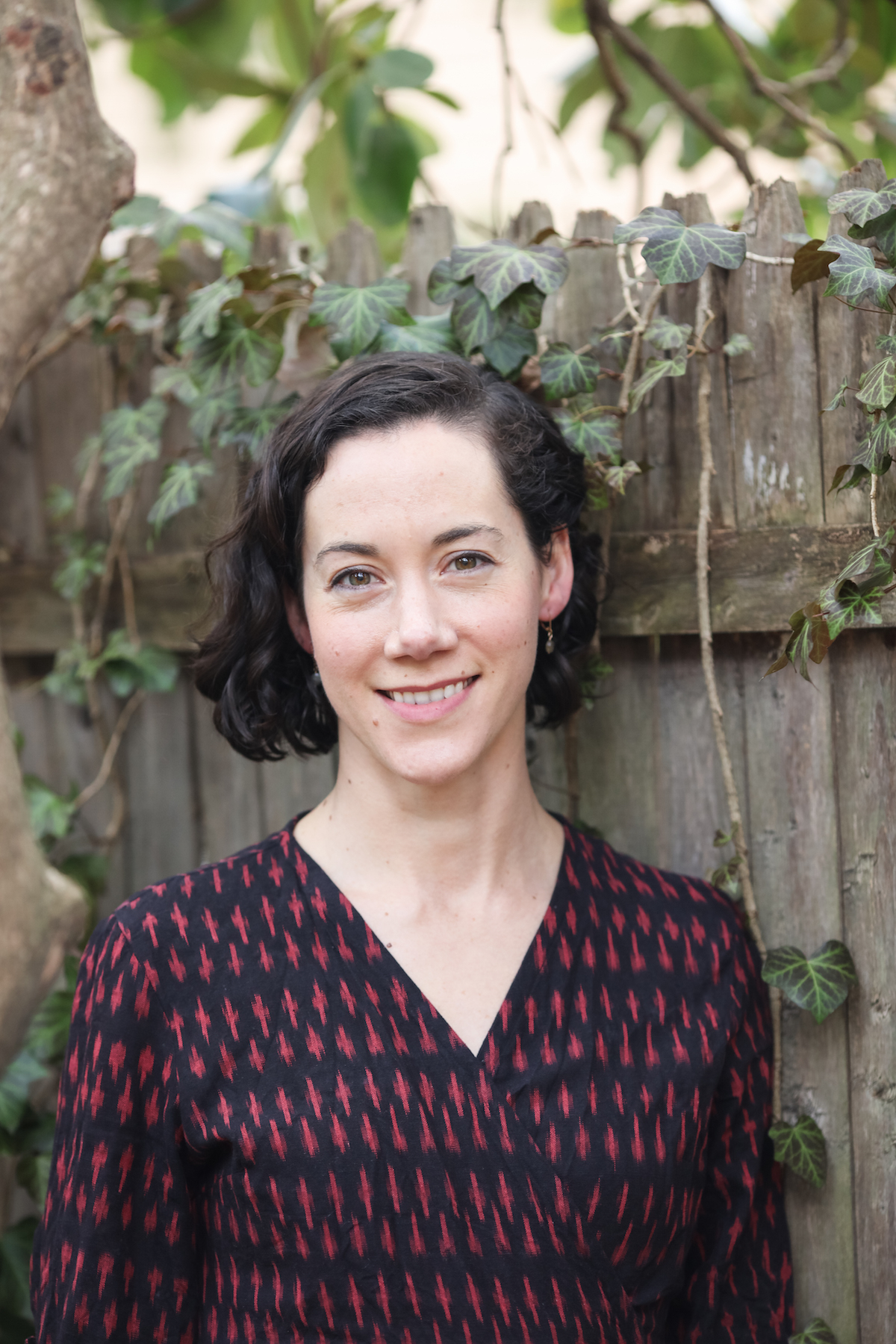
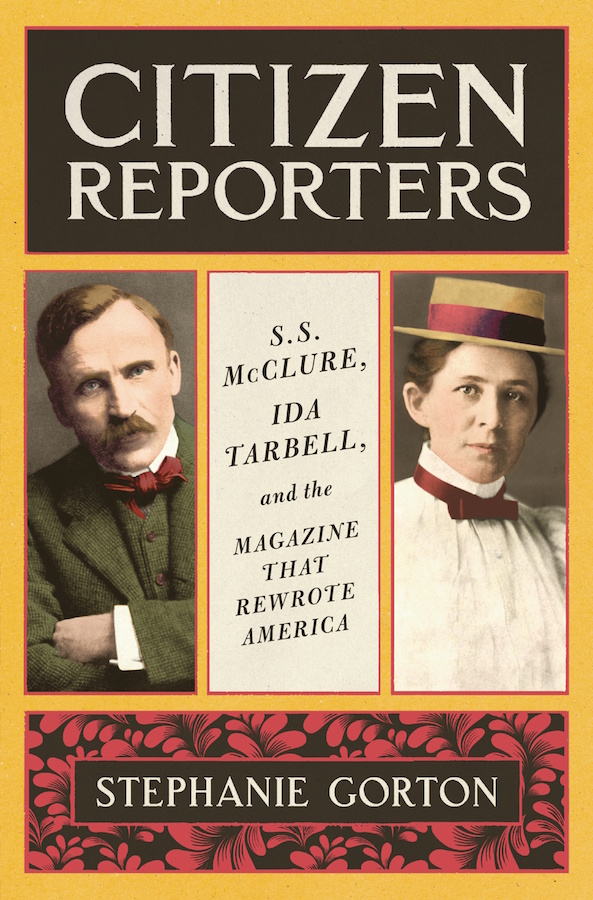
Stephanie Gorton wrote Citizen Reporters: S. S. McClure, Ida Tarbell, and the Magazine that Rewrote America (2020), a finalist for the Sperber Prize for journalism biography. She has written for The New Yorker online, Smithsonian online, The Paris Review Daily, and LA Review of Books, among other publications, and been featured on radio shows including On Point. Previously, she held editorial roles at Canongate Books, The Overlook Press, and Open Road. She was a fellow with the Logan Nonfiction Program at the Carey Institute for Global Good in 2021. Gorton lives in Providence, Rhode Island, with her family.
Those of you you are regulars here on the Margins know that I am all about historical women journalists these days, which means I’ve had Citizen Reporters on my radar ( and my TBR pile) ever since it came out. I was thrilled to have a chance to learn more about the book.
Take it away, Stephanie!
What path led you to Ida Tarbell? And why do you think it is important to tell her story today?
I didn’t set out to focus on Ida Tarbell; she’s been the subject of some great biographies already. Originally, I wanted to write a history without a traditional main character, a kind of survey of the muckraking journalists in the McClure’s Magazine group and the stories they told. But the research entailed was overwhelming, and with a half-dozen subjects who had different trajectories and timelines, the narrative fell flat! After six years of research, I took the difficult step of putting the whole draft away for a few months. When I finally looked at it again, what immediately stood out was that I had unwittingly gotten wrapped up in Tarbell’s story and especially in the collaborative, sometimes exploitative relationship she had with her editor, S. S. McClure.
Tarbell’s work and legacy are worth getting to know today for several reasons. When it comes to the craft of journalism, Tarbell’s self-imposed ethics have become standard: confirming sources’ reports with a separate source wherever possible, for instance. Her History of the Standard Oil Company still stands as one of the most influential works of twentieth-century journalism, alongside the reporting of people like Rachel Carson, John Hersey, Bob Woodward and Carl Bernstein, and Edward R. Murrow. The Standard Oil series alone had such an impact on public opinion it has been credited with driving the 1911 Supreme Court decision dissolving the Standard Oil monopoly. But it’s not only deeply worthy; it’s a page-turner. The language is fresh, and the facts unfold according to a sensibility that’s clearly familiar with drama, with the dynamics of great fiction, I even often thought of TV documentary series and the elements that keep you hooked through a long series. Tarbell’s memoir mentions how she used to hide away in her parents’ house with a slice of lemon cake and read Dickens, George Eliot, Thackeray, Wilkie Collins, and there are absolutely in her articles an almost novelistic cast of noble characters and enterprises, shadowy schemes, and a kind of vivid, small-grain level of detail that’s hard to put down once you start reading.
Apart from her genre-defining writing and its transformative impact on antitrust history—a history that is certainly relevant now, when our lives are tracked by Amazon, Facebook, and other monopolistic behemoths every day—Tarbell was a remarkable person. She shunned fame, navigated a workplace that demanded all emotional and intellectual resources, and was kind of a bad feminist in that she never supported women’s suffrage. I think there’s a lot of insight to be gained in exploring complexities like that, in addition to the aspect of her character most intriguing to me: she held herself to a standard of meticulousness that never relented and required severe compromises in her personal life.
Ida Tarbell was well-known in her day, but today often appears as a secondary character in histories of her period. Why do we tend to forget, or at least minimize, the roles women play in history?
History textbooks have a lot to answer for. Thinking of how I first studied American history, going from one presidential administration to the next, many figures and cultural shifts were relegated to colorful context. That framework tends to stay with us through adulthood: so many works of narrative history dive deep into the lives of authority figures, or recount wars, or look at a particular piece of legislation. Marginalized groups don’t get to be part of the “real” story. For a long time, women were largely excluded from the realm of politics, at least on paper, so their achievements tended to be sidebar material: women’s history, not American history. I’m always catching ways in which I’ve been formed by this thinking myself.
Consequently, what I’ve frequently heard is that Ida Tarbell and Ida B. Wells are the same figure in people’s minds: two reporters of the same name in the same era, doing investigative work, but with a huge difference–Wells was risking her life because she was black and investigating lynching. Similarly, many people know the term “muckraking,” but sometimes use it interchangeably with Yellow Journalism – the two are very different, and how you value one shouldn’t color how you view the other! The press had a transformative role during the Gilded Age and that era has many parallels to today, so I wanted to give it center stage.
What are you working on now?
I’m working on a narrative history of the birth control movement, focused on activists Mary Ware Dennett and Margaret Sanger, tentatively titled The Icon and the Idealist. The book will track their campaigns to legalize birth control against what was happening culturally from the 1910s to the 1930s—urbanization, modernist literature, silent film, the 1913 Armory show, for example.
Dennett is a fascinating figure, though her belief that birth control should not be subject to gatekeeping by physicians—that access to contraception was a free-speech issue, not a doctor’s-privilege issue—did not end up succeeding. She’s the “idealist” of the title. Sanger’s name is more familiar to us today, but what’s less known is that many of her arguments and achievements can be traced to her contest with Dennett. Their contrasting visions and strategies have much to teach us today, both about how we as a society have adjusted to the idea of women’s bodily autonomy and the risky, happenstance ways in which grassroots activism sometimes leads to legislative change.
A question for Pamela: Who’s more challenging to write for, children or adults?
From my perspective, children are definitely harder to write for, though I think that says as much about me as it does about children and children’s books. Even when I’m writing for adults I don’t always have a clear grasp about what I can expect people to know.* That problem is even worse when I’m writing for kids. (To be honest, even when I was a kid I didn’t know what I could expect other kids to know.) In my last book for kids, Across the Minefields, I was surprised when my editor asked me to add a sentence or two explaining World War II early in the book.
Also, even though I am good at making complex ideas understandable, my default style is complex sentences. This does not work for the 8-12 year old set. Which means I write a draft as simply as I can. Then I go back and break down sentences into their constituent parts—and take out any phrases like “constituent parts” that slipped in when I wasn’t looking.
It is a challenging and profoundly satisfying process.
*Luckily I can always call on My Own True Love and my BFF from graduate school for a reality check. I regularly have conversations with both of them that start with “Is this something everyone knows?” It is amazing to me how often the answer is know—er, no. (A Freudian typo if there ever was one.)
***
Want to know more about Stephanie Gorton and her work?
Check out her website: stephaniegorton.com
Follow her on Twitter: @sdgortonwords
* * *
Come back tomorrow for a whole bunch of questions and an answer with author and art historian Bridget Quinn, whose latest book was described by NPR’s Susan Stamberg as “spunky attitudinal, SMART writing,” (Now that’s praise worth having!)