




Talking About Women’s History: Ten (!) Questions and an Answer with Mary Cronk Farrell
Mary Cronk Farrell got carried away and answered LOTS of the questions I gave her. I wasn’t surprised. Enthusiasm and energy are two of the qualities I associate with her and her work.
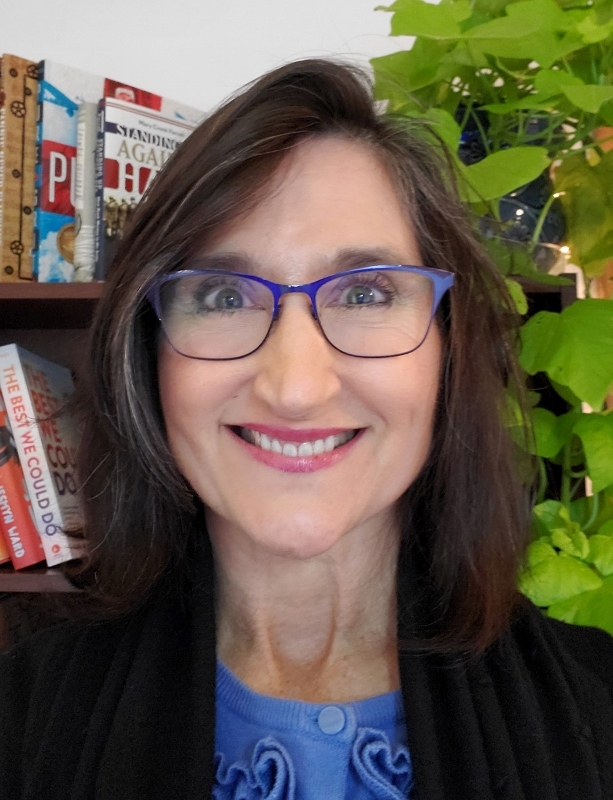
Mary is the author of books for young people and a former journalist with a passion for stories of little-known women who faced adversity and prevailed through fortitude, hard work and courage. Her books earned starred reviews and are named on lists for the Notable Social Studies Books for Young People, Bank Street College Best Children’s Books, NY Public Library Best Books for Teens and the Amelia Bloomer Project. Her work has been nominated for the Washington State Book Award, the California Reading Association Award for Excellence in Nonfiction, and the Western Writer’s Spur award for best fiction for young people.
Take it away, Mary:
You write about forgotten/historical women for younger readers. Why do you think it is important to tell these stories today
Telling women’s stories is critical if we’re to stop the machine of history that has ignored, devalued and denied women’s contributions. Without these stories we don’t have a full, in-focus, right-side-up picture of the past. And without such an understanding of the past, we can’t take meaningful strides toward justice for women. Until women’s gifts and contributions are valued equally with men’s we will continue down many of the destructive paths we’ve taken before.
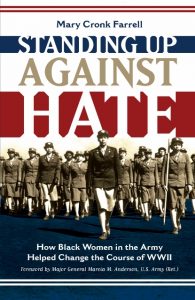
Stories of individual women are important because they give us different types of role models, and demonstrate different ways that women can approach obstacles in order to accomplish their goals. I have learned so much from the women I’ve written about: the power of leadership and grit from women prisoners-of-war, the strength of unity and collaboration from a labor organizer, the courage to step beyond your comfort zone from black women who dared join the segregated US army in WWII, and self-confidence and persistence from a young woman who followed U.S. Marines into some of the bloodiest battles of the Vietnam War.
Learning the details of historical women’s lives empowers us, provides doors and windows to better understand ourselves and others. These women give us hope to engage with the circumstances of our own lives and strengthen our faith in the human spirit and our own capabilities. Lastly, telling women’s stories honors and gives credit where credit has long been overdue.
You write both historical fiction and historical non-fiction. Is your research process different for fiction than for non-fiction?
For both historical fiction and nonfiction, my research is very much the same in terms of process. But when writing a true story I am much more meticulous about sources, details and actual quotes. What I love about research is the same for both, and that is the discovery of details that help bring history to life, interesting information that help me paint a picture.
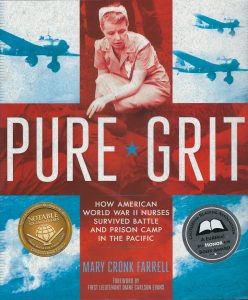
For example, I discovered quite revealing details about the facilities, where in 1941 after the fall of Corregidor in the Philippines, the Japanese imprisoned US army nurses For some 300 prisoners there were three showers, five sinks and five toilet stalls from which the doors had been removed. On the wall, a sign in huge letters said. IF YOU WANT PRIVACY, CLOSE YOUR EYES.” These few, precise details help us imagine a great deal about the women’s day to day lives in captivity.
When did you first become interested in women’s history? What sparked that interest?
I think it was the courage and fortitude of women that sparked my interest at a young age. I remember from when I was very young, a story my mother read to me about Saint Frances of Cabrini, who I’m named after. As a child Frances played with her brother by a stream where they made little leaf boats and sent them off downstream to the sea, if I remember correctly after all these years. (And possibly the story itself was not exactly true.)
Frances was determined that one day she would bravely sail across the sea and spend her life helping others. Which she did. She founded a religious order, the Missionary Sisters of the Sacred Heart, and in 1889, she sailed from Italy where she was born to the United States. She spent her life building schools, hospitals and orphanages. I never imagined joining a religious order, but at some point I realized the opportunity they presented to women. Within the bounds of their orders, many religious women throughout the ages had the freedom to pursue full-time careers, every bit as accomplished as many men. Now I’ve totally gotten off the topic. But I’ve always been drawn to stories of women who are fearless, go after what they want and don’t give up.
How would you describe what you write?
I write about little-known women in American History whose incredible courage will amaze you. Every one of my books has started with a discovery, the unexpected find of a historical person or persons that I think everyone should know about. Often, I’m shocked it isn’t being taught in school. I get so excited about how and why they did what they did that shouting from the rooftops does not seem like a silly, threadbare cliché.
What work of women’s history have you read lately that you loved? (Or for that matter, what work of women’s history have you loved in any format?)
I recently read about Gerda Pohorylle, a young German Jewish woman who escaped Germany in 1933 when Hitler became chancellor. In Paris, she met another young Jew teaching himself photography. They collaborated and she suggested they change their Jewish surnames to increase opportunities with international newspapers. She became Gerda Taro and her friend Robert Capa, who would later become the world’s most famous war photographer. Covering the Spanish Civil War, Gerda became one of the first women working in the field of photojournalism, and unfortunately, she was the first to die on the frontlines of war.
If you could pick one woman from history to put in every high school history textbook, who would it be?
Too difficult to choose, but I’ll say Gerda Taro because I only recently learned of her. She was only 26 years old when she was killed, so I think young people would relate to her. In this time of fake news, I believe it is so important for us to realize that for combat journalists, the truth is worth dying for.
What’s your next book about and when will we see it?
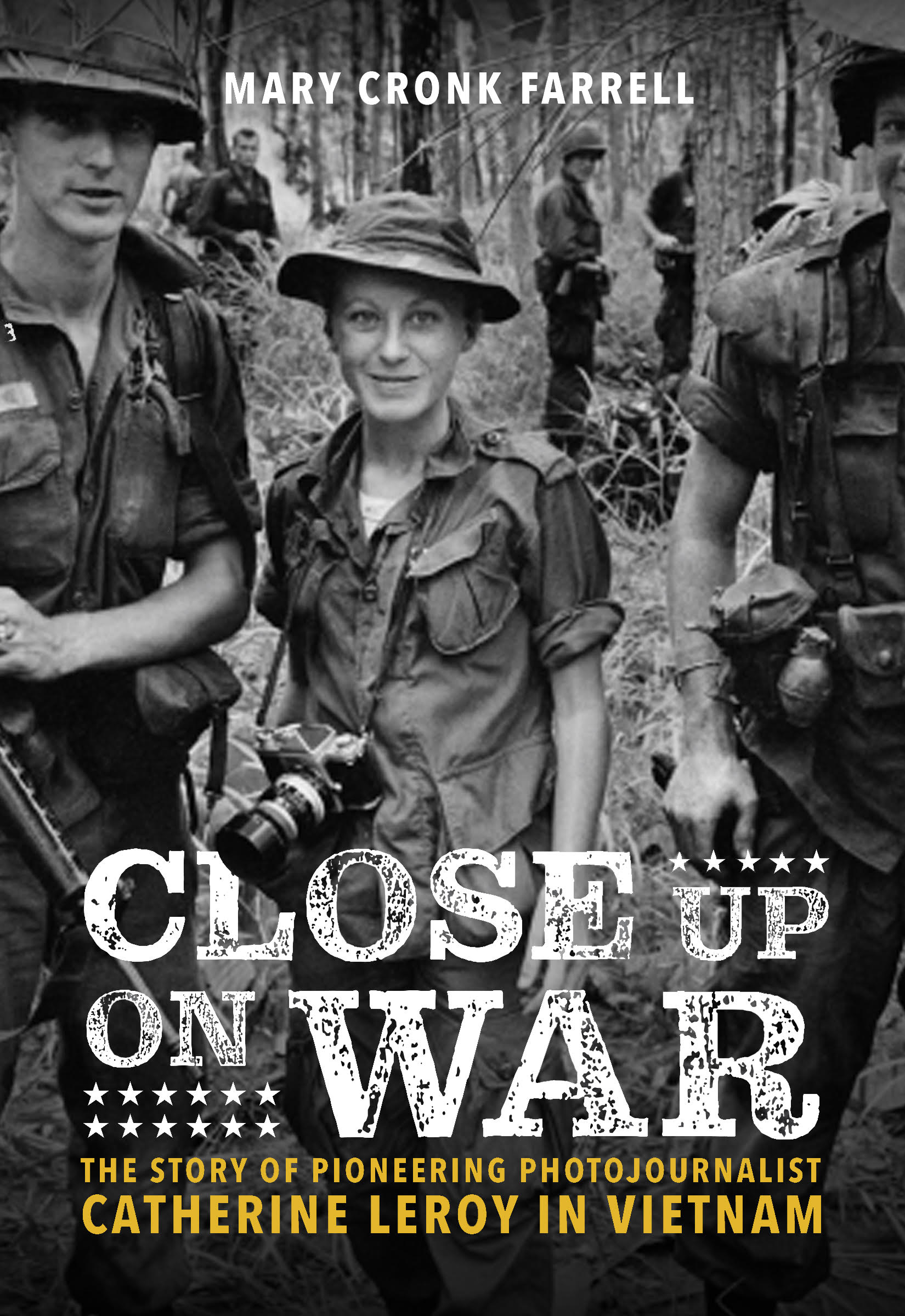
My next book is Close-up on War: The Story of Pioneering Photojournalist Catherine Leroy in Vietnam. The cover was just released in February, which is very exciting, but it will not be published until 2/2/22.
As the title says, it’s the story of Catherine Leroy, a combat photographer who started her career in Vietnam.
When Catherine flew to Vietnam in 1966, the United States was rapidly escalating its war against communism there. Though equal rights and equal pay for women were still considered radical in America, she dared to take on the heavily male-dominated world of war photography.
Bold, determined, and cool under fire, Catherine accompanied marines into the jungle, crawled through rice paddies, and parachuted into combat despite being told she didn’t belong in a “man’s world.”
Scores of photojournalists from around the world risked their lives reporting on the long, costly, and divisive war. For the bloodiest years, 1966-1969, Catherine remained the only woman photographer.
Neither capture by the enemy nor shrapnel wounds kept Catherine from getting her pictures. Her raw photos showed the brotherhood and compassion of soldiers, the anguish of civilians, and the humanity of the enemy. Published in America’s leading newspapers and magazines, Catherine’s images forced Americans to confront the human cost of war.
Based on Catherine’s personal letters from Vietnam, and including her most powerful photos, this biography is a gripping look at the Vietnam War through the eyes of an extraordinary woman whose legacy of compassion endures today.
What do you find most challenging or most exciting about researching historical women?
I love researching historical women and find it exciting to discover facts I didn’t know before. What I find challenging is all the detail work that goes into writing a nonfiction book, for instance, my new book included 23 manuscript pages of endnotes. I had many different kinds of sources and had to continually look up in the Chicago Manuel of Style to make sure I had the commas in the right place, italics where they needed to be, and so on. Then there was a different style to adhere to writing up all these same sources for the bibliography. I honestly just about lose my mind doing that kind of work.
Do you think Women’s History Month is important and why?
Mostly, I think it’s fun and interesting. I love learning about women I haven’t heard of and the impact they made in history.
What was the most surprising thing you’ve found doing historical research for your work?
To this day, I think the most surprising thing was discovering some eighty American military nurses had been captured POW by the Japanese in the early days of WWII. They remained in prison camps until the last months of the war and barely survived. I feel honored to have had the chance to write their story, and some of the most memorable and meaningful moments I’ve had as an author was talking with sons and daughters of those women.
My question for Pamela is: Why was it important for you to write about women warriors? This seems a fascinating topic for study, but what drew you personally to commit so much of yourself to writing this book?
I’ve been fascinated by the concept of women warriors ever since I was a nerdy kid who read every biography of famous women I could get my hands on and who regularly blew her allowance on comic books with female super heroes. Like a lot of young girls, I was hungry for historical role models that told me it was okay to be smart, mouthy, opinionated, or different. Looking at women warriors as role models, whether they are historical or fictional, takes that one step further. They’re not just smart, they’re strong. They’re not just opinionated, they’re brave. (I think one reason so many young girls are fascinated by Joan of Arc is that she was a teenage girl who made powerful people listen to her. That’s heady stuff if you feel like you can’t make yourself heard.)
But the real trigger for me came in 1988, when Antonia Fraser published Warrior Queens. Fraser’s book not only introduced me to women I’d never heard of before, but also to a new idea: that women “fought, literally fought, as a normal part of the army in far more epochs and far more civilizations than is generally appreciated.” Once I was aware that women warriors had existed in many times and places, it seemed like I ran across references to them everywhere. I began collecting their stories with no particular purpose in mind. After a couple of decades, that file was pretty fat and I decided it was time to share.
* * *
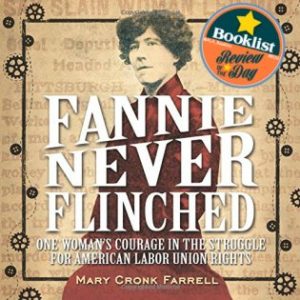
Want to know more about Mary Cronk Farrell and her work?
Check out her website: www.MaryCronkFarrell.com
Read her latest blog post
Follow her on Instagram: marycronkfarrell
Follow her on Facebook: Author Mary Cronk Farrell
* * *
Come back tomorrow for all the questions and an answer with historian Allison Lange, talking about women’s suffrage, women’s history, and the power of images.
* * *
If you’re interested in the process of writing and thinking about history, you might enjoy my newsletter, which comes out roughly every two weeks. The content is totally different from History in the Margins. In recent months I’ve discussed forgotten female photojournalists, cliffhangers, the odd experience of reading history “in real time” in the form of old newspapers, and the question of “first-naming” the subject of a biography. If that sounds like your bottle of beer, you can subscribe here: http://eepurl.com/dIft-b (When you subscribe, you’ll get a link for a very cool downloadable timeline of the Roman emperors and the women who fought against them or supported them, which I created with the people behind The Exploress podcast.)
Talking About Women’s History: Three Questions and an Answer with Lisa Levenstein
I discovered historian Lisa Levenstein while listening to one of my favorite writing podcasts. (#AmWriting with Jess and K.J. for anyone who’s interested.) Her work sounded fascinating. As soon as the podcast was over, I did a little research, decided that her work sounded even more fascinating than I originally thought, and immediately sent her an invitation to be part of this series.*
Lisa is Director of the Women’s, Gender, and Sexuality Studies Program and Associate Professor of History at UNC Greensboro. She is the author of the award-winning A Movement Without Marches: African American Women and the Politics of Poverty in Postwar Philadelphia (UNC Press, 2009) and They Didn’t See Us Coming: The Hidden History of Feminism in the Nineties (Basic Books, 2020). Lisa’s research has been supported by long-term fellowships from the American Association of University Women, the Center for African American Urban Studies and the Economy, the National Humanities Center, and the American Council of Learned Societies. She is a founding executive board member of Scholars for a New Deal for Higher Education, the Vice Chair of the Board of Governors of UNC Press, and co-host of the podcast Collegeland.
Take it away, Lisa:
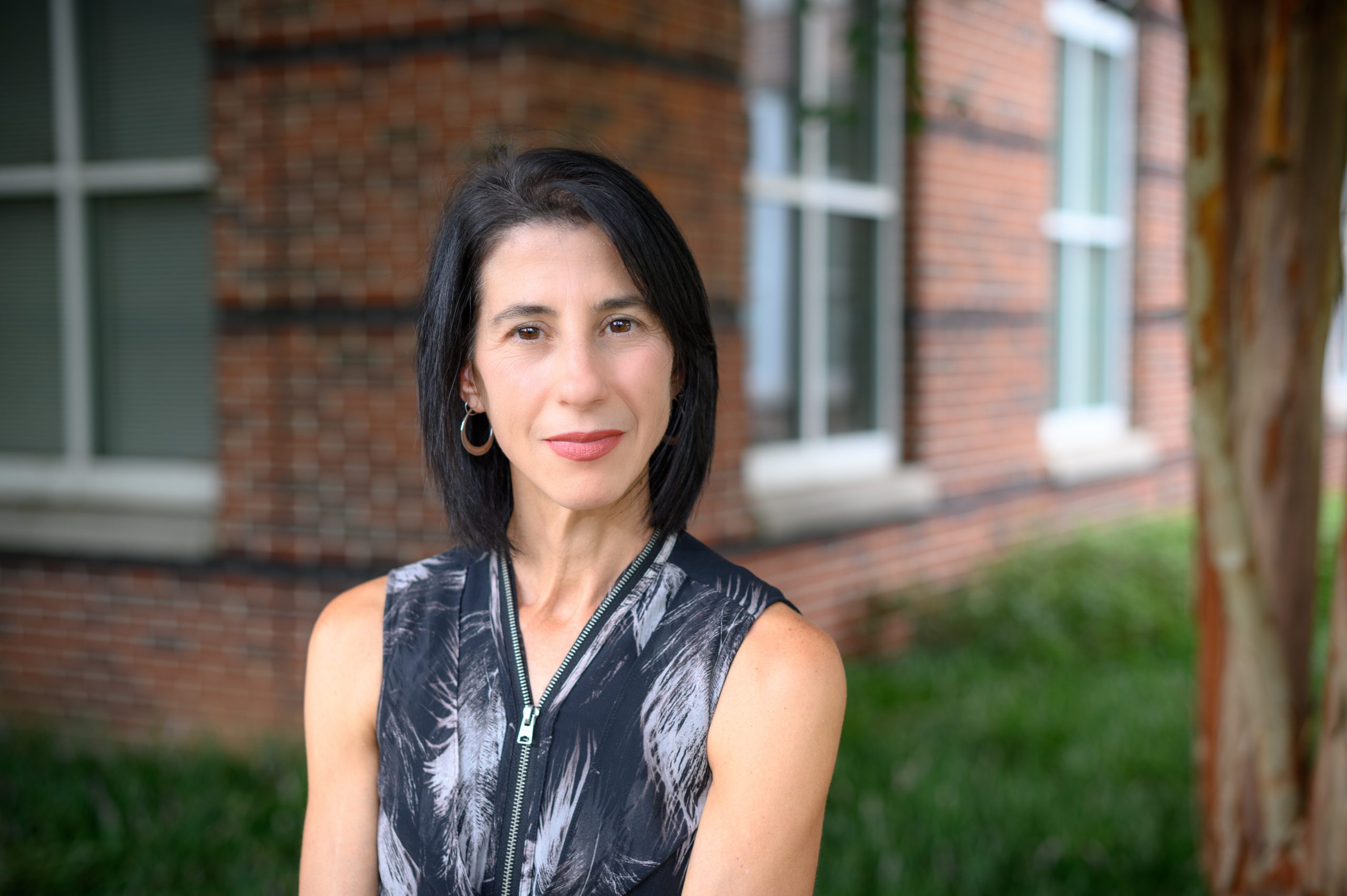
You write about women who are not generally included in the history of feminism. How does the addition of women of color and working class women change our understanding of the feminist movement?
While the media has often characterized feminism as a white middle-class women’s movement, women of color and working-class women have been working to advance feminist goals for just as long as white women. When we include a broad range of actors in our histories of feminism, we can better understand the breadth and goals of the movement. In the 1990s, activists insisted that every issue was a feminist issue–from environmental justice to labor rights. They fought for reproductive justice and welfare rights while protesting against police brutality and free trade. Feminism in the 1990s was a broad umbrella thanks in large part to the efforts of working-class women and women of color.
When did you first become interested in women’s history? What sparked that interest?
I was a history major in college but did not get exposed to women’s history until a course I took on European women’s and gender history in my junior year. The professor, Carolyn Dean, taught us about how gender ideology was deeply ingrained into all aspects of politics and culture. Although the course focused on Europe in the eighteenth and nineteenth centuries, it fundamentally altered my understanding of contemporary politics and culture in the US. When I realized that one course had changed how I read the newspaper, watched television, and debated with my friends, I was hooked.
Unlike many of the people I’m interviewing, your work deals with the recent past. Are there special challenges to researching and writing about women in the periods you study?
Writing about the 1990s was a joy because I could interview people about their lives and work. But writing about living people who were part of the same movement is tricky because they each have their own recollections of specific events. After hearing several different versions, I tried to compare the information in the interviews with the available primary documents. But here again, the benefits of researching the recent past (there are a plethora of documents) also posed a challenge. There are so many available accounts of the events of the 1990s that it’s hard to know when to stop researching. To make things even more complicated, in the 1990s, the Internet was starting to become a force in people’s lives, and many feminists were very active online. Fortunately there have been efforts to catalogue early webpages and many of the activists I studied printed out their e-mail messages, leaving a paper trail for historians. I’m not sure how we will track the correspondence of our current generation, since most of our email is privately stored on our computers or in cyberspace. Many of us also interact with other people on social media platforms like Facebook and Twitter. Skilled archivists are tackling these questions but I suspect that the digital age will pose unique challenges to future historians.
Question for you (I will continue the theme :-): Is women’s history a feminist project?
The short answer is: yes. But I suspect that you were looking for something a little more substantive here.
Actually, Lisa answered this for me. One class on European and gender history taught her how deeply gender ideology is interwoven into not only our understanding of history, but into our understanding of how society works. In fact, interwoven is too mild a word. Gender ideology is a Gordian knot of knowledge, beliefs, and habits. Every women’s history class, every book about a forgotten woman from history, every article that reveals a woman whose name was left out of the story helps loosen that knot just a little bit.
*Moral of the story for any writers in the audience: Being a podcast guest is definitely an effective way to reach potential new readers.
* * *
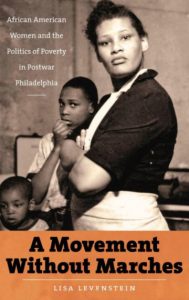
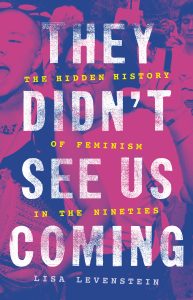
Want to know more about Lisa Levenstein and her work?
Check out her website: https://lisalevenstein.com/
Listen to her podcast: https://www.collegelandpod.com/
Follow her on Twitter: @lisalevenstein
Come back tomorrow for three questions and an answer with author Mary Cronk Farrell, who writes about little-known women in American history for a young adult audience. (Catch ‘em while they’re young!)
* * *
If you’re interested in the process of writing and thinking about history, you might enjoy my newsletter, which comes out roughly every two weeks. The content is totally different from History in the Margins. In recent months I’ve discussed forgotten female photojournalists, cliffhangers, the odd experience of reading history “in real time” in the form of old newspapers, and the question of “first-naming” the subject of a biography. If that sounds like your bottle of beer, you can subscribe here: http://eepurl.com/dIft-b (When you subscribe, you’ll get a link for a very cool downloadable timeline of the Roman emperors and the women who fought against them or supported them, which I created with the people behind The Exploress podcast.)
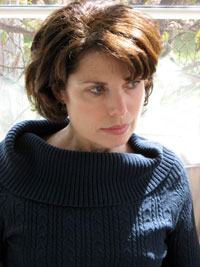
Talking About Women’s History: Three Questions and an Answer with Nancy Goldstone
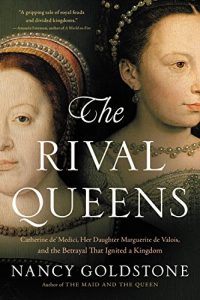
I first discovered Nancy Goldstone’s work when I read The Rival Queens for a Shelf Awareness review. I’ve been a fan ever since.
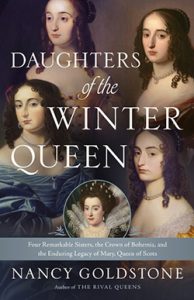
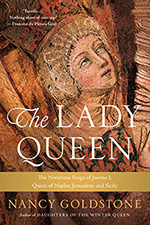
Nancy has a passion for medieval history and old and rare books. She is the author six works of historical non-fiction about powerful and often overlooked women in European history , including most recently Daughters of the Winter Queen: Four Remarkable Sisters, the Crown of Bohemia, and the Enduring Legacy of Mary, Queen of Scots. (FYI: She also writes books with her husband about their experiences in the world of rare and antiquarian books.)
Like many of us, Nancy didn’t take a straight path to her writing life. She graduated with honors in history from Cornell University in 1979 and received her MA in International Affairs from Columbia University in 1981. Immediately upon graduation she embarked on a hilariously brief career trading foreign currency options, an adventure which was chronicled in her first book, Trading Up: Surviving Success as a Woman Trader on Wall Street.
Personally, I’m pleased that she found her way to writing about remarkable women who helped shape history.
Take it away, Nancy!
You write about women who were powerful in their own time, but who are largely overlooked today. Why do you think we tend to forget the roles women play in history?
I don’t think we forget the roles women play in history. I think we never learned anything about them in the first place! That is because for centuries the study of history was dominated by men who, let’s face it, (1) weren’t all that interested in researching the lives of women and (2) tended to believe that men did everything anyway. It’s changing now as more and more women come into the field but in my opinion we still have a long way to go. For example, there’s a lingering prejudice in the field of European history that women did not really wield power, that their role was mostly to bear sons, and that other than that they were more or less considered part of the interior decoration of the castle. Elizabeth I is the great exception to this, of course—a new book, documentary, film, or series seems to come out about her every year. But there were so many other women just as important as Elizabeth I, who no one has ever heard of! Women of great courage and ability, whose lives and accomplishments are absolutely integral to understanding the signal events of their time. Those are the women I want to learn about. And I am thrilled to report that I have found them in every century.
If you could pick one woman in history to put into every high school textbook, who would it be?
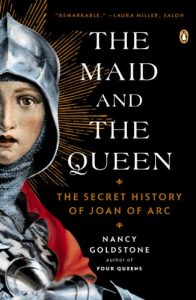
I can think of so many women who deserve a place in school textbooks but I am going to go with Yolande of Aragon, 15th century queen of Sicily, duchess of Anjou and Maine, and countess of Provence, only because the Joan of Arc story is so well known, and to study Joan without Yolande is like omitting Abraham Lincoln from a survey course on the Civil War.
Just to recap quickly, Yolande of Aragon was the dauphin’s mother-in-law during the second half of the Hundred Years War. After Henry V walloped the French army at Agincourt in 1415, the English invaded and occupied all of western France, plus the capital city of Paris. The dauphin Charles was subsequently disinherited, and Henry went on to marry Charles’s sister and to declare himself king of both England and France.
But the dauphin did not give up. Forced to flee Paris, he regrouped his forces south of the Loire and declared war on England. Luck was against him, however, and he lost battle after battle. He began to doubt whether his cause was just, whether he really was the legitimate heir to the throne. Then, in 1428, the English, determined to break through the barrier of the Loire and take over the rest of France, launched the siege of Orléans, Orléans being one of the cities still loyal to the dauphin. And it was at this point that Joan of Arc miraculously turned up unannounced at Charles’s court, convinced him she was a messenger from God, gave him the courage he needed to fight back, and went on to lift the siege, beat the English, and lead Charles to be crowned king at Reims, thereby returning the rightful heir to the throne.
Except that it wasn’t just Joan’s voices that got her an audience at court. Although she was unaware of it, Joan had quite a bit of help from Yolande. It was Yolande who ran her son-in-law’s council. It was Yolande who pawned her own silverware to pay for the army and supplies necessary to lift the siege of Orléans; it was she who brought in new diplomatic allies and recruited the most experienced warriors to lead the French military effort against the English. Most significantly, it was Yolande who, in a brilliant political move, stepped in and secretly recruited a mystic (Joan) to help jolt her son-in-law out of his psychological paralysis when Charles (who was after all only in his twenties, very superstitious, and so vacillating that he made Hamlet look decisive) refused to give the order to fight back and instead openly debated fleeing to Scotland.
There’s much more—Yolande was hands down the most competent politician of her time (or of any time for that matter)—but what I really love about her is that she did this all so deftly, and hid her tracks so well, that for the next 600 years every historian and writer who looked at these events, including some of the greats like George Bernard Shaw and Mark Twain, totally swallowed her cover story because it was obviously far more likely that angels would come down to earth to direct the course of a battle than that a fifty year old woman with decades of political, diplomatic, and administrative experience, would actually be running the show.
What’s your next book about and when will we see it?
My next book is about Empress Maria Theresa, queen of Hungary and Bohemia, and three of her daughters: Maria Christina, duchess of Teschen and governor-general of Brussels; Maria Carolina, queen of Naples; and the world-famous Marie Antoinette, doomed queen of France.
I have known for years that I wanted to write about Maria Theresa. In fact, I have been building up to her. Maria Theresa was the only female ever to inherit the vast Habsburg empire in her own right. However, no sooner did she come into her birthright at the age of 23 than she was attacked by an overwhelming consortium of European powers who, believing her weak because she was a woman, intended to divide her lands and subjects among themselves. This turned out to be a big mistake. Despite her youth and inexperience, Maria Theresa managed through intelligence, hard work, and sheer determination to overthrow her enemies instead! Who would not wish to tell that story?
In this book I also had the chance to write about the whole tumultuous, wondrously transformative eighteenth century by following the lives of three of Maria Theresa’s remarkable daughters as well. And one of those daughters was Marie Antoinette, the most notorious queen in history! That was irresistible.
Although it is true that Marie Antoinette’s story has been told many times, I am very glad that I had an opportunity to research it myself. Before, so much of hers and Louis XVI’s behavior seemed inexplicable to me. This is my sixth book of European history; one by one, in chronological order beginning with the thirteenth century, I have meticulously examined a slew of royal courts. The rule of almost every king and queen I have ever written about has been threatened. And yet nowhere but at the court of Louis XVI had I encountered a sovereign who did not at least try to send his wife and children away to safety. Even Charles I got his wife and all but two of his six children out of England! And this was only one of a multitude of behaviors that I found puzzling. Happily, as a result of my research, I believe I have discovered the answers to all of my questions and can help illuminate the mystery and add greatly to our understanding of these key historical figures.
But while Marie Antoinette might get all the press it is her older sisters who deserve to be rescued from anonymity! They were among the most impressive women I have ever written about. Maria Christina, in addition to governing first Hungary and then the Austrian Netherlands, was a gifted artist who also managed to assemble the magnificent collection of paintings and drawings which today form the permanent exhibit of the celebrated Albertina Museum in Vienna. And Maria Carolina, the sister closest in age and affection to Marie Antoinette, was even more extraordinary—she ruled the kingdom of Naples, guided it into its Golden Age, and then fought tenaciously against Napoleon, all while being saddled in marriage to Ferdinand, king of Naples, who gets my vote for all-time worst husband ever. Maria Carolina’s hilarious dealings with her hopeless spouse were definitely among the most fun sections to write!
The book is called In the Shadow of the Empress: The Defiant Lives of Maria Theresa, Mother of Marie Antoinette, and her Daughters. It comes out in September. I love the cover, you can see it here:

A question for you: I would love to hear what you are investigating—you have kind of hinted at it and it sounds fascinating.
Allow me to introduce you to Sigrid Schultz of the Chicago Tribune:
Sigrid Schultz was the Chicago Tribune‘s Berlin bureau chief and primary foreign correspondent for Central Europe from 1925 to 1940. It was a period of big ideas and big events, and Schultz was at ground zero for many of them. She was one of the first reporters—male or female—to warn American readers of the Nazi menace. At a time when women reporters rarely wrote front page stories, her connections in Berlin society, her colloquial command of German, and her understanding of Germany’s history and politics allowed Schultz to regularly scoop her male counterparts on major news events, including the impending death of Weimar Germany’s first president in 1925 and Hitler’s non-aggression pact with Russia in 1939. William L. Shirer, author of the Rise and Fall of the Third Reich, who reported from Berlin from August 1934 to December 1940, admitted, “No other American correspondent in Berlin knew so much of what was going on behind the scene as did Sigrid Schultz.”
I am deep in the world of foreign correspondents, American newspapers. Weimar Germany, “false news,” glass ceilings, American isolationism, Nazis, the Lost Generation, the rise of radio news, daily life in Berlin and the challenges of getting the news out in the face of tightening controls over the press.
And thank you for asking!
* * *
Want to know more about Nancy Goldstone and her work?
Check out her website: www.nancygoldstone.com
* * *
Come back tomorrow for three questions and an answer with historian Lisa Levinstein, whose work expands the history of feminism in important ways.
* * *
If you’re interested in the process of writing and thinking about history, you might enjoy my newsletter, which comes out roughly every two weeks. The content is totally different from History in the Margins. In recent months I’ve discussed forgotten female photojournalists, cliffhangers, the odd experience of reading history “in real time” in the form of old newspapers, and the question of “first-naming” the subject of a biography. If that sounds like your bottle of beer, you can subscribe here: http://eepurl.com/dIft-b