




Two WASP Pilots Show the Men How It’s Done: A Guest Post by Jack French
One of the great pleasures of writing History in the Margins is the opportunity to carry on conversations with readers “off the page.” I love it when one of you expands the story with additional information or gently corrects me when I go astray. Long-time reader Jack French occasionally takes it one step further and not only shares a story with me, but allows me to share it with you. (You may remember his wonderful post on the woman who invented Monopoly. )
This is one of those times. Take it away, Jack:

Since this is Women’s History Month, I’d like to tell you about two very significant women you’ve probably never heard of before: Didi Moorman and Dora Dougherty. This duo played an important role in our eventual victory in WW II. Their story is inspiring, although history has almost forgotten them.
In 1943 when the enormous four-engine B-29 “Super Fortress” was still in early test flights, many problems with it occurred which Boeing was having trouble fixing. One main problem was engines catching fire. In February of that year, Boeing’s top test pilot, Eddie Allen, was on a test flight with 8 other crewmen when an engine caught fire, leading to a catastrophic wing failure and the plane crashed, killing the entire flight crew and 19 civilians on the ground. There were B-29 failures before but none this serious.
Word spread throughout the Army Air Corps, and its pilots started doing everything to stay out of the B-29. Its scary nick-name was now “Eddie’s coffin.” The hand-picked men who were being trained to fly this new complicated bomber were resistant to fly it and some absolutely refused to get in the cockpit. The officer in charge, Lt. Col. Paul Tibbets, knew something had to be done to correct this situation. His plan was bold: get women pilots to show the men this giant military aircraft was safe and reliable.
The only women pilots in the military were those of the Women’s Airforce Service Pilots (WASP) who were federal civilians in the ferry service who were also towing targets and instructing new male pilots. In June 1944 Tibbets recruited two WASP pilots: Didi Moorman and Dora Dougherty, assigned to Eglin Army Air Force Base in FL. Neither of these experienced pilots had ever flown a 4 engine bomber. Instead of the six month training program that male pilots received before flying a B-29, Tibbets trained the two women for only three days before he decided they were ready for their demonstration. This was because the two women were experienced, highly motivated, well trained, and unlike their male counterparts, actually followed Tibbets’ instructions to the letter.
Next Dora and Didi, with a male crew, piloted a series of successful demonstration flights out of the heavy-bomber base at Alamogordo, NM with male pilots watching on the ground. Within days, the men stopped complaining, got over their fears, and resumed training on the B-29.
On Aug 6, 1945, a B-29, “Enola Gay”, piloted by Tibbets, dropped the first atomic bomb on Japan.
Jack French is a former Navy officer and retired FBI Agent in Virginia. He is a vintage radio historian and the author of two published books on the subject. Jack is a guest lecturer whose topics include: Civil War Heroines, History of Toys & Games, and the Golden Age of Radio.
www.jackfrenchlectures.com
* * *
On Monday, it’s back to Women’s History Month, with Three Questions and an Answer with historian Nancy Goldstone, who writes about powerful women in medieval and early modern Europe.
* * *
If you’re interested in the process of writing and thinking about history, you might enjoy my newsletter, which comes out roughly every two weeks. The content is totally different from History in the Margins. In recent months I’ve discussed forgotten female photojournalists, cliffhangers, the odd experience of reading history “in real time” in the form of old newspapers, and the question of “first-naming” the subject of a biography. If that sounds like your bottle of beer, you can subscribe here: http://eepurl.com/dIft-b
Talking About Women’s History: Three Questions and an Answer with Diana Giovinazzo
Diana Giovinazzo is the co-creator of Wine, Women and Words, a weekly literary podcast featuring interviews with authors over a glass of wine. Diana is active within her local literary community as the president of the Los Angeles chapter of the Women’s National Book Association. Her debut novel, THE WOMAN IN RED, was released August 4, 2020. Her second novel, ANTOINETTE’S SISTER will be released January 11, 2022.
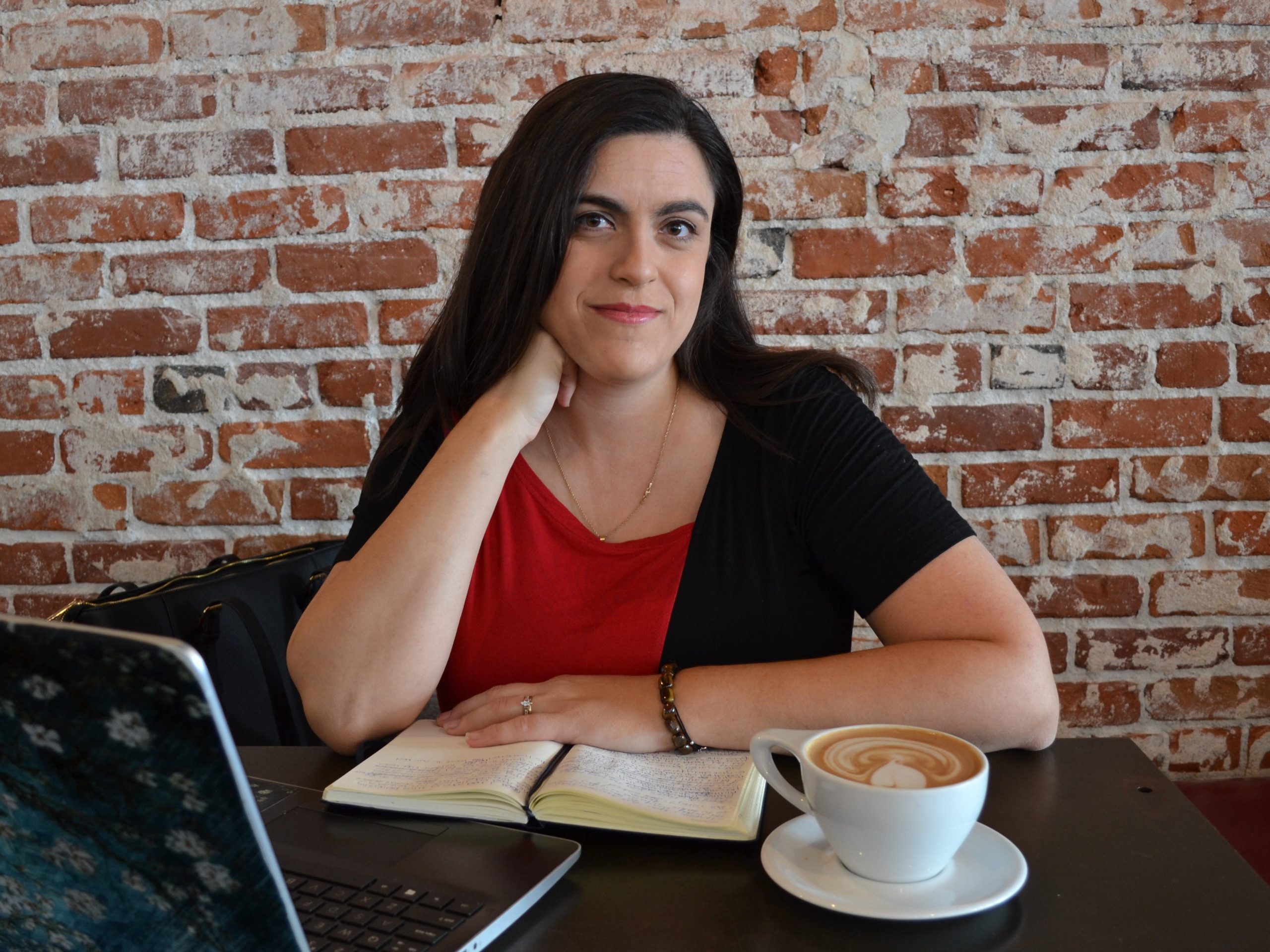
The Woman in Red is the story of Anita Garibaldi, best known as the wife of Italian nationalist Giuseppe Garibaldi. Are there special challenges to writing about a woman whose story has been overshadowed by that of her husband?
Giuseppe Garibaldi is one of the most famous men in Italian history, there is no shortage of books analyzing everything he did. On the flip side, there was virtually nothing on Anita, and if she was listed in a book the information was wrong. I mean so blatantly wrong to the point where I couldn’t even trust the source. The lack of information that I was able to get was not only a challenge but I continuously having to go back and double-check my sources against each other. No too book was the same and it was really frustrating.
What types of sources do you rely on to create rich fictional characters from obscure or poorly documented historical figures?
The books I had to primarily rely on were first-hand accounts from Giuseppe, their friends, and even Anita herself. In the end, those were the only sources I could truly trust. Which is so different from the book that I am currently working on where history books and biographies can be trusted. It’s a little weird. I am thankful I was able to use these resources though because it really helped me capture their voices and their feelings of what was happening.
Do you think Women’s History Month is important and why?
Women’s History Month is exceedingly important. For so long women’s history has been delegated to the fringes letting the contributions that women have made slip through the cracks of the historical record. Taking the month of March to pause and reflect on the women who came before us helps us remember and to preserve their memories for future generations.
And my questions for you: What woman in history has been influential for you?
There are so many ways to answer that question! There are women who taught me how to be the person I am. And women who fought for women’s rights and gave me opportunities I wouldn’t otherwise have enjoyed. But I think I’ll go with two historical figures who shaped my interest in women’s history.
The first is Clara Barton, the most famous of the women who nursed in the American Civil War and the founder of the American Red Cross. She was the subject of the first biography I ever read. (Not just the first biography of a woman. The first biography, period.) I was seven or eight at the time and reading everything that crossed my path. Barton captured my imagination, both in her own right and because it was the first time I learned that women could do Big Things. I was hooked.
The second is Lakshmi Bai, the Rani of Jhansi, who led her soldiers onto the battlefield to fight the British in the uprisings of 1857. She was a major figure in my master’s thesis and an important step on the road to writing Women Warriors.
* * *

Want to know more about Diana Giovinazzo and her work?
Check out her website: https://dianagiovinazzo.com/
Follow her on Instagram: @dianagauthor
Follow her on Twitter: @dianagauthor
* * *
Come back tomorrow for a great Women’s History Month story from friend of the Margins, Jack French.
Talking About Women’s History: Three Questions and an Answer with Anna Malaika Tubbs
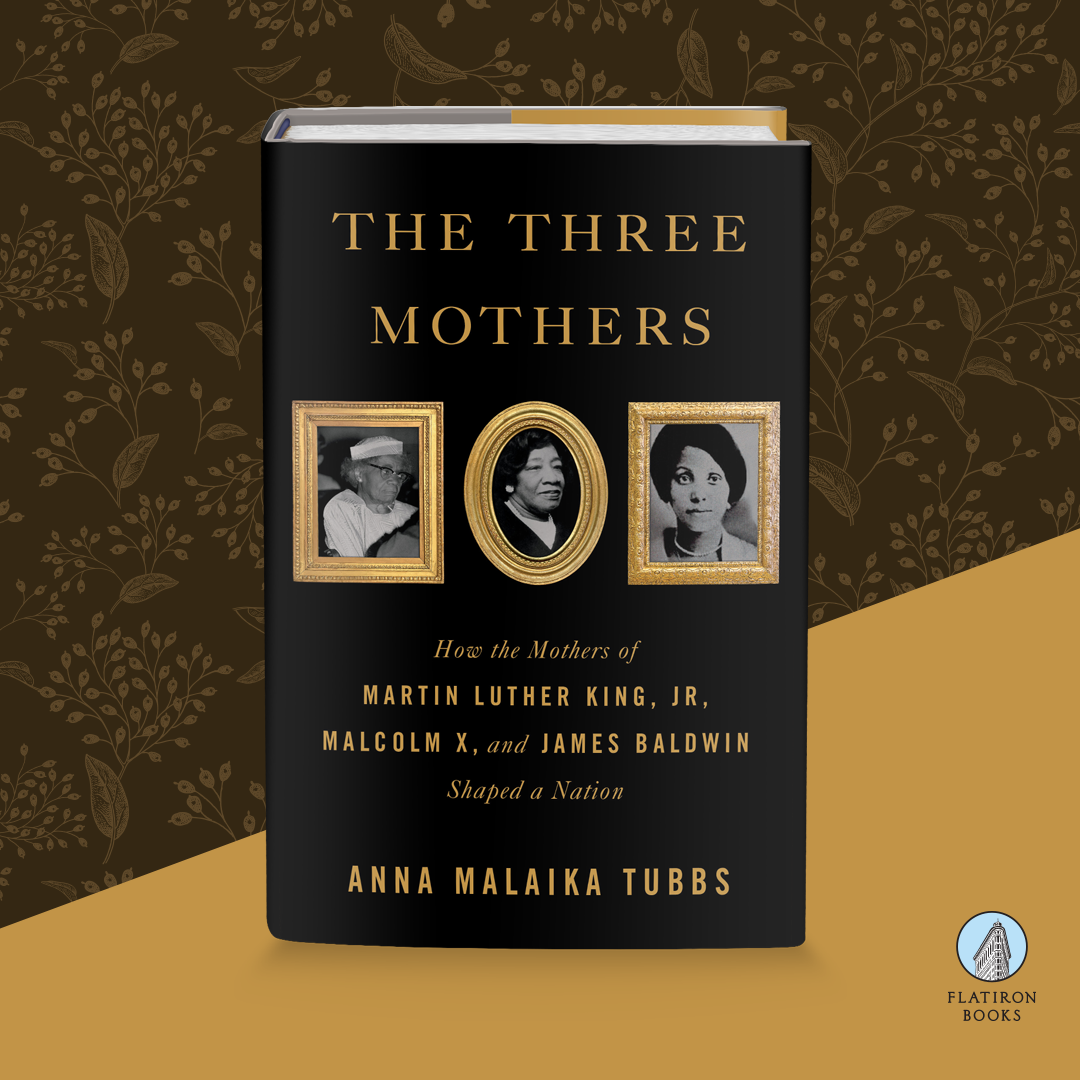
Anna Malaika Tubbs is the author of The Three Mothers: How the Mothers of MLK Jr., Malcolm X, and James Balwdin Shaped a Nation. She is also a Cambridge Ph.D. candidate in Sociology and a Bill and Melinda Gates Cambridge Scholar. After graduating Phi Beta Kappa from Stanford University with a BA in Anthropology, Anna received a Master’s from the University of Cambridge in Multidisciplinary Gender Studies. Outside of the academy she is an educator and DEI consultant. She lives with her husband, Michael Tubbs, and their son, Michael Malakai.
Take it away, Anna!

What inspired you to write about these women?
I have always been passionate about correcting the erasure of Black women. When I started my PhD I knew I wanted to bring attention to Black women who had been wrongfully forgotten. We often hear the saying that “behind every great man is a great woman,” a saying that really bothers me, because most likely in such cases that woman is right beside the man, if not leading him. So I wanted to think about things differently and introduce the woman before the man. I believe mothers are some of the most underappreciated and unseen people in society and I felt it was time to honor them with the attention and credit they deserve. With all of this in mind, I dove into researching mothers of famous Black men. When I came across Alberta’s, Berdis’s, and Louise’s stories that were filled with nuance, diversity, as well as similarities and intersections as a result of the closeness in their birthdays as well as their famous sons’ birthdays, I just knew I had to dive deeper and share their names with the world. Their lives offer guidance and encouragement for Black women today, they show us different ways to be women, Black women, Black mothers, activists, educators, and much more. They remind us how difficult the world can be while also showing us ways to actively change it.
Who are some of your favorite authors working in women’s history today?
I have so many, but I’ll list a few!
Isabel Wilkerson – what she was able to do with The Warmth of Other Suns and now Caste is deeply inspiring. Her research is crucial and her ability to translate years of work into beautiful narratives that allow us to understand difficult concepts easily is something I try to emulate.
Patricia Hill Collins – her extensive sociological work on all aspects of Black womanhood and Black feminism over decades provides the basis of so many projects, interventions, and policies that impact our lives. You simply cannot do research on anything concerning Black women without engaging in something Patricia Hill Collins produced.
Melissa Harris-Perry – She is the kind of public intellectual I hope to become. She is brilliant and she uses her work to inspire change within, but more importantly beyond, the Ivory tower. She reminds all Black women of our worth and the treatment we deserve even if we’ve been denied it time and time again in the United States. Sister Citizen is one of my all-time favorite books.
How can your book help us better understand the civil rights movement as well as our current political/social climate?
At the center of The Three Mothers is a discussion of the dehumanization of all Black people. Motherhood is about creation, the giving of life, and this role becomes even more powerful in communities that are denied humane treatment on a daily basis. We as a Black community are continuing a long-fought struggle for our humanity, dignity, and worth to be recognized. This book, by focusing on Black motherhood, acknowledges that fight and shows how despite the many ways that our humanity has been denied in our nation, we have continued to find ways to humanize ourselves, give life, and move our country forward.
The Three Mothers provides a perspective of a century of U.S. history through the eyes of Black mothers. Alberta King, Berdis Baldwin, and Louise Little were born within six years of each other, the first was born in the late 1890s, and the last of the three to die, passed away in the late 1990s. The book is a lesson on the way history has impacted the current fight we find ourselves in from the perspective of identities we do not highlight enough. We have much to learn from the generation before our revered civil rights heroes, we have much to learn from Black women, and we have much to learn from Black mothers.
Question for you – Who would you say are women warriors of today?
In Women Warriors, I concentrated on women for whom battle was not a metaphor. By that standard, some of the most amazing modern women warriors are the Kurdish women who fought against Isis. They are the subject of a new book by Gayle Tzemach Lemmon, The Daughters of Kobani. I loved her previous book, Ashley’s War and I’m looking forward to this one.
* * *
Want to know more about Anna Malika Stubbs and The Three Mothers?
Check out her website: https://annamalaikatubbs.com/
Follow her on Twitter: @annas_tea_
* * *
Come back tomorrow for three questions and an answer with historical novelist Diana Giovinazzo.