




Talking About Women’s History Month: Three Questions and an Answer with Rowena Kennedy-Epstein
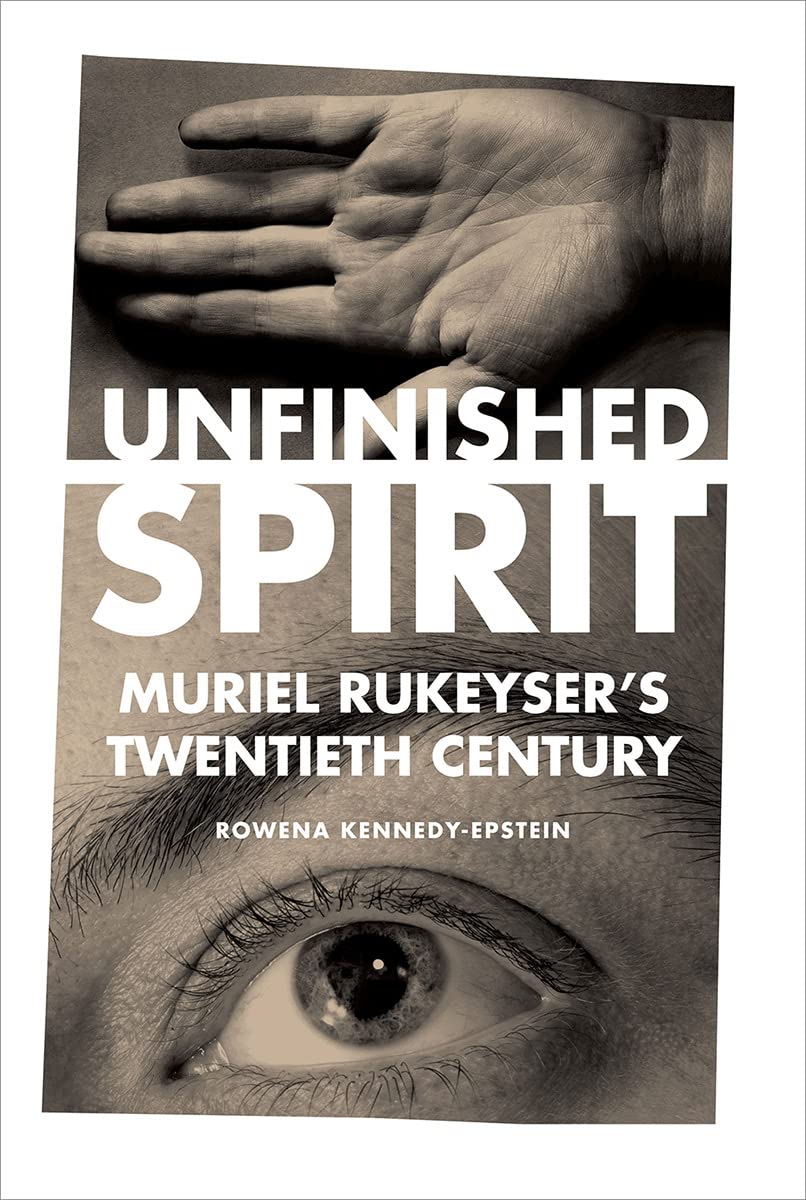
Rowena Kennedy-Epstein is Associate Professor of Gender Studies and 20th/21st-Century Women’s Writing at the University of Bristol. She is the author of Unfinished Spirit: Muriel Rukeyser’s Twentieth Century (Cornell UP, 2022), which won the Modern Language Association Matei Calinescu Prize, and she has published three editions of Rukeyser’s witting: The Muriel Rukeyser Era: Selected Prose (Cornell UP, 2023), her novel Savage Coast (Feminist Press, 2013), and Barcelona, 1936 (Lost&Found 2011). A visiting scholar at the Oxford Centre for Life-Writing, she’s currently writing the first biography of Rukeyser (Bloomsbury USA), for which she was awarded a 2022-23 National Endowment for the Humanities Public Scholars Fellowship.
Take it away, Rowena!
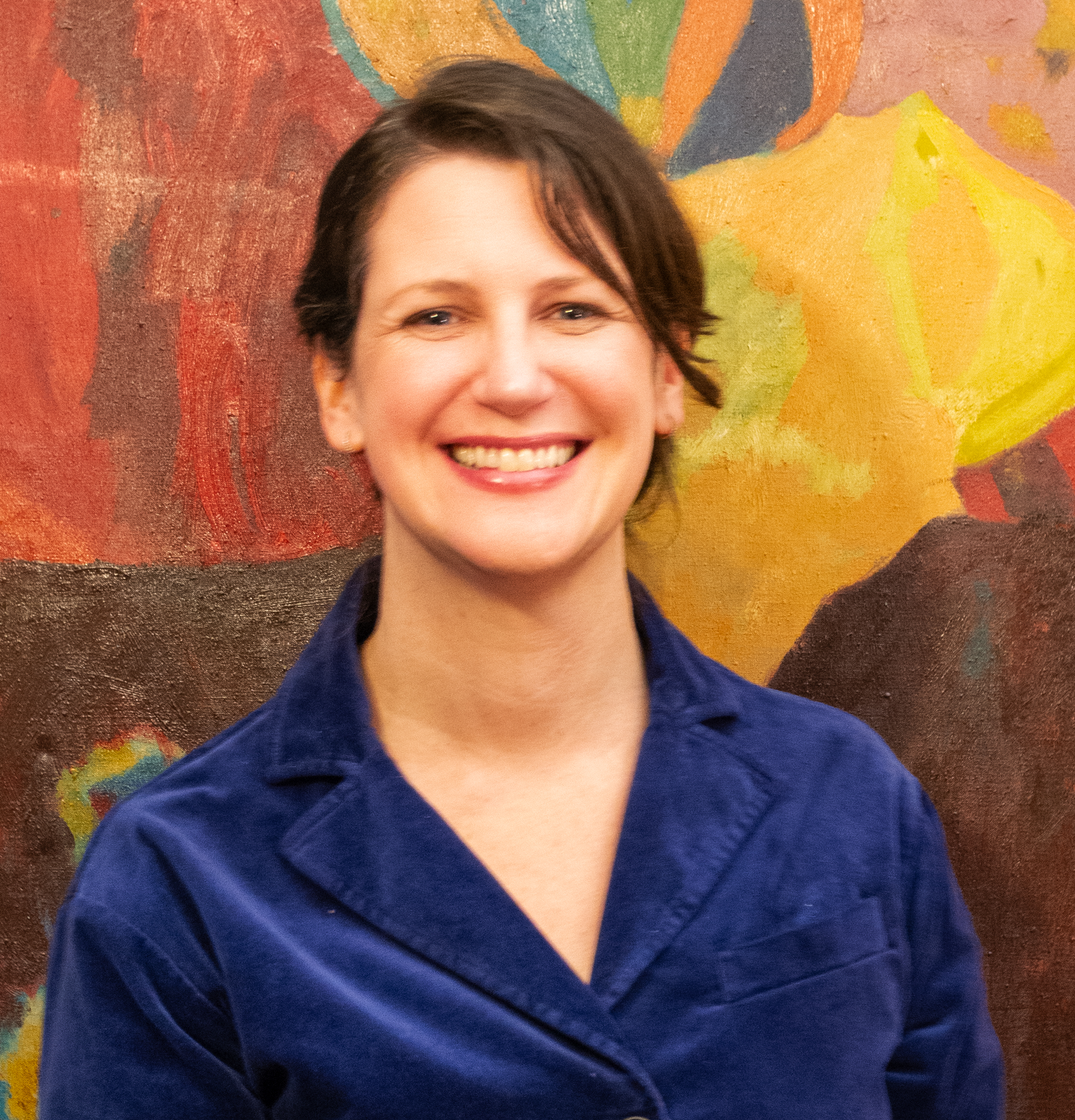
What path led you to Muriel Rukeyser, and why do you think it’s important to explore her story today?
I think the “Rukeyser Era” had been percolating, because in my first weeks of graduate school in 2006 at the CUNY Graduate Center two different professors included her work on their reading lists. Ammiel Alcalay included the Life of Poetry (1949) in his seminar on American poetry and the Cold War—that course was the start of his extraordinary Lost & Found publishing project, which I think has really transformed the ways students engage with archives. At the same time, I was in Jane Marcus’s seminar on the Spanish Civil War (1936-39), and Rukeyser’s poem “Mediterranean” was on the syllabus. I think I ended up reading both works around the same week, and they are clearly connected, each beginning on the boat evacuating Barcelona at the start of the Civil War in July 1936. It was clear how vital that moment in Barcelona was to Rukeyser, and I began looking for more writing and scholarship about her time in Spain. But there was very little written about her that I knew how to access at the time—Adrienne Rich’s introduction to a selection, a collection of essays, some chapters in book, and a monograph from 1980.[1] Her Collected Poems had only just been republished that year, in 2006. When I went to speak to Jane about Rukeyser, she asked me what I thought about the poem. Without much understanding of why I would think this, I said I thought the poem “might be bad and I wasn’t sure I liked her writing at all.” I had just come out of an MFA program in poetry, and looking back I can see that we were still caught in the long backlash to second wave feminism, and to the writers that articulated the political realities of women’s lives, many of whom would cite Rukeyser as a major influence—the “mother of us all.”
Jane Marcus, whose ideas and criticism were forged in the second wave, responded with a howl of impatience when I used the word “bad” to describe Mediterranean. She said, in words more brilliant than I can recall now, that in order to do feminist and radical scholarship I had to evaluate texts not on the aesthetic, disciplinary and political terms defined by patriarchy to exclude women from public space but by looking at how women writers disrupt and defy those very orthodoxies. Better yet, she said, go to the archives and find those texts; teach them not just as a corrective or counter-canon, but as exemplary—as the very subject itself.[2] And so I went up the street to Rukeyser’s archive at the Berg collection of the New York Public Library. I began to find there a subject whose work demanded a new kind of narrative, whose writing—much of it unfinished or out of print—would make me understand how inculcated in patriarchy my thinking still was, our texts still were. It wasn’t long after that I followed Rukeyser’s trail to her other archive at the Library of Congress, where I discovered her lost novel about the Spanish Civil War, Savage Coast. I’ve written about the experience of encountering Savage Coast in the Library of Congress a few times—it was in a miscellany folder, filed away from her other Spanish Civil War writing—and it was unfinished, with the rejection letter (written by her mentor Horace Gregory) just siting on top, so it was the first thing I read. But what is poignant, now that I think about it, is how the language used in the rejection of the novel in 1936—that it was “BAD”—prefigured so strongly my own cursory assessment of Mediterranean in Jane’s office in 2006. As I began to read the novel right there in the archive I must have started to course-correct myself, to retrain the aesthetic judgments I held, seeking to understand how gender bias had formed responses to her writing but to also see how the forms she chose in her writing were already responding to the very same gendered assumptions. I could also see what critical sexism had done to this extraordinary novel, leaving it fragmented and unpublished, and forcing Rukeyser to work relentlessly, in every genre, to move her ideas into the world. Following this work—published and unpublished—through the archive has changed those narratives and it has changed me. Rukeyser’s politically engaged and formally experimental writing teaches us how to read and write against institutionalised power, and to imagine “some nameless way of living/of almost unimagined values.”
Writing about a historical figure like Muriel Rukeyser requires living with her over a period of years. What was it like to have her as constant companion?
I never thought I would be working on one writer for over a decade! I’m still surprised that I am writing her biography now. There’s a great passage the Introduction to Andrea Dworkin’s Letters from a War Zone (1988), in which she talks about about being Rukeyser’s assistant in 1972. I think it underscores why living with Rukeyser has been so rewarding and feels important. Dwrokin recalls:
Muriel gave me my first book party, to celebrate the publication of Woman Hating; and I thought that was it—I was a writer (sort of like being an archangel) forever. Everything she had tried to tell me was lost on me. She had tried to make me understand that, for a writer, endurance mattered more than anything—not talent, not luck; endurance. One had to keep writing, not to make a brilliant or distinguished or gorgeous first try, but to keep going, to last over hard time. Endurance, she would say, was the difference between writers who mattered and writers who didn’t. She had had rough years. I hope someday her story will be told. It is a heroic story. She knew the cost of keeping at writing in the face of poverty, ostracism, and especially trivialization. She knew how much worse it was to be a woman. She knew that one had to survive many desolations and injuries—one would be both bloodied and bowed; but one had to keep writing anyway—through it, despite it, because of it, around it, in it, under it goddam.
I did not know about her relationship with Dworkin until the writer Sophie Ward mentioned it—that I could know her work and still not know her yet felt fruitful; it also affirmed for me her centrality to American feminism and women’s writing. But Dworkin’s two simple sentences, “I hope someday her story will be told. It is a heroic story,” are poignant. The fact that Rukeyser’s biography has not yet been written, 44 years after her death, that so much of her story is still untold—not just her story but the stories of her innovative and radical milieu of women writers in the 30s and 40s and 50s that shaped the 20th-Century—compels me to keep working with her, to bring her writing into print, to tell those narratives, mainly because those are the stories I want to read. As Rukeyser wrote, you go to the “houses of the papers themselves” and write the book that you so badly need to read. Rukeyser made incredibly interesting choices in response to both personal circumstances and to the crises of her times—how she thought about gender and race, imperialism and anti-facism, motherhood and sexuality—and to have the chance to follow her thinking, decipher the work that she created in response to it, has been surprising and rewarding.
Unfinished Spirit is such an evocative title. Can you tell us how you came to it?
The title of the book comes from a line in one of Rukeyser’s Elegies, which she wrote throughout the 1940s, in a period of both personal and public crisis:
When you have left the river you are a little way
near the lake; but I leave many times.
Parents parried my past; the present was poverty,
the future depended on my unfinished spirit.
There were no misgivings because there was no choice, only regret for waste, and
the wild knowledge: growth and sorrow and discovery.
Muriel Rukeyser, “First Elegy: Rotten Lake” (1949)
As I wrote the book, I came to understand that the “unfinished” was not only representative of the state of a manuscript encountered in the archive, but an essential part of Rukeyser’s process—a process that remains “open” in the way the poet Lyn Hejinian has described a work that resists totality, a “rejection of closure,” which might be especially important for women writers who want to resist confining orthodoxies. Rukeyser understood the gender politics of the unfinished—she often wrote about the disruptions of motherhood, the censure of critics and the sexism and homophobia of editors. But she also recognised something deeply promising in the kind of work that never ends—“where the process never stops,” she writes in the synopsis of an unfinished biography, “we are offered the continual opening of the spirit.”
I end Unfinished Spirit thinking about the process that we have to undertake to do this kind of feminist recovery work:
The unfinished work—messy, fragmented, diffuse, and hard to read, found in miscellany folders, in a folder in someone else’s archive—is, I think, the condition of women’s writing, and women’s lives, to a large extent. It should never be assumed that at anytime the fraction of work that women have had published is at all representative of what they have actually produced. We need continue to move away from the assumption that publication confirms authorship. For what happens between the moment of creation and the moment of publication is a series of negotiations with power structures that shapes not only the culture in any given period, but the forms of the works themselves, and then our responses to them (167).
[1] Louise Kertesz’s The Poetic Vision of Muriel Rukeyser (1980); a collection of essays, How Shall we Tell Each other of the Poet: The Life and Writing of Muriel Rukeyser (1999), edited by Anne Herzog and Janet Kaufman; Jan Heller Levi’s A Muriel Rukeyser Reader (1995), and Adrienne Rich’s Introduction to the Selected Poems (2005).
[2] Jane introduces her essay collection Art and Anger: Reading Like a Woman (1988) with the title “Changing the Subject.”
A question from Rowena: How do you deal with archival gaps when writing women’s lives?
I go into each project with the assumption that there will always be archival gaps. In fact, in some ways my last book, Women Warriors, was nothing but archival gaps. Which you could argue was the point.
My experience in the current book, The Dragon From Chicago, was much different. I had a great deal of archival material to work with as well as the articles Sigrid Schultz wrote for the Chicago Tribune. (Echoing a point Elaine Hayes made several days ago, I am deeply grateful for the fact that the historical Tribune has been digitized, so I didn’t have to scroll through more than twenty years of microfilmed newspapers and suffer the inevitable migraines related thereto. I am even more grateful that I had access to the digitized files on-line through the Chicago Public Library during the pandemic.)
Even with a wealth of material, there were holes. I took different paths, depending on what was missing. In some cases, I discussed what sources are available and what questions they leave unanswered. Occasionally I speculated on possible answers to unanswered questions, based on the archival information we do have and information about the lives of others at the time. I read as many memoirs by people who had been in the period as I could get my hands on. In the case of the missing second half of a very interesting letter, I spent a lot of time trying, without success, to find where the recipient’s papers were held. And in one case the gap seemed so egregious that after I turned in my draft I went back to the first archives I had visited to see if there was something I’d missed in my previous visits. (There was. A single sentence that told me how she felt about something I knew was important to her. Which was both wonderful and worrying.)
And yet, holes remain.
***
Interested in learning more about Rowena Kennedy-Epstein and her work?
Visit her faculty page: https://research-information.bris.ac.uk/en/persons/rowena-kennedy-epstein
***
Alas, this is the last interview for Women’s History Month this year. Thanks to all of you who contributed, and all of you who read. Come back next week for life as usual here on the Margins.
Talking About Women’s History: A Whole Bunch of Questions with Vanessa Riley
Honored as the 2023 Georgia Literary Fiction Author of the Year, Vanessa Riley is an acclaimed author known for captivating novels like Island Queen, which is based on the true story of Dorothy Kirwan Thomas, who rose from slavery to become one of the wealthiest and most powerful landowners in the colonial West Indies, and Queen of Exiles, which tells the story of Marie-Louise Christophe, Haiti’s first and only queen.. Riley’s works spotlight hidden narratives of Black women and women of color, emphasizing strong sisterhoods, diverse communities, and power across historical fiction, romance, and mystery genres. With a doctorate in mechanical engineering from Stanford University, Vanessa brings a research-oriented approach to highlight inclusivity in her storytelling about Caribbean, Georgian, and Regency eras, resulting in over twenty-five published titles. As a member of various literary organizations, she advocates for diverse voices and storytelling.
Take it away, Vanessa!
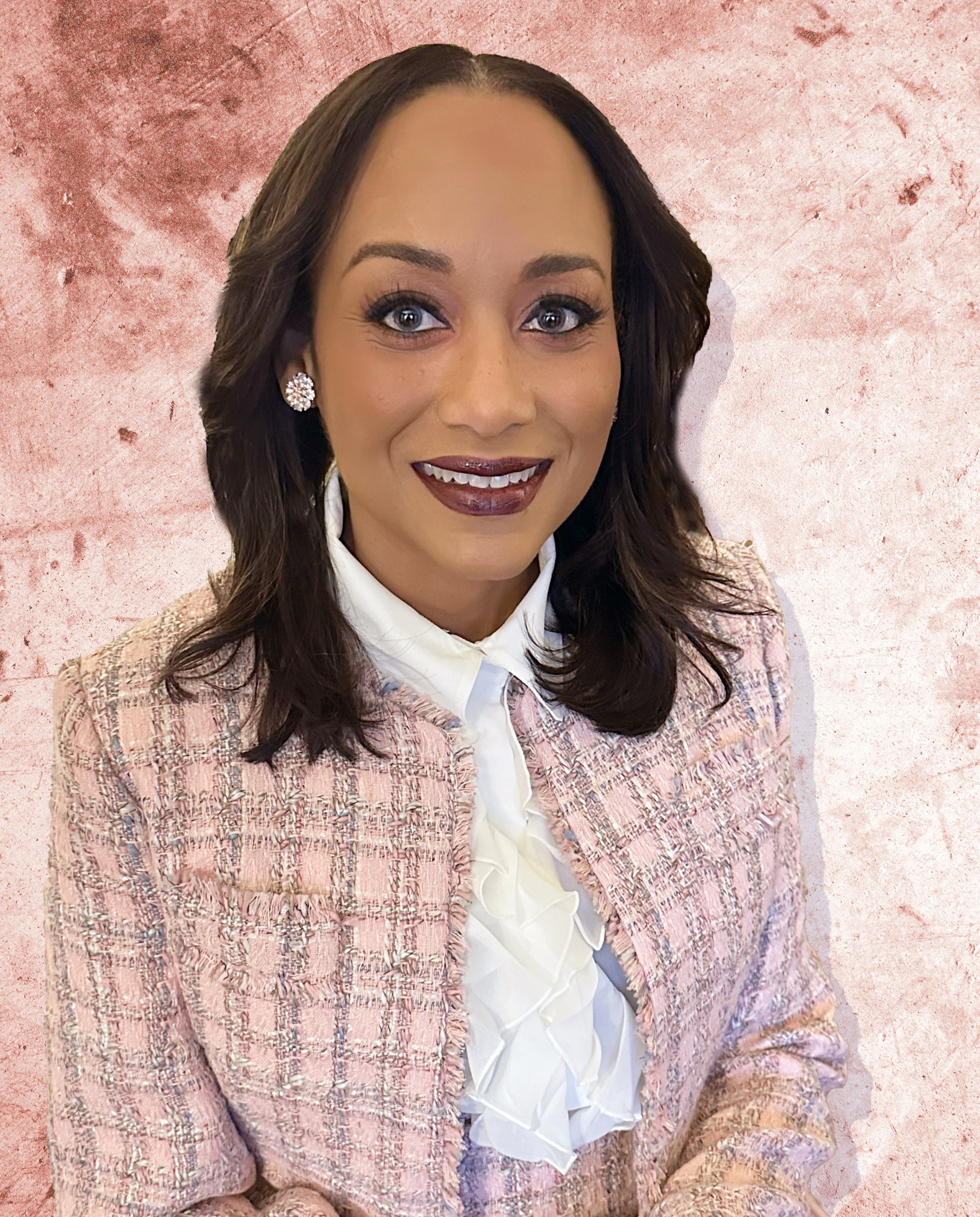
Photo Credit: Gallium by Ellis Riley
You have written several historical novels based on the lives of real-life Caribbean women during the Georgian period. What path led you to their stories?
The path to discovering the stories of real-life Caribbean women during the Georgian period is part of my heritage. I was told as a child in smaller tales of these exploits. As an adult who loves history, I think I am more attuned to finding these treasures. My passion is to rediscover real Black women and women of color who have impacted history. Their stories are often hidden or purposefully obscured. My desire is to shed light on hidden histories and showcase the resilience and strength of women who’ve been overlooked in traditional historical narratives, our written history books, our conscientiousness.
You have written books based on real historical figures and others that place a fictional woman in a historical setting. How does your writing process differ when you are writing about a real person as opposed to a completely fictional character?
When writing about real historical figures, my process involves extensive research to ensure accuracy while delving into the emotions and motivations. I try to understand the global politics of their situation, as none of history exists in a vacuum. For fictional characters in historical settings, I have more creative freedom to craft their journeys while staying true to the historical context. These fictional characters often represent themes that support the narrative or explain what is happening in the world.
How do you walk the line between historical fact and fiction in a novel?
Balancing historical fact and fiction requires meticulous attention to detail, especially as this may be a reader’s first introduction to this history. I want to provide as many details as possible, including the art of the time period, to immerse readers. If I send you Googling to learn more, I’ve done my job.
What types of sources do you rely on to create rich fictional characters who are historically accurate?
To create rich, historically accurate characters, I rely on a variety of sources such as primary documents, historical accounts, and scholarly research. The art of the time period is also important as it adds depth and authenticity to the storytelling.
You include detailed author’s notes in your novels that provide historical documentation for the stories you tell. What inspired you to include those notes?
Including detailed author’s notes is inspired by my commitment to transparency and providing readers with behind-the-scenes insights into the historical context of my novels. Readers love these glimpses into how the stories come together.
What do you find most challenging or most exciting about researching historical women?
Researching historical women is both challenging and essential due to misogyny, the infantilization of women’s roles, and the intersection of feminism and racism. Many would rather believe that Black women and women of color are limited to enslavement, that they played no part in women seeking the right to vote, etc. It’s crucial to amplify marginalized voices and reclaim their rightful place in history.
What was the most surprising thing you’ve found doing historical research for your work?
One surprising discovery during historical research was the depth of resilience, strength, and elegance in the history of these powerful women. We need these stories to strengthen and inspire women everywhere, showing that obstacles can be overcome with grace and determination.
Are there special challenges to researching women of color, who in some ways have been doubly erased from history?
Researching women of color presents unique challenges due to historical erasure and lack of documentation. However, nothing is more rewarding than restoring these women for modern readers to know and become familiar with.
What work of women’s history have you read lately that you loved? (Or for that matter, what work of women’s history have you loved in any format? )
I’m currently enjoying works like The Four Winds by Kristin Hannah and The Other Princess by Denny S. Bryce, which explore women’s experiences in different historical contexts.
Do you think Women’s History Month is important and why?
Women’s History Month is important as it honors those who came before us, paving the way and holding lanterns to show us how to be resilient and succeed. It’s a time to reflect on the contributions of women throughout history and celebrate their achievements.
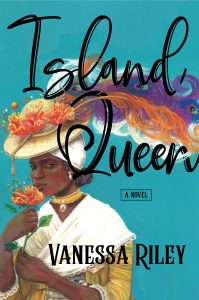
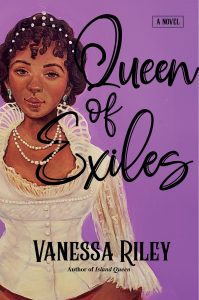
Interesting in learning more about Vanessa Riley and her novels?
Check out her website: www.VanessaRiley.com
Follow her Facebook page: Vanessa Riley Author
Follow her on Instagram: vanessarileyauthor
Follow her on the site previously known as Twitter: @VanessaRiley
***
Come back tomorrow for three questions and an answer with Rowena Kennedy-Epstein Author of Unfinished Spirit: Muriel Rukeyser’s Twentieth Century
Talking About Women’s History: Three Questions and an Answer with Elaine Hayes
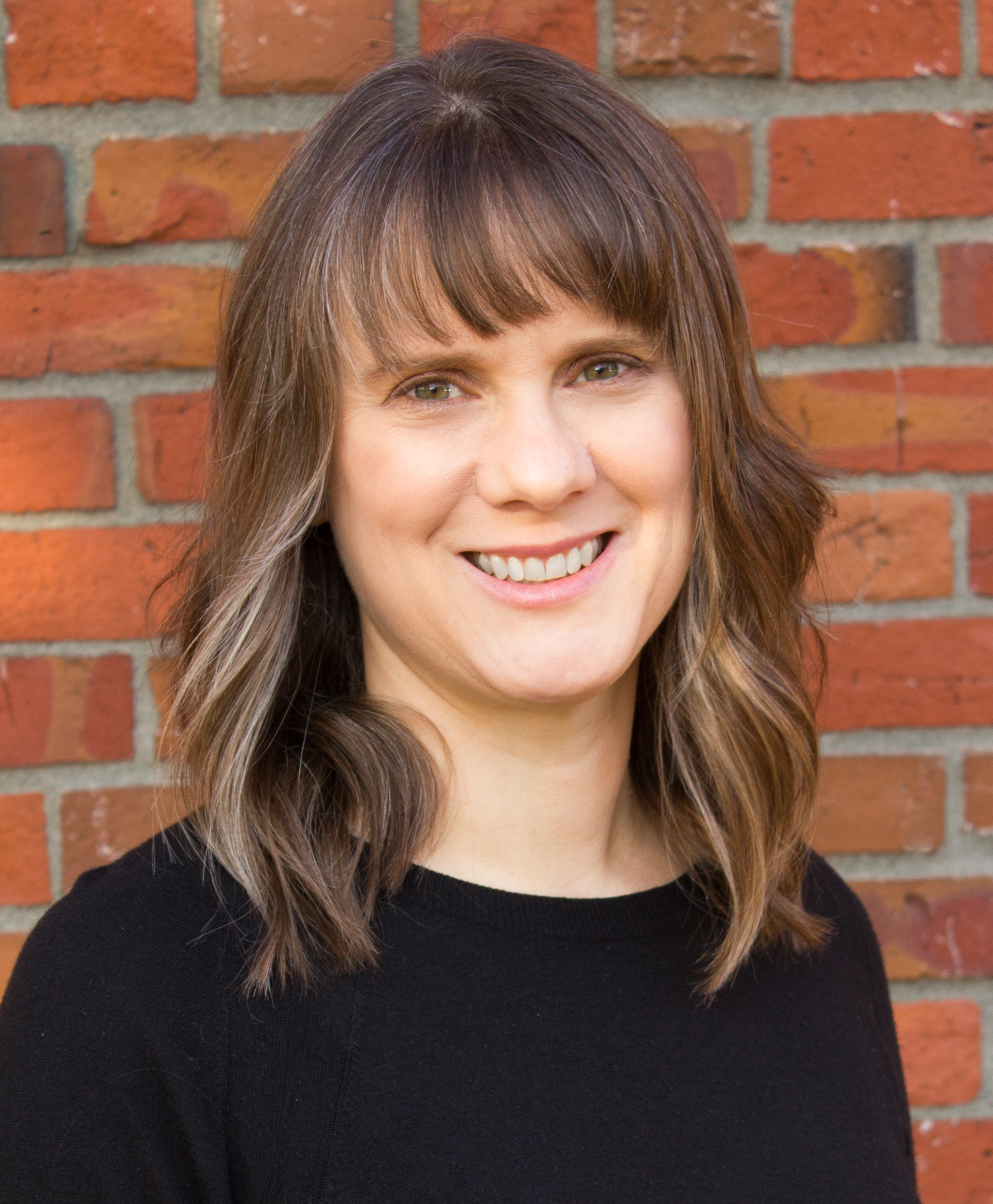
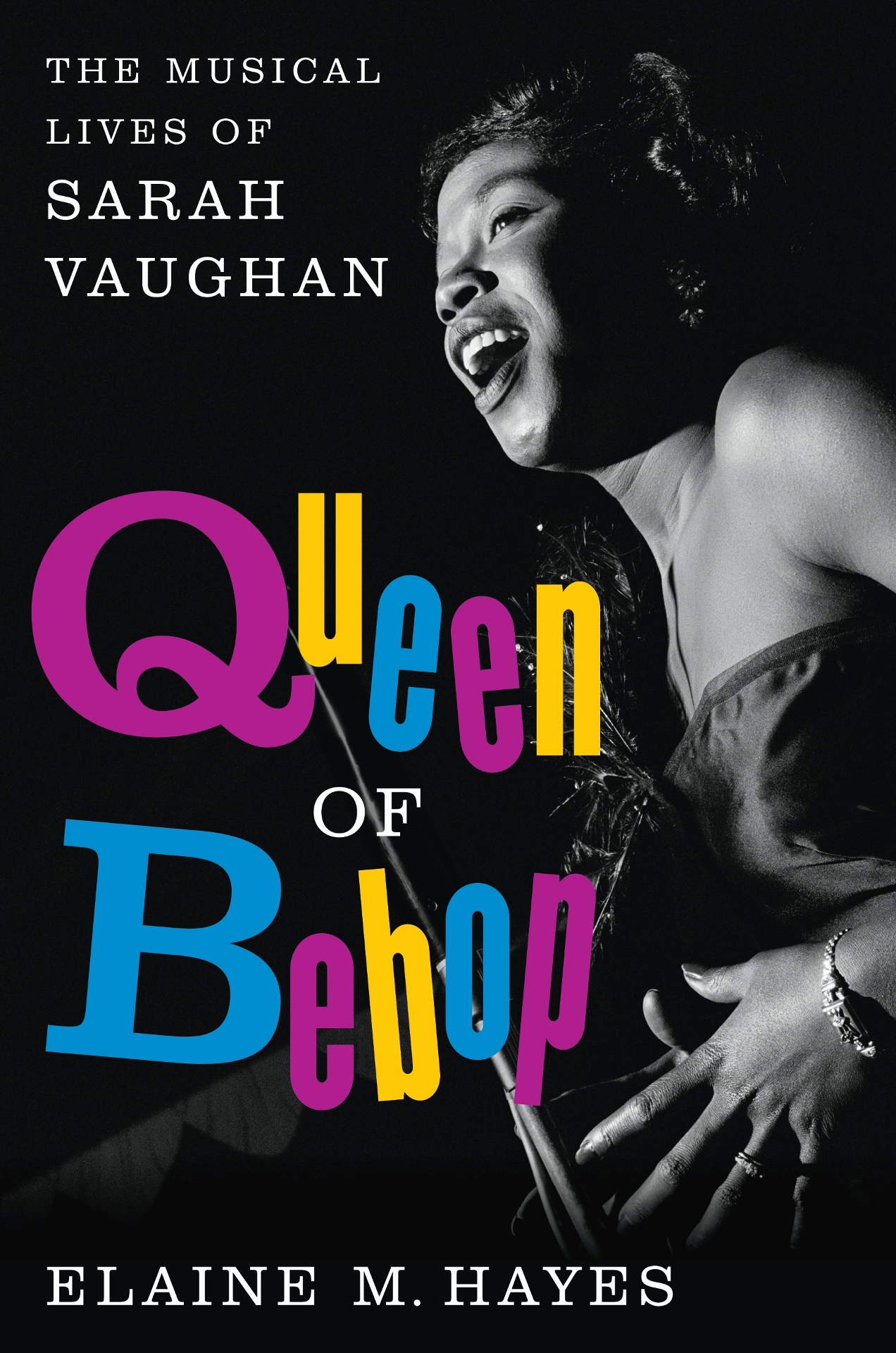
Elaine Hayes is the author of the critically acclaimed biography Queen of Bebop: The Musical Lives of Sarah Vaughan (Ecco, 2017). Recognized as a best book of the year by Amazon, Publishers Weekly, Booklist, and the Washington Post, Queen of Bebop tells the story of this iconic vocalist’s rise from a choir girl in Newark, New Jersey, to an innovator at the forefront of modern jazz, a pop star, and ultimately a vocal legend, whose voice transcended boundaries of genre, race, and class. Elaine received her doctorate in musicology from the University of Pennsylvania and currently lives in Seattle with her husband, son, and Archie the miniature poodle.
I am thrilled to have Elaine here on History in the Margins on March 27, 2024, just in time to celebrate Sarah Vaughan’s 100th Birthday.
Take it away, Elaine:
When did you first become interested in big band “girl singers” and women in jazz? What sparked that interest?
Sarah Vaughan was my entry point into girl singers, big bands, and really, jazz more generally. I was a classically trained pianist, who hadn’t thought much about jazz until a college roommate played lots of Sarah Vaughan. I was immediately drawn to her voice, how she used it, and the sheer presence and authority she exuded when she sang.
I didn’t really know that much about Sarah the woman until a couple years later when, as a graduate student, I wrote a research paper about her for a seminar on women in jazz. I learned more about her artistry and creative process. The challenges she faced as a woman working in the male-dominated world of jazz. And how the narratives surrounding both her professional and personal life shaped her legacy. I realized that there was a bigger story to tell—one that would provide insights not only into Sarah Vaughan but also vocalist and women in jazz more generally.
Writing about a historical figure like Sarah Vaughan requires living with her over a period of years. What was it like to have her as a constant companion?
Yes, Sarah Vaughan really did become my constant companion, first as a graduate student and then a decade later as her biographer. Spending five days a week, for years, thinking about a single person, investing in her life and career, triumphs and challenges, can be very intimate. Even though we never met, and I didn’t have a relationship with her in the traditional sense, I felt a close emotional bond. Vaughan’s power as an artist magnified this connection. She possessed an uncanny ability to capture the full spectrum of human experiences and emotions in her singing. And I, like so many other listeners, felt as if I knew her and she knew me.
I am not a sentimental person, but I cried as I wrote, and even edited, the final chapter and epilogue of Queen of Bebop. The life of a person who I admired and cared deeply about was ending, and so was my journey with her. There was a very real sense of mourning and loss.
As I re-visit the material for Vaughan’s centenary, however, it is speaking to me in a new way. It’s like reconnecting with an old friend that I hadn’t realized I’d missed. I’m enjoying their company again and remembering why we became friends in the first place.
We’re all familiar with the challenges of finding sources for writing about women from the distant past. What are the challenges of writing about women from the early and middle twentieth century?
In the past 20 years, writing about a public figure like Sarah Vaughan has, in fact, gotten much easier. When I began the project as graduate student, it was hard to find source material. If I wanted to go beyond the clip folders collected by two or three specialized libraries, I needed to read full runs of publications—on microfilm! This was incredibly time consuming (and nausea inducing). So I limited myself to trade publications, how critics, usually white critics, responded to her singing. This really narrowed the story I could tell.
But now, thanks to the emergence of searchable digital newspaper and magazine archives, there is a wealth of source material. With patience, persistence, and perhaps most importantly, good organization, researchers can find amazing things.
This allowed me to reconstruct Vaughan’s career with a level of granularity and precision which had been missing. It also helped me incorporate perspectives that had been underrepresented or overlooked in past scholarship. A survey of the Black press, for example, added complexity to her story by providing insights into how Black communities understood Vaughan and her singing.
And, finally, because of these digital resources, I was able to re-insert Vaughan’s own voice back into her narrative. (Past biographers relied on contemporaries and acquaintances to tell her story.) When I began the project, I couldn’t find many interviews with Vaughan, and I assumed she simply did not give that many. This was not the case. Although she was a reluctant, often hostile interview subject, she regularly spoke to the press. By digging into this newly accessible historical record, I rediscovered many of these interviews, making it possible for Vaughan to tell us, in her own words, about her worldview and approach to making music. This was huge.
A question from Elaine: Now that I’ve told you about the wealth of source material I was lucky to find about Sarah Vaughan, I’m interested in learning more about how a historian like you, who does study women from the distant past, recreates their life stories.
In working on my last book, Women Warriors, I faced a number of challenges as far as sources were concerned.
Because it was a global history, I was dependent on secondary sources and translations of primary sources in languages I could read. (And mightily frustrated by the hints about sources that had not been translated.)
Even when I had access to sources, they were often meager. In the case of Boudica for instance, who led her people in a revolt against the Romans in 61 CE, we are limited to three written sources, with some help from modern archeology. All three written accounts are told from the perspective of her enemies. The Roman historian, Tacitus, who was born five years before the revolt, wrote two separate accounts of Boudica’s revolt. He could at least claim secondhand knowledge of the events on which he reported: his father-in-law served as a member of the Roman governor’s staff during the revolt, and there is evidence that Tacitus interviewed other veterans of the rebellion. Our only source is a fragment of an account written roughly a hundred years later by Dio Cassius, which appears in a a selection of readings compiled by a Greek monk in the eleventh century CE. With primary sources such as these, one must read and write warily.
My current book is a different story. There is a great deal of material by and about its subject, Sigrid Schultz, the Chicago Tribune’s Berlin bureau chief from 1925 to 1940. And even so there are holes I was not able to fill.
***
Interested in learning more about Elaine Hayes’ work on Sarah Vaughan and other women of jazz?
Check out her website: https://elainemhayes.com/
Follow her Facebook page: Sarah Vaughan, Queen of Bebop
***
Come back tomorrow for a whole lot of questions with novelist Vanessa Riley.