




From the Archives: The Other Mozart
In every book I write I reach the point where I am so deep in the work that I have to stop writing blog posts and newsletters. I always hope to avoid it. That somehow I’ll be smarter, or faster, or more organized, or just more. This time I’ve managed to avoid hitting the wall for several months by cutting back to one post a month. But the time has come. For the next little while, I’m going to share blog posts from the past. I hope you enjoy an old favorite, or read a post that you missed when it first came out.
There will be new posts in March no matter what: we celebrate Women’s History Month hard here on the Margins.
* * *
Wolfgang Amadeus Mozart is impossible to avoid if you spend any time in Salzburg. A dedicated tourist could attend a Mozart concert everyday of the week without much effort. The city has transformed both his birthplace and the building where his family rented an apartment from 1773-1787 into museums. (1) At least one tour company runs a bus tour that follows “in the footsteps of Mozart.” His picture is prominently displayed in the many, many shops that sell the ubiquitous Mozartkugel (2) and his name is attached to a number of restaurants and hotels throughout the city.
I am fond of Mozart’s music, but I came away fascinated by another Mozart, his older sister Maria Anna Walburga Ignatia Mozart (1751-1829), nicknamed “Nannerl”, who was a musical prodigy in her own right.
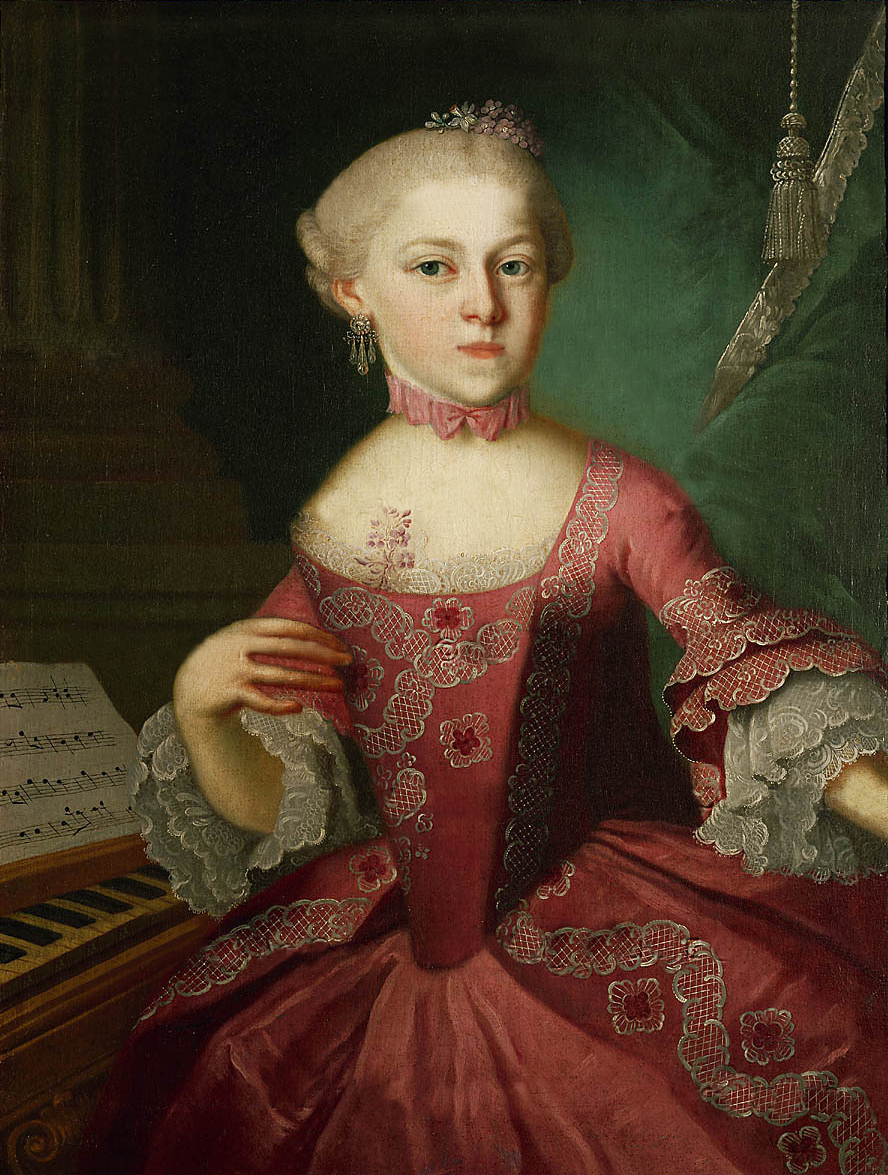
Maria Anna Mozart in her touring days, age 12
I had been vaguely aware of Ms. Mozart before,(3) but her story clicked into focus for me in an exhibit at the Salzburg Museum devoted to historical musical instruments. The exhibit is fascinating. Instruments from the museum’s extensive collection are not only displayed and placed in context, but recordings allow you to hear them played by professional musicians. Some are familiar, like lutes, harpsichords and French horns. Others are not: the theorbo and the pommel for instance. Personally I was fascinated by the pochette,(4) also known as the dance-master’s violin, and the steel piano, also known as steel laughter.
One of the first pieces in the exhibit was Ms. Mozart’s clavichord, and a brief description of her life. She was five years older than her famous brother, and had already proven herself a talented musician at the time that he wrote his first composition. In fact, the two toured together for three years when they were children. She sometimes received top billing and a review from that period praised her in terms not that different from those showered on her younger brother: “Imagine an eleven-year-old girl, performing the most difficult sonatas and concertos of the greatest composers, on the harpsichord or fortepiano, with precision, with incredible lightness, with impeccable taste. It was a source of wonder to many.”
But actions that were acceptable for a little girl were not acceptable for a grown woman. When Ms. Mozart was eighteen, her days on the concert trail were over. She was left behind in Salzburg when her father took her brother back on the road. She eventually married an older man chosen by her father, Johann Baptist Berchtold zu Sonnenburg. After his death, she returned to Salzburg, where she taught music.
There is evidence that she composed in addition to playing. Surviving letters (5) suggest that her brother consulted with her about musical issues. But unless new material comes to light, we’ll never know what her compositions sounded like because none of them have survived. *sigh*
(1) We visited the so-called Mozart Residence. I wouldn’t recommend it unless you are a Mozart groupie. There really isn’t much to see: the fact that one of the eight rooms is devoted to the musical career of his son who, by the museum’s own account, wasn’t anything special as a musician or composer tells you all you need to know. Much of the audio tour is snippets of Mozart’s music, which is pleasant but there are plenty of places to hear Mozart while you are in Salzburg. The best part of the museum was the final room, which talked about the use of Mozart’s image as a marketing device and included a life-size cardboard silhouette of the composer. At 5 foot and almost 2 inches, I would have towered over him.
(2) The candy—a ball of pistachio marzipan coated with a layer of nougat covered with a layer of chocolate—was created by a Salzburg confectioner in 1890. It seemed like a must try for a Salzburg visit. My take? *Meh* (Of course, I felt the same way about the Sacher torte we ordered at the Sacher hotel. I may not be the right audience for Austrian sweets.)
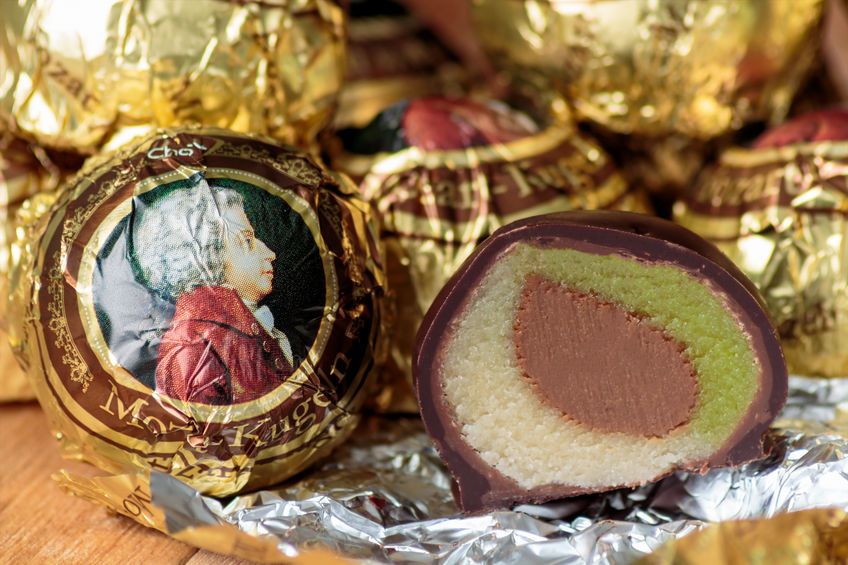
Mozartkugel
(3) Somehow calling her “Nannerl”, as so many scholars do, feels disrespectful and simply calling her Mozart will lead to confusion.
(4) French for pocket, because the instrument was theoretically designed to fit in a pocket. Though not in any pocket I’ve ever had.
(5) Of which there are many, thanks to Ms. Mozart herself, who served as the family’s unofficial archivist
From the Archives: Enheduanna–A Surprise from the Ancient World
In every book I write I reach the point where I am so deep in the work that I have to stop writing blog posts and newsletters. I always hope to avoid it. That somehow I’ll be smarter, or faster, or more organized, or just more. This time I’ve managed to avoid hitting the wall for several months by cutting back to one post a month. But the time has come. For the next little while, I’m going to share blog posts from the past, starting with this one from 2019.
I’ll make it up to you in March, when I’m going to run my Women’s History Month interview series no matter what.
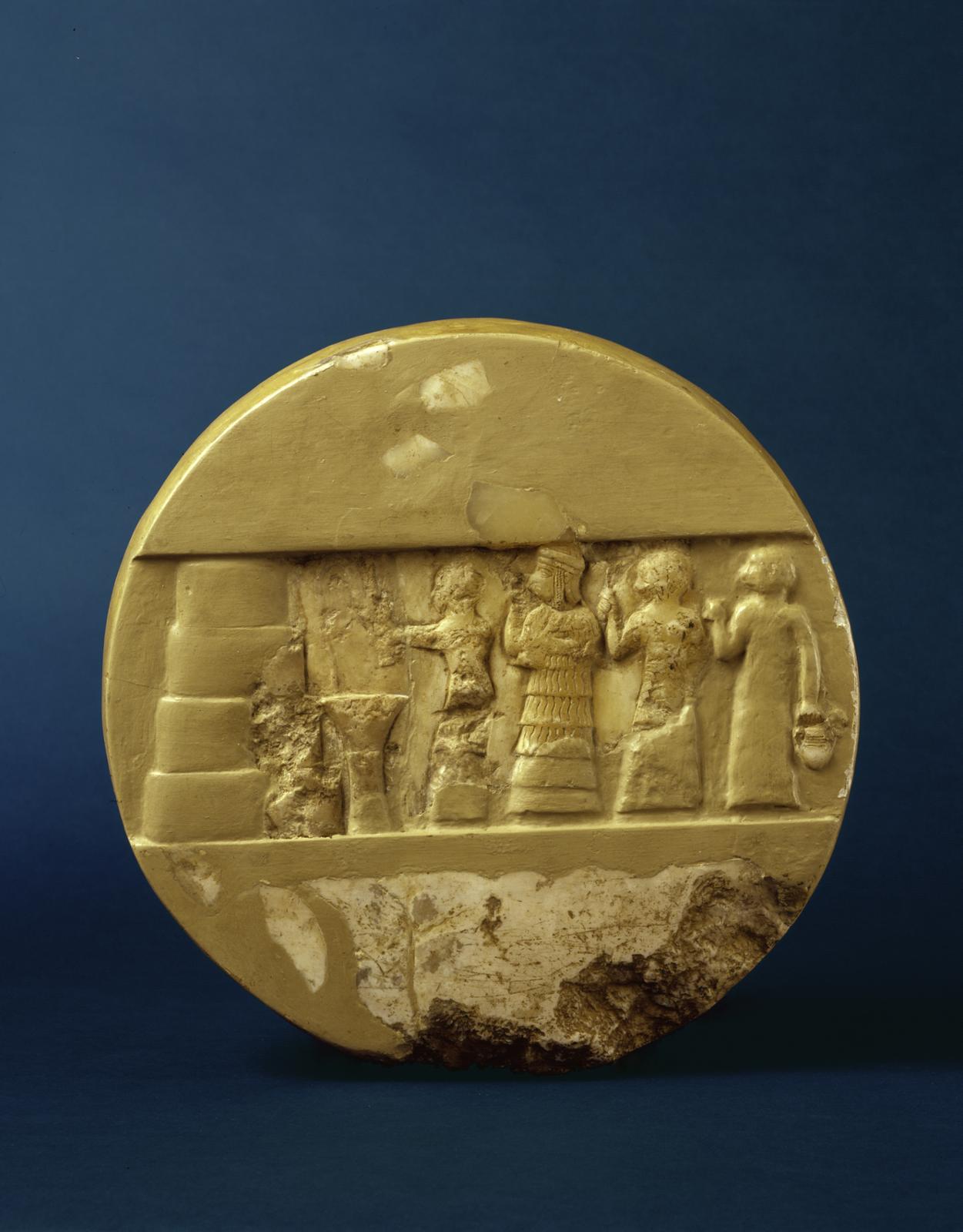
Enheduanna is the one in the middle.
Image courtesy of the University of Pennsylvania Museum, British Museum/University Museum Expedition to Ur, Iraq 1926.
Allow me to introduce you to the first author whose name is recorded in history, a WOMAN named Enheduanna (2285-2250 BCE). Enheduanna was the daughter of Sargon the Great of Akkad, ruler of Mesopotamia. Her father appointed her the high priestess of the most important temple in the Sumerian city of Ur. She may have gotten the job thanks to Daddy, but there is no doubt that she earned it. Combining her roles as both priestess and poet, she wrote more than forty liturgical works that were copied and used for almost 2000 years. In those works, she created conventions for psalms and prayers that were used throughout the ancient Middle East and Mediterranean. Her work influenced the poetic forms of the Hebrew Bible, the Homeric hymns of ancient Greece, and the early hymns of the Christian church. (That’s a lot of influence for someone I never heard of until a few days ago.) She also wrote forty-two more personal poems in which she described her feelings about the world she lived in.
She served as high priestess for forty years, despite a coup attempt that drove her temporarily into exile.
Enheduanna was rediscovered as a historic figure in 1927, during British archaeologist Sir. Leonard Wooley’s excavations of Ur. You can’t say she’s been erased from history, but she isn’t exactly a pop culture icon. (1) Yet.
(1) Except among the people who believe that aliens built the pyramids.
Another Christmas Adventure
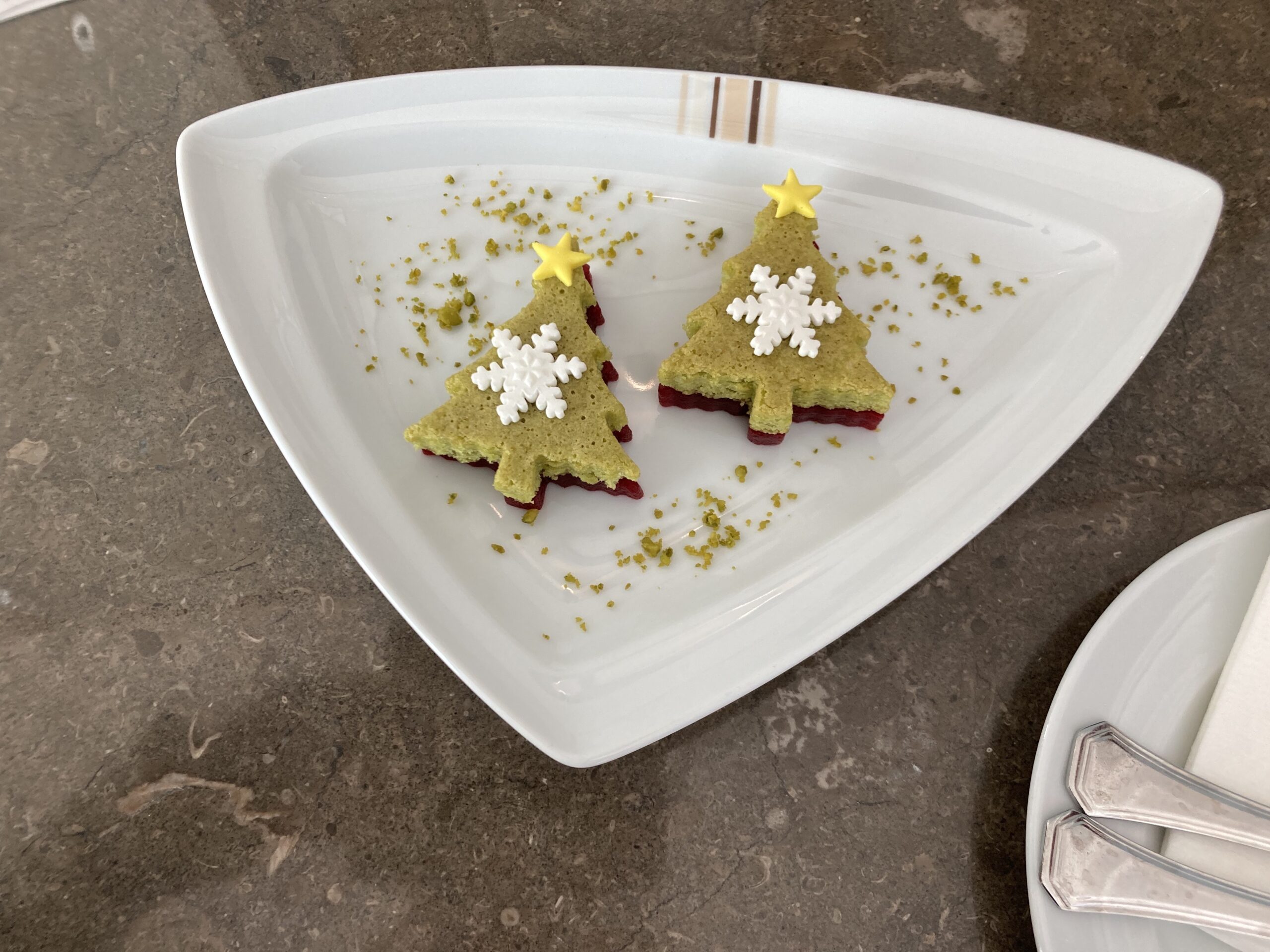
It’s Christmas Eve and I am sitting in our hotel room in Cascais, Portugal, looking at a surprise Christmas treat the restaurant staff just delivered to our room. We have a little balcony with two comfy chairs, where it is almost warm enough to sit and stare at a gorgeous view of a gray and challenging Atlantic. We were afraid we wouldn’t get here because of the winter storms that disrupted holiday travel in the United States and we are counting our blessings.
This is the fourth time in the last ten years that we have spent Christmas in another country. Each time, I’ve learned new historical stories and widened my understanding of stories I thought I knew. I fully expect to have the same experience here. And once I’m back, I’ll share them with you.
In case you need something to keep you amused until I’m back, here are some links to earlier posts dealing with Portuguese history:
Prince Henry the So-Called Navigator
The Violent and Often Ugly Story of How Portugal Won A Global Empire
(Some of you may note that my previous knowledge of Portuguese history is very specific in scope, and you would be right.)
In the meantime, have a merry/jolly/happy/blessed time as you celebrate the victory of light over the darkness in the tradition of your choice.