




The Free and Independent Republic of West Florida
And speaking of short-lived, mostly forgotten nations, as I believe we were, allow me to go back into my notes from our road trip in 2015, and dig up a story that never got the blog post it deserved. *
The Free and Independent Republic of West Florida made the Free State of Fiume look like it had a long and venerable history.

West Florida, which at its height included much of what is now Florida, Mississippi, Alabama and Louisiana, became a diplomatic football between Britain, France, Spain, and eventually the United States at the end of the eighteen and beginning of the nineteenth century. Possession of the region was passed from France, to Spain, to Britain. In 1783 it was returned to Spain in the treaty that ended the American Revolution. Spain subsequently ceded Louisiana to Napoleon in 1800. ***
When the United States bought the Louisiana Purchase from France in 1803, Spain insisted that the ceded territory did not include the area known as West Florida, which extended from the Perdido River in Alabama across Missisipi and Louisiana to the Mississippi River. Rather than confronting Spain over the issue, first President Jefferson and then president Madison let the matter slide.
Meanwhile, British and American colonists in West Florida became increasingly disgruntled with the Spanish colonial government. On September 23, 1810, a small group of settlers “attacked” Fort San Carlos in Baton Rouge by walking through the open gate and firing a single volley of shots at the Spanish soldiers who held it. They then raised a new flag—a single star on a blue ground—and declared the foundation of the Free and Independent Republic of West Florida. They quickly established a capital in St. Francisville, in modern Louisiana, adopted a constitution, and established a supreme court and a two-house legislature.
It was clear from the beginning that the founders of the new republic were hoping to become part of the United States. And seventy-four days later, on December 10, that is exactly what happened. The United States claimed possession by a simple proclamation. The Lone Star flag came down—though it would rise again when American colonists in Texas revolted against Mexican rule.
* I n 2015 we set out to spend three weeks on the Great River Road,** with the plan that we would drive south from Memphis and then head back north as far as we could go. We spent two days in Memphis, three days in New Orleans, and then drove north along the Mississippi without a schedule, stopping at anything that caught our imaginations. We didn’t last the full three weeks. And we only got as far north as Vicksburg because we made lots of stops–between us we are interested in just about everything. Since then we’ve been following the river in shorter stints, ten days to two weeks at a time. You can follow our adventures, and others, in the category “Road Trip Through History.”
** Which, like the Silk Road, is not a single road but a conglomeration of 3,000 miles of local and state roads that roughly follow the course of the Mississippi.
***If you are interested in knowing more about the colony of West Florida, as opposed to the republic, I strongly recommend reading Kathleen Duval’s Independence Lost.
The Free State of Fiume
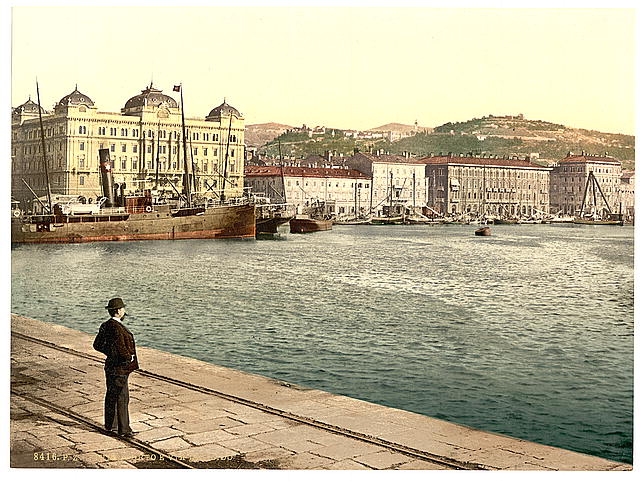
And speaking of oddities in the Versailles Peace Treaty, as I believe we were, allow me to introduce you to the Free State of Fiume.
I stumbled across the story while I was working my way through old articles in the Chicago Tribune, trying to untangle a messy problem of chronology, when I ran across this opening line in an article dated August 23, 1919: “Fiume, child of trouble since History began…” Despite myself, I read on.*
The headline, in case any one is interested, read “Grazioli May Be Italy’s Goat for Fiume Riot: Witnesses Agree Italians Began Massacre of the French.” It was the 1919 equivalent of click bait. While there were indeed riots, and French troops were indeed massacred, the heart of the story was the conflicting claims of the relatively new country of Italy (1861) and the even newer country of Yugoslavia (December 1, 1918) over the Adriatic port of Fiume (aka Rijeka). Up and down the Dalmatian coast from Cattaro to Trieste, the general opinion was that the longer the old men in black coats at Versailles delayed making a decision the more likely it was that there would be another riot in the streets of Fiume.
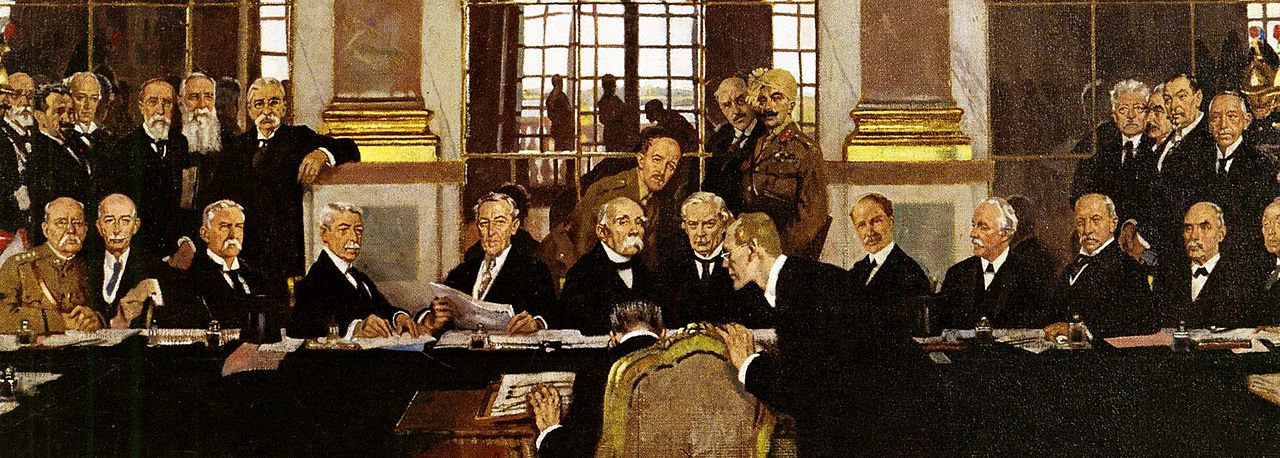
I had to know more. And down the rabbit hole I went.
The Great Powers came up with a solution that probably satisfied no one: the establishment of the port as an independent buffer state between the competing claimants. Woodrow Wilson suggested that it could serve as the home for the League of Nations, making it an independent buffer state for the whole world. All eleven square miles of it.
The Free State of Fiume existed from November 12, 1920 through the end of 1923. Instead of being an emblem of peace it was a tiny version of the Wild West. The first election was immediately contested. Governments came and went, sometimes in a matter of a few days. The Nationalists, Fascists, the smallest Communist party in the world, and the Italian poet Gabriele d’Annunzio, who had occupied the city for fifteen months beginning in September 1919,** all seized power and were overthrown in turn. In January 1924, the Kingdom of Italy and Yugoslavia signed the Treaty of Rome, in which they agreed that Fiume would become part of Italy and its suburb of Su sak, became part of Yugoslavia.
(If you are reading this in an email and you want to see the newsclip, click through to your browser.)
After World War II, Fiume, now called Rijecka, became part of Yugoslavia. It is now part of Croatia.
*I am trying to sort out which Tribune correspondents were in Berlin between 1919 and 1926. And the job would go much faster if I limit myself to reading the by-lines, datelines, and occasionally relevant headlines—which gave me all the material I needed. But I keep getting sucked into stories. And really, wouldn’t you want to know more if you read an opening like that one? (The complete sentence, for anyone who’s curious, read: “Fiume, child of trouble since History began, is as quiet now as a Dearborn street soft drink dispensary.”)
**If you do the math, you’ll find that he held the city-state for almost a month after its creation, until he was expelled by the Italian Army in what became known as the “Bloody Christmas” campaign.
Why was Chief Mkwawa’s skull an issue in the Treaty of Versailles?
First, let me make it clear that this story is NOT an April Fool’s joke. Even if I enjoyed prank stories as a way to celebrate foolishness on April 1st—and I don’t*—over the last few years we have seen so many unbelievable true stories that it is sometimes are to tell the real articles from satirical stories in The Onion.
That said, the story of Chief Mkwawana’s skull has the “ Wait! What??” quality common to so many of the fake stories that clutter the internet on April 1 each year. But it also has a dark side. In fact, despite the “what?” factor, it is mostlydark side. This is a story about colonialism, resistance, and political symbolism. (Feel free to imagine exclamation marks liberally sprinkled throughout.)
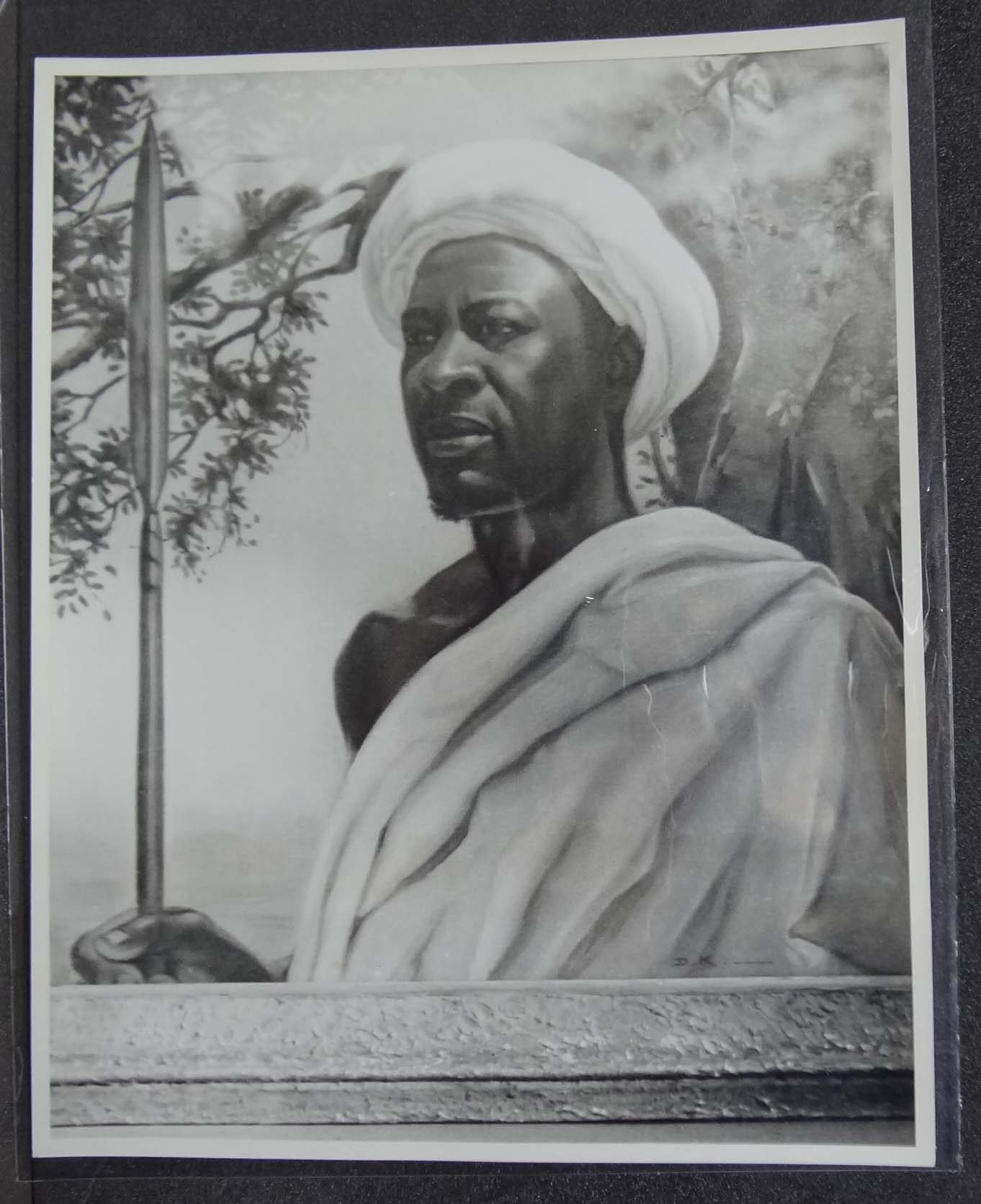
A portrait of Chief Mkwawa, painted by Mrs B. Kingdon, wife of a British District Commissioner-who I suspect never saw him.
An odd clause appears in the Treaty of Versailles, sandwiched in between the War Guilt Clause and the Financial Clauses. Article 246 stated: “Within six months from the coming into force of the present Treaty … Germany will hand over to His Britannic Majesty’s Government the skull of the Sultan Mkwawa, which was removed from the Protectorate of German East Africa and taken to Germany.”
Mtwa Mkwava Mkwavinyika Mahinya Yilimwiganga Mkali Kuvago Kuvadala Tage Matenengo Manwiwage Seguniwagula Gumganga was the chief of the important Wahehe people in the newly founded colony of German East Africa (now part of Tanzania). He led the HeHe in a determined resistance against the invaders for seven years.
In 1898, the Germans placed a bounty on his head—an ironic phrase given how things turned out. In the ensuing manhunt, a party lead by Sergeant Major Merkl had closed in on Mkwawa. Hearing a shot, they hurried toward the camp and found two dead bodies, one of which was identified as Mkwawa, who had previously declared that he would commit suicided rather than surrender to the Germans. (Exactly who did the identifying in unclear in the references I’ve read.) Merkl ordered one of the African soldiers in his party to cut off Mkwawa’s head so he could take it back to camp. (And presumably claim the bounty.) His captain took charge of the head and, in Merkl’s account, ”had it dried”—a disturbing war trophy by any standard. (Though apparently not unique, as we shall see in a moment.)
Perhaps not surprisingly, Mkwawa became a heroic symbol of the struggle against the colonial powers.
On November 14, 1918, only a few days after the Armistice that ended World War I was signed, Sir Horace Byatt, administer of the former German East Africa, suggested to the Colonial OPffice that Britain should try to recover Mkwawa’s skull from Berlin, where it was said to be exhibited in a museum, as a good will gesture to the HeHe tribe, which had been helpful to the British during the war.
The skull was included in a schedule of art and artifacts which had the Germans had seized that and were required to be returned as terms of the peace agreement.
Unfortunately, no one knew where it was.
On May 6, 1920, the German Foreign Ministry said that they couldn’t find the skull and in fact found no indications that it had been brought to Germany. A year later, Winston Churchill, the newly appointed Secretary of State for the colonies, decided to let the matter drop.
It didn’t stay dropped. Enquiries were made about the skull in the 1930s, the 1940s, and again in 1951. Finally, in 1953, the German Foreign Ministry announced that the skull might be part of a large collection in a museum in Bremen. Faced with the question of how to identify the correct skull, someone suggested comparing them to the cephalic index of Mkwawa’s grandson, Chief Adam Sapi, which was an apparently unusual 71%.**
The British governor of the former German East Africa (then called Tanganyika, for anyone who likes to read with a map) visited the museum, which had a large cabinet full of skulls. After identifying those which had been taken from German East Africa, they were measured. Of the two skulls with the appropriate cephalic index, one of them had a bullet hole that had entered at the back of the head and come out through the front. (I will remind you the Mkwawa had reportedly committed suicide.) A German police surgeon confirmed the hole was consistent with a type of rifle used by German troops in East Africa.
Having determined, with some enormous logical leaps, that this was Mkwawa’s skull, it was shipped from Berlin to Tanganyika via diplomatic pouch and presented to Chief Adama Sapi in a formal ceremony on June 19, 1954.
Today the head is displayed on a plinth in a glass box in a museum in Tanzania.

Skull of Chief Mkwawa on display in the Mkwawa Memorial Museum, Kalenga, Iringa.
*Personally, I’m a big believer in celebrating foolery—but I don’t think most pranks are funny.
** I’ll save you the trouble of googling. The cephalic index is the measured width of the head divided by the length of the head multiplied by 100 and reported as a percentage. It is used to categorize the shape of skulls—and has strong racist/colonial roots as part of early anthropologists’ attempts to “scientifically” categorize different peoples.