




Women’s History–Not Just a Month
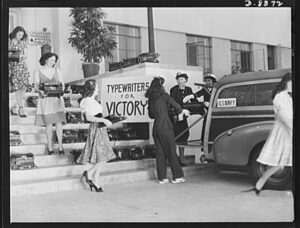
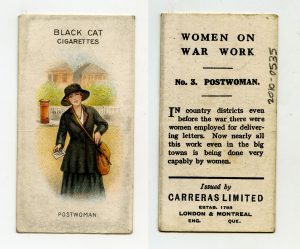
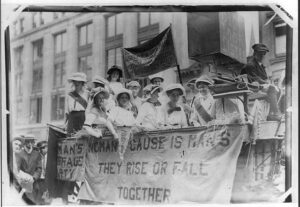
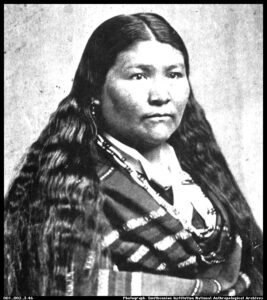
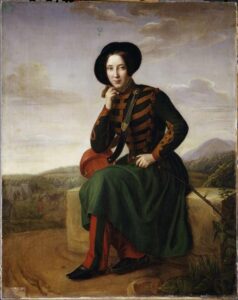
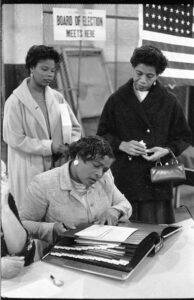
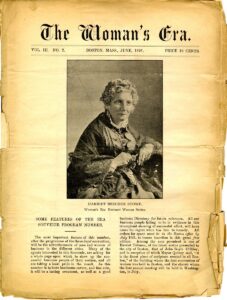
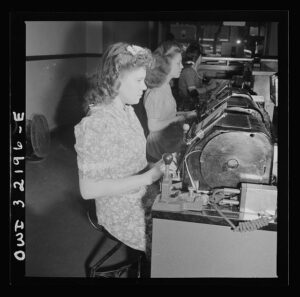
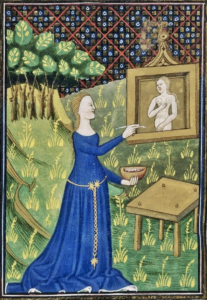
We’re coming to the end of Women’s History Month. Here on the Margins it’s been a month of fascinating interviews with people doing exciting things in the field.*
The fact is, I could interview someone about this work every day of the week and not run out of people to talk to.** People are doing wonderful work researching and writing about women who are forgotten, erased, or shoved to the side in the historical record: novelists and journalists and artists and musicians and labor organizers and scientists and activists and business owners and general shin-kickers. Historians are looking at the networks between women, the institutions they formed, and the ways in which they navigated cultural restrictions. Public historians are adding women to museum exhibitions and historical site interpretations. At this point, I can’t keep up with the new and exciting books that are coming out. Not to mention the podcasts. (Are there women’s history tiktoks? Do I dare go down that rabbit hole?)
It would be nice to reach the point where we don’t need Women’s History Month, or Black History Month, or any of the other history months and heritage months that mark our calendars. A point at which history as we learn it would include people who were not at the center of power as a matter of course. I don’t have an answer about how we do that, but I don’t think it happens by relegating women to a sidebar, a chapter, or a special section on women in history taught once a year during Women’s History Month.
Rant over. For the moment.
* I take no credit for this. I invite people. I ask them questions. And then I get out of the way.
**This is not going to happen. I would run out of energy long before I ran out of people to interview. And my book would never get finished. I do, however, already have three names on the list for next year.
Talking About Women’s History: Three Questions and an Answer With Theresa Kaminski
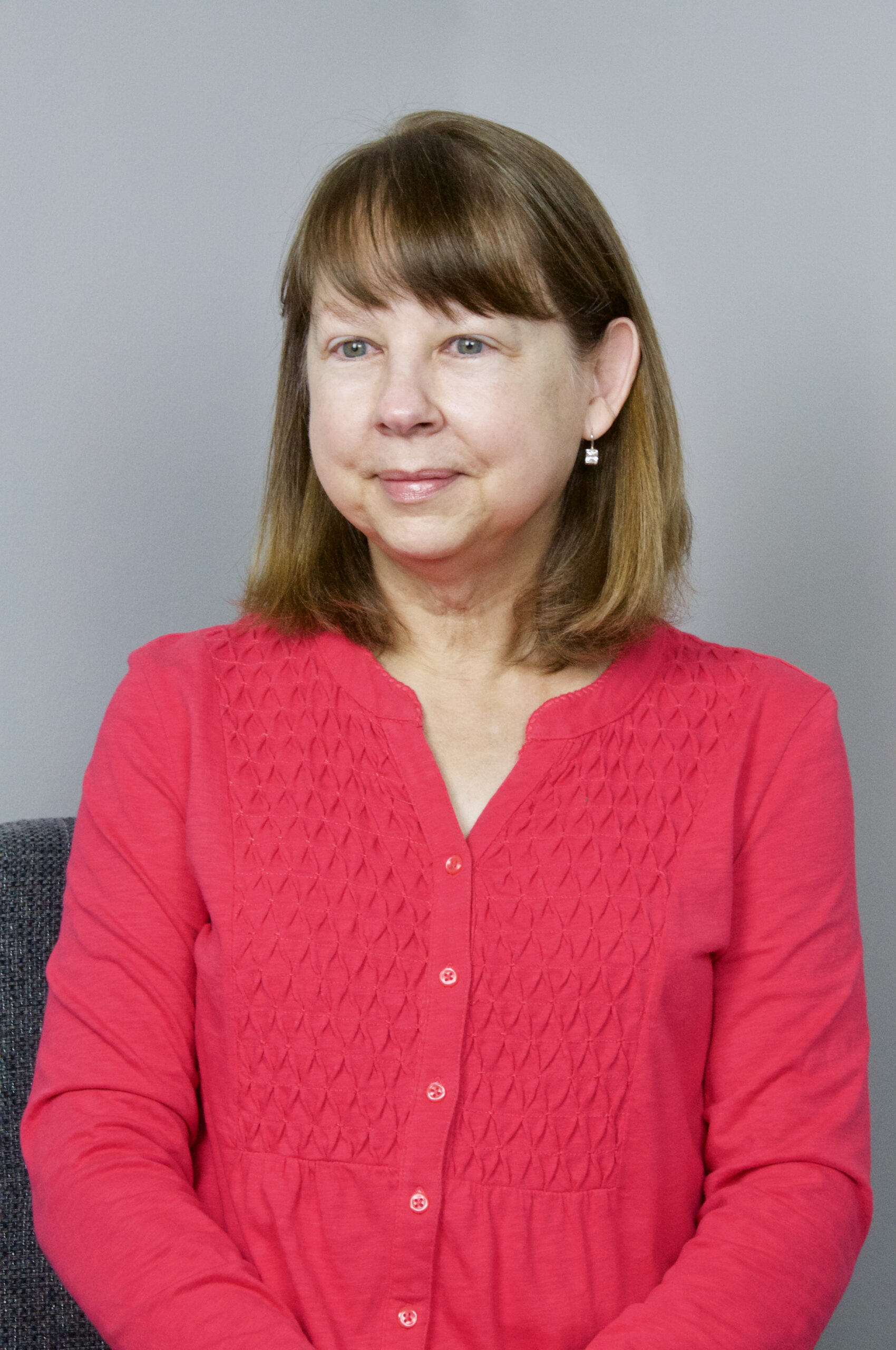
Theresa Kaminski and I are co-administrators (and occasionally, co-conspirators) for a Facebook reading called Non-Fiction Fans, where readers and writers of narrative nonfiction meet up to talk about great non-fiction and how it gets written. She is also a wonderful writer of women’s history and a generous member of the on-line literary and historical community.
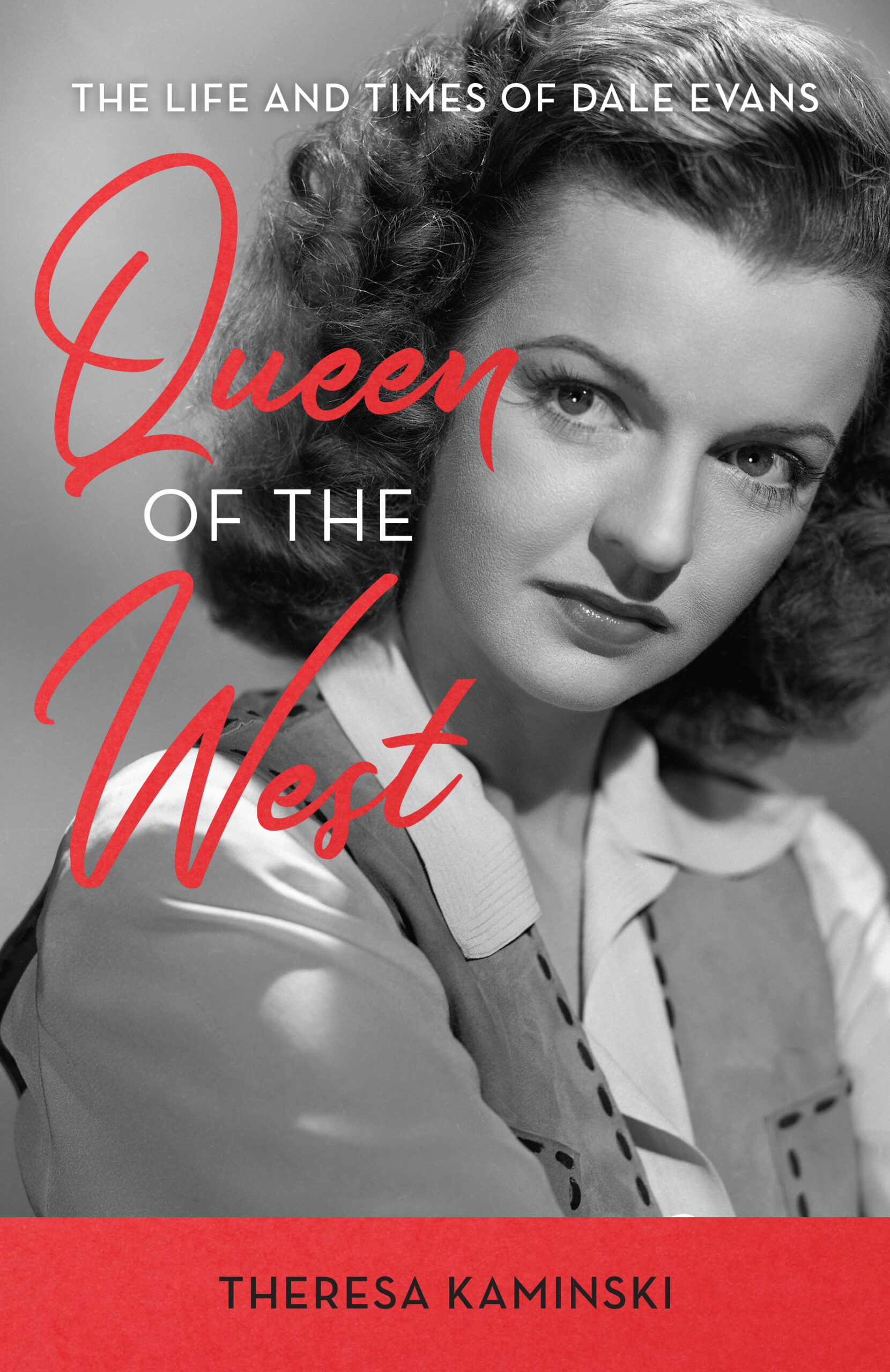
Theresa, who earned her PhD in history from the University of Illinois at Urbana-Champaign, specializes in writing about scrappy women in American history. She is the author, most recently, of Dr. Mary Walker’s Civil War: One Woman’s Journey to the Medal of Honor and the Fight for Women’s Rights. Theresa also wrote a trilogy of nonfiction history books on American women in the Philippine Islands during World War II. Her biography of Dale Evans, Queen of the West: The Life and Times of Dale Evans, is due out from Lyons Press in April 2022.* After more than twenty-five years as a university history professor, Theresa is now retired from teaching (but not from writing), and lives with her husband in central Wisconsin at a place known affectionately as Southfork.
Take it away, Theresa!
Writing about historical figures like Dale Evans requires living with them over a period of years. What was it like to have Evans as your constant companion? (Not to mention Roy Rogers.)
I’ve been living with this project for over ten years, and I really liked having Dale Evans as a constant companion. (Roy, although personable and charming, wasn’t so constant. See #3 below.) There were so many facets to her public and private lives that it was never dull. Still, ten years is a long time for a nonfiction project.
I began the book when I was still working fulltime as a professor of history, so my day job always came first. Still, I completed most of the research, both with secondary sources on Hollywood, television, radio, big bands, and twentieth century American women’s history, and with the primary sources I could track down, mostly the autobiographical books Dale Evans wrote.
Two unanticipated delays stretched out the project. One was the brand-new, biggest, and first of its kind, Roy Rogers and Dale Evans collection, acquired by the Autry Museum of the American West in Los Angeles. I wasn’t comfortable about turning in a manuscript to any press until I’d researched that collection. But the problem was that the museum’s archives was closed (and remains so) to researchers because of a move to a new facility. The only way to access the collection was through an archives research fellowship, which I received in 2019. I’m so glad I stuck to my conviction to wait because the contents of that collection helped shape my vision of Dale Evans.
The other delay: I got a literary agent. And she wanted me to write a book (which would be my third) about American women in the Philippine Islands during World War II. So I set aside Dale Evans for a few years to write what became Angels of the Underground.
I always knew I would return to Dale Evans and, after yet another book, Dr. Mary Walker’s Civil War, I did. Dale’s personality and her accomplishments proved too much to ignore. And it was mostly because of her friendly, outgoing personality that I decided to refer to her by her first name in the biography. What to call their subject is something every biographer wrestles with, but for a variety of reasons, it’s more complicated with a woman. Sometimes that’s because of birth names and married names, which was something I had to consider. But with Dale Evans, an already complicated situation became more so because she opted to use a stage name.
Dale Evans was the name she chose for her singing career. She was born Frances Octavia Smith, and as both Frances and Dale, she had husbands. So how to refer to her throughout the book? I settled on most often using her first name, Frances in the first couple of chapters, before she took a new name. After that stage name was adopted, she became Dale. The two things that most influenced these choices were my perception of Dale Evans’s personality and the mood I wanted to convey with the biography. I think it worked.
Your previous books have dealt with women doing extraordinary things in times of war. With Dale Evans you’ve moved to popular culture. Did you approach your subject differently?
My research and writing methods don’t change much project to project. I felt a bit of initial relief that I wouldn’t have to deal with the trauma and drama of war this time around. While I was mapping out the Dale Evans project, I kept hearing “Down by the Riverside” play through my head, especially the line, “I ain’t gonna study war no more.”
There is a lot of joy in Dale’s story, and a lot of excitement with breaking into show business and becoming a star. It was fun to get immersed in twentieth-century popular culture. I loved reading up on early radio and television, nightclub and big band singers, and, of course, Hollywood. Plus there was all that great Western fashion. I really envied Dale’s boots.
But I also wrote about events in Dale’s life that were traumatic, and I don’t mean just the professional setbacks. She dealt with so much sorrow in her private life.
Are there special challenges in writing about a woman whose biography closely tied to that of a famous man? Do you feel like Roy Rogers overshadowed Dale Evans?
While they were married, I think he often did. Roy Rogers was massively popular in the 1940s and 1950s, both with children and adults. Thousands, sometimes tens of thousands, of people showed up at his personal appearances. Dale Evans had a solid fan base, too, but few performers could compete with Roy in the popularity department.
So one of my biggest challenges as Dale’s biographer was to not let Roy’s story take over hers. I read a few dual biographies of Roy and Dale that seemed lopsided, like Dale was just along for the ride (pardon the pun) and that her only importance–even her fame–came from her marriage to Roy. My book shows how Dale Evans made a name for herself as a singer and actor well before she met Roy, though of course their professional and personal partnership significantly enhanced her celebrity.
Some Roy Rogers fans may think I went too far in Queen of the West, turning him into a supporting character. But I think the story has just enough Roy. I must admit, Roy was a fascinating person, and I sometimes got caught up in reading too many accounts of his activities. But it was really time for Dale to have her story told.
* My copy arrived on March 25, so it may be in stores by the time you read this.
Question for Pamela: When I read nonfiction, it’s almost always women’s history. I know that’s an interest of yours, too, so what work of women’s history have you read (or perhaps watched or listened to) lately that you loved?
I’m going to circle back to the place we began this series of interviews on March 1: Shelley Puhak’s The Dark Queens: The Bloody Rivalry that Forged the Medieval World blew me away, from the opening when she tells the reader how she came to the story through the epilogue, where she explores why the story was—not exactly lost but definitely under-told and misrepresented. (The epilogue’s title, “Backlash,” says it all.) An exciting story, with lots of twists, based on impeccable research, told with beautiful language and a certain amount of attitude. In other words, just my cup of lapsang souchang.
***
Want to know more about Theresa Kaminksi and her work?
Check out her website: https://theresakaminski.com/
Follow her on Facebook: https://www.facebook.com/TheresaKaminskiHistorian
Follow her on Twitter: @KaminskiTheresa
Follow her on Instagram: @hers_torian
* * *
Come back tomorrow for one last Women’s History Month post.
Talking About Women’s History: Three Questions and an Answer with Katie Nelson and Olivia Meikle
I am thrilled to have, sister-professors Katie Nelson and Olivia Meikle, the hosts of the What’sHerName podcast, back as my guests. I listen to a lot of podcasts, but What’sHerName is one of a handful that I make sure I listen to on the day they go live. What’sHerName tells the stories of fascinating women you’ve never heard of (but should have). The show is an engaging blend of story-telling, historical banter between the hosts, and interviews with experts. It is consistently smart, funny and thought-provoking. (And I thought that before they asked me to record an episode or two with them.)
Katie and Olivia bring impeccable credentials to the project:
Katie Nelson has a PhD in History from the University of Warwick and teaches courses in history, travel, and the meaning of life at Weber State University. She loves exploring life’s big questions and bringing students to Europe every year on study abroad courses.
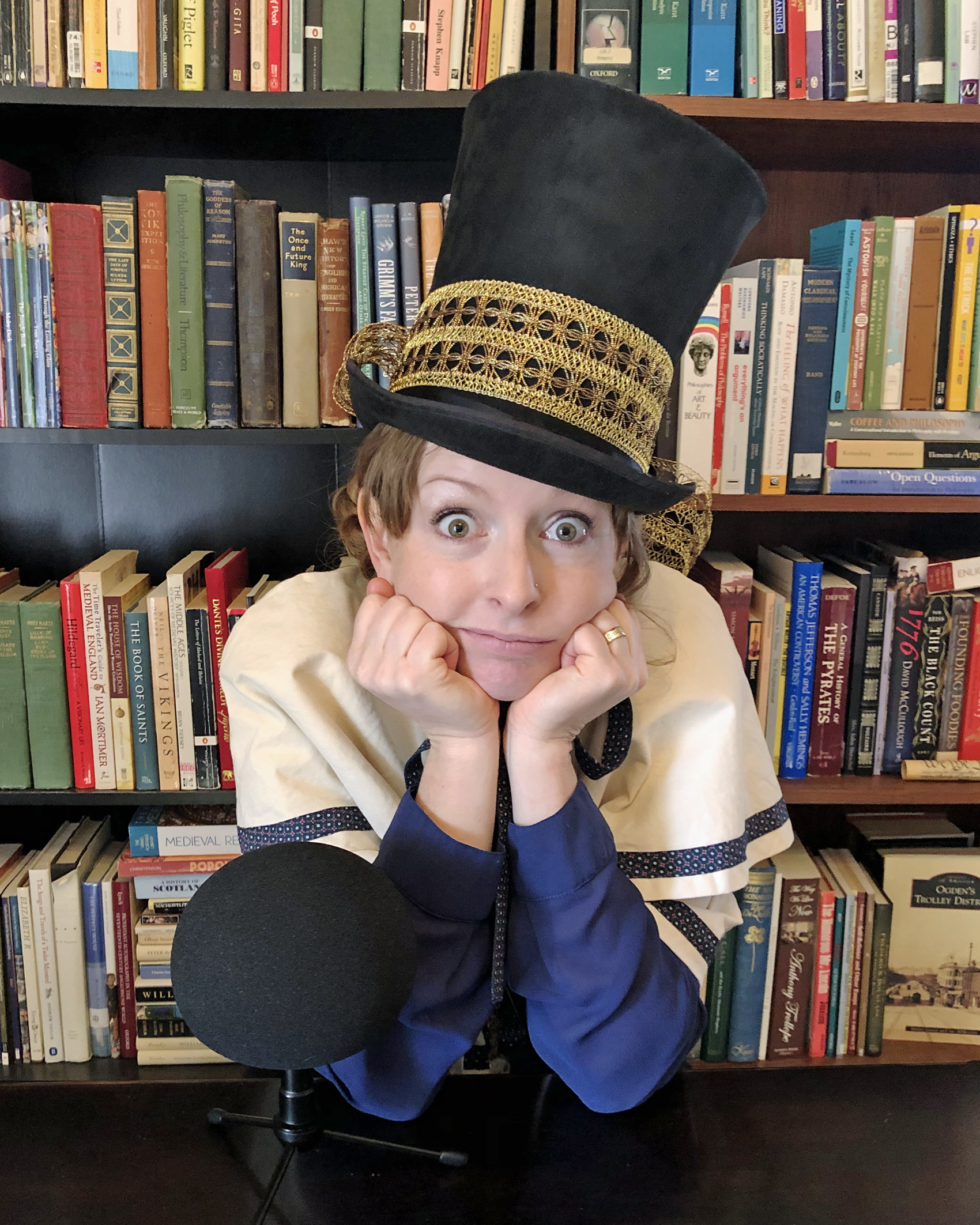
Olivia Meikle teaches Gender and Women’s Studies at Naropa University in Boulder, Colorado. She has an MA in English Literature and Women’s and Gender Studies from the University of Colorado at Boulder.
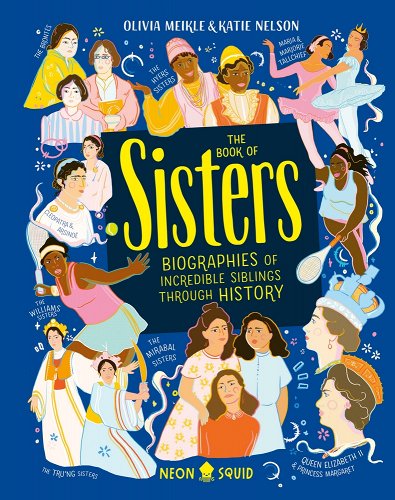
Now they have a new project coming out: The Book of Sisters is a non-fiction book for kids (or eternally curious adults) about sisters who made a mark on history, coming out on April 4th. I can hardly wait for my copies to reach the bookstore
Take it away, Katie and Olivia!
* * *
There is a long tradition of collective biographies of notable women, that are written to provide female role models for girls. Do you see The Book of Sisters as part of that tradition?
Katie: I’m not sure if our editors originally conceived of the book in that vein, but I wanted to put a very different twist on it. I had the idea of writing a history of the world, in sisters. I was awed and a bit intimidated by the thought: could we authentically cover all the main episodes of world history with a new set of glasses on, so to speak? I knew it would be a big challenge. Happily for me, our amazing editors were on board too!
And there are certainly plenty of women in the book who shouldn’t be anyone’s role models! Rather than being inspiring, they are downright terrifying. Some sets of sisters destroyed each other and everyone around them…and it’s all part of the wider human story. I am so glad we were able to present the whole variety of human experience. I think it’s important NOT to present historical characters as idealized heroes to model our lives on. Who could ever live up to a perfect fantasy? We’re all flawed humans, stumbling toward enlightenment.
Olivia: Yeah, I’m pretty proud that this book is so much more than just what can sometimes (not always!) turn into a fairly reductive and/or dismissive “big book of ladies” – and instead we’re taking this often-complicated relationship and using it as a throughline through human history, looking at these characters and events – some well-known and some very unknown – from a unique and very specific angle that (we hope) yields equally unusual and fascinating results! (Just to be clear: There are lots of GOOD examples of those type of books. I own tons of Books of Ladies that I love dearly!)
Was it difficult to find historical sisters for the book?
Katie: Happily, a decade of teaching world history at university helped me out here. Still, as I was mapping out the historical roadmap of the book, there were some “chapters” of world history that struck me as particularly masculine. Genghis Khan’s Mongolian Empire, for example – where would I find sisters in this (immensely important, primary source-starved) episode of world history? But wouldn’t you know it – just a little bit of digging beneath the surface led me to Jack Weatherford’s book, The Secret History of the Mongol Queens, and there it was: Genghis Khan’s daughters built and sustained the whole operation. Without those four sisters, there would have been no Mongolian Empire.
This confirmed for me that the lack of women in our historical narratives isn’t the fault of today’s historians. The scholarly research and the books are out there, now: we just need to help those stories make the leap into popular culture, placing these women as main characters in our collective historical narratives. Hopefully, with a book like this, we can help make that leap a reality.
Olivia: Yeah, I confess I was a bit nervous if we’d be able to do it, but this kind of thing kept happening – whenever there were particular “holes” we needed to fill in the narrative or in the map, after a bit of determined digging we’d uncover another incredible story just begging to be told! And thank goodness for supportive spouses. Our wonderful men got almost as invested in the project as we did – I can think of at least three ‘sets’ of sisters in the book that my husband Matthew found before I did!
What work of women’s history have you read lately that you loved? (Or for that matter, what work of women’s history have you loved in any format? )
Olivia: I recently finished 18 Tiny Deaths,about the completely fascinating Frances Glessner Lee, the middle aged Chicago “socialite” responsible for almost single-handedly establishing modern forensic medicine in the US in the early 20th century, and it was such a wild and unexpected story I could hardly put it down! The relentless and passionate commitment this woman showed toward what she saw as the pursuit of real ‘justice for all’ was inspiring and totally astonishing. And I know Katie just basically devoured Kim Todd’s Chrysalis, on 17th century naturalist Maria Sibylla Merian, who was doing groundbreaking field research on entomology and botany almost a century and a half before Darwin.
Katie: I also want to plug the podcast The Exploress as one of my favorite works of women’s history “in any format.” Kate Armstrong’s research and attention to detail is impeccable, and the script is full of so many laugh-out-loud witty remarks. I love it!
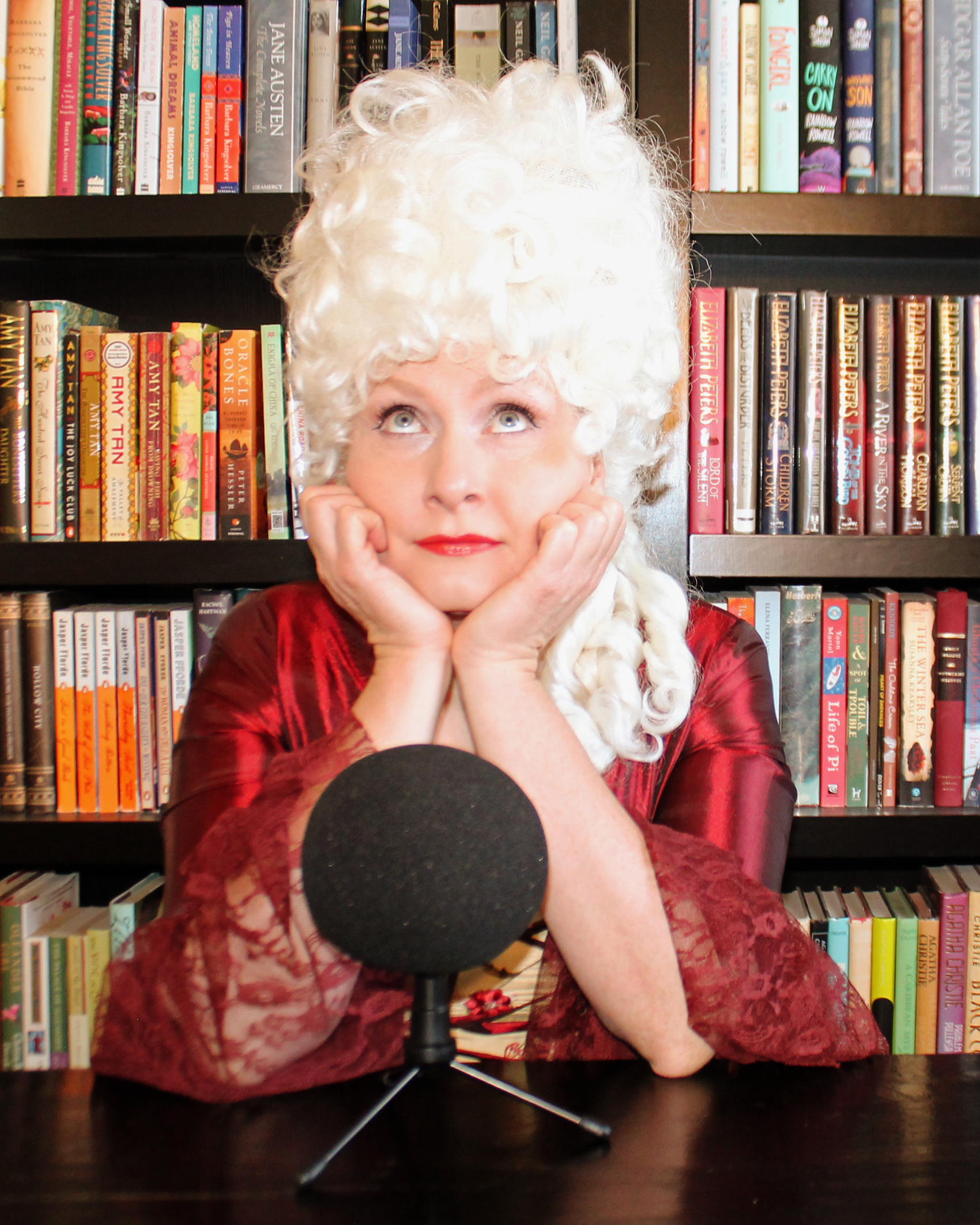
And for our question for you – We want to know your thoughts on the long tradition of collective biographies designed to provide female role models for girls?
I read those books as a kid, when I could get my hands on them. (There weren’t as many of them then as there are now.) And I loved those books. They gave me models that said it was okay to be tough/mouthy/opinionated/different.
But ultimately I think we need something more than role models. We need to show young girls, young boys, and grown-ass people of all genders that “women’s history” is simply history. Because we were there, y’all. We were there.
***
Want to know more about Katie Nelson and Olivia Meikle and the amazing work they do?
Listen to the podcast: https://www.whatshernamepodcast.com/
Follow them on Twitter: @WhatsHerNamePC
Follow them on Facebook: https://www.facebook.com/whatshernamepodcast
Follow them on Instagram: https://www.instagram.com/whatshernamepodcast/
* * *
Come back tomorrow for three questions and an answer with Theresa Kaminski, author of a new biography of Dale Evans, the Queen of the West.