




Talking About Women’s History: Four Questions and an Answer with Michael Cooper
Here’s the official bio: Dr. Michael Cooper, the Margarett Root Brown Chair in Fine Arts, has had research interests in 19th-century music, source studies, historiography and political history, specializing in Mendelssohn, Schumann, Berlioz, and Richard Strauss. He has also spent the last three decades in research of Florence Price and Margaret Bonds, and is a leading editor of the music of Florence Price and Margaret Bonds.
Here’s the passion behind it: “I’m a musician. I’m a teacher. I’m a scholar. I have a passion for social justice. I believe that the most important thing we can do — for ourselves, our understanding of who we are, our history, our future — is to learn music and understand how it serves as a lens into the world that produces it and a lens into who we are. Music is the key to understanding ourselves in all the diverse beauty and complexity of the human condition. And it is the key to making our world a better world.
The most important thing, though? That is to learn the music that we do not already know — the musical voices that others are not already telling us to listen to, the voices and works that have been erased from our collective history. “
My guess is that’s a mission statement that all the Marginalia can get behind.
Take it away, Michael!

What path led you to Florence Price and Margaret Bonds? And why do you think it is important to tell their stories today?
This is a story both professional and deeply personal for me. I was in my mid-twenties when I first heard Price’s Songs to the Dark Virgin and Bonds’s Three Dream Portraits, and I was thunderstruck – I remember nothing else about the program, but the experience of those two works was like nothing known to me before. I immediately tried to find more music by these two obviously marvelous composers – but could only get to a tiny handful of other works, even though both Bonds and Price were reportedly quite prolific. A quarter-century later, the situation was the same: a very small body of works by Price and Bonds (4-10 pieces each) kept being recycled. What were the other hundreds of pieces, and what were they like?
I wanted to know, needed to know: it was like a burning question that had been simmering unanswered for a quarter-century. By then I had dealt with most of the contractual obligations that had kept me from addressing it for so long. I had also learned how to understand musical manuscripts and conduct archival research, and seen that the music suppressed by our world’s obsession with genuflecting before canonical “Great Men” was usually far worthier of mainstreaming than canonical works are. So when pianist Lara Downes (whose 2016 recording of Price’s First Fantasie nègre contributed much to the momentum of the current Price renaissance) encouraged me to follow through on the notes I had been taking over the years about those “missing” (unknown = marginalized and suppressed) compositions, I decided to go for it. I plunged headlong into the thousands of pages of manuscripts of both Price and Bonds – and I was stunned by what I found there, by its consistent beauty, by its eloquence and power, ceaseless originality. I started inputting the content of those musical autographs into my computer (editing the works), and so got to know the music from the inside out, putting one note at a time onto the pages, one bar at a time. It was so beautiful and amazing, each work so different from every other even though all clearly came from the same springs, that I couldn’t stop. By today, because of that work, the voices of Margaret Bonds and Florence Price have gifted me a huge musical universe of dazzling beauty, intensity, and originality. My musical universe has been enriched and transformed by their legacies. That long-unanswered question has been addressed, its fire supplanted by light.
I think we need to tell the stories of Bonds, Price, and countless other composers who have been marginalized because of their sex and/or their race partly because of the wonders that they left to our world, legacies without which the world is poorer. Beyond that, it’s impossible to understand any history if we hear only one group of its voices (by which I mean male voices, most of them White and most of these European). That’s like looking at a few pixels and pretending you’ve seen the picture. Most important, though, is the general principle that the marginalization and suppression of women and persons of color is, to put it plainly, wrong. We have to choose whether we accept that wrong and go on about business as usual, or call it out for what it is (wrong) and resist it with every fiber of our being. That path of resistance – the path of listening to voices silenced and suppressed – is the only conscionable way forward, the only way to make it possible for future generations to know a better, richer, more just world than we do.
Are there special challenges to researching women of color, who in some ways have been doubly erased from history?
“Doubly erased” is an apt term – and it’s an important one for me, a White male, to keep in mind as I approach the powerfully expressive art of two Black American women, one of whom (Price) was nearly ten years dead before I was born. As we all know, the tendency of White historiography and male historiography is to portray history and its art through White male eyes, thus perpetuating the very same White and male gaze that marginalized women and people of color to begin with. That approach to history not only marginalizes women and people of color; it also inevitably – and worse – misses the point of what they saw in their art, and wanted others to see there.
While it’s true that I feel obligated (having watched the musical world stand idly by for decades while the very music by Price and Bonds that it’s interested sits in the libraries and archives, unheard, unstudied, untaught) to do my best to help get that music and other aspects of those composers’ lives out into the public, I have to respect the challenge for me to, in some senses, suppress my own perspective, White and male as it is. Because it seems to be the historian’s nature to speak with authority, the challenge that researching women of color poses for me, and for all of us, is to remain humble rather than asserting authority, to listen more than we talk.
What can we learn when we use music as a historical source?
Because of music’s pervasive presence in cultures worldwide throughout history and its universally acknowledged position among the arts that are natural expressions of the mathematical order of the cosmos (Boethius’s quadrivium) as well as created through human imagination, music has an extraordinary capacity for serving as a lens into the ideas, issues, ambitions, and questions of the worlds of its historical composers and performers and their audiences. For the same reasons it’s also been an agent of change and social discourse. What’s more, historical music has an amazing ability to kindle emotional responses, to stimulate the intellects and imaginations, of historical observers. The chants of Hildegard of Bingen, the violin works of J.S. Bach, the symphonies of Louise Farrenc, the fantasies nègres of Florence Price – all these can speak to modern performers and listeners with an immediacy fully equal to that with which they addressed themselves to their contemporaries. They can connect us directly to those long-dead composers, and thus make their worlds more approachable than they might be otherwise. Music thus has a remarkable ability to connect us to a past that might otherwise be hopelessly remote; to articulate the voices of composers that are otherwise now forever silent; to share the ideas, questions, and inspirations of their creative imaginations with us with an immediacy that makes it perhaps every bit as powerful as a source of inspiration and agent of change today as it was in its own time.
Do you think Women’s History Month is important and why?
Women’s history month is incredibly important as a thing in itself, but even more so as a first step toward an eventual future where women’s history is no longer regarded as something that could possibly be celebrated in just thirty days. That future must come. For now, Women’s History Month acknowledges that 50%+ of the population and their myriad creations and contributions to history deserve to be celebrated not just as counterparts to men (as is usually the case) and not just as tokens in a male-dominated and resolutely male-chauvinist world, but on their own, and (more importantly) on their own terms.
We all know that the current thirty-one-day span will see more public and scholarly celebration of women’s history than the next 334 days will. That needs to change, has to change. Women’s history month is one small step in the right direction, and it’s important to me as an opportunity to drink deeply of the wealth of ideas and inspirations created by women throughout history and get a sustaining dose of those legacies – legacies that will be shamelessly marginalized and tokenized until the next Women’s history month. I look forward to March, 2023.
(Reminder: If you are reading this in your email, you probably need to click over to your browser to view, and more importantly listen to, these video clips.
A question for Pamela: Correcting the erasure of women’s voices by restoring their presence in historical narratives is essential work, but wholesale erasure is only one of the techniques by which women have been marginalized and women’s contributions diminished. Another is historians’ tendency, when writing about women, to go out of their way to emphasize historical women’s attachments to men who are already recognized as important: commentators on Florence Price attach her to George Chadwick more than they need to and ought to; commentators on Margaret Bonds overly rely on her relationship with Langston Hughes; historians discussing Fanny Mendelssohn Hensel or Clara Wieck Schumann seem unable to discuss them as composers and musicians in their own right without making them indebted to Felix Mendelssohn or Robert Schumann in ways that, for these historians, do not seem to be reciprocated by Felix Mendelssohn and Robert Schumann. The list goes on and on – and its ultimate result is that the women who are discussed emerge as exponents of, or pendants to, “Great Men,” while male-centered narratives treat women as footnotes or incidental. The imbalance is a historiographic artifice that’s insidious in its undermining of the progress made by restoring women’s presence in historical narratives from which they’ve traditionally been erased.
The question, then: what do you think about this problem? And, more to the point, do you have suggestions about how to most effectively address it?
First, I think it is a very real issue. Every year in this series, I ask about the special challenges of writing about someone who is best known as the “wife of” someone or who is otherwise overshadowed in the literature by a man in their lives. And every year, I get interesting answers to the question.
I think one of those answers gets to the heart of how to address it. Music historian Angela Mace Christian said that the biggest problem she has in writing about women like Fanny Mendelssohn Hensel is her own thought process:
I find myself consistently needing to stop and think carefully about if what I’m thinking is based on a long-held assumption about the relationship of a female artist to her brother, or whether what I am thinking is an objective analysis of evidence. I find that this issue crops up frequently when analyzing the music. It is incredibly tempting to compare the music of Felix and Fanny, because it truly does share a sort of genetic fingerprint. I find that many of us also fall into the habit of comparing composers to everyone who came before them; it’s hard not to, especially when a composer like Beethoven was very much alive and working when Felix and Fanny were teenagers. It can even be completely appropriate for some works, such as Fanny’s “Easter” sonata. But what if we didn’t compare them? What if we dug into the music of Fanny, just like we dig into the music of Bach or Beethoven or Brahms? What could we find that we’ve missed? What happens if we truly level the playing field, take gender and kinship out of the equation, and approach the work of art head on, regardless of its composer?* That’s incredibly difficult for me, since I do primarily write on the social context around Fanny, with a special interest in kinship, but it might be the best way to overcome those inherent biases in our minds and the historical record.
In short, we need to constantly wrestle with the opinions we hold so deeply that we don’t even know they are opinions, whether we are talking about race, gender, ethnicity, or religion. (And there are probably other things that ought to be on that list that I am not thinking of right now.) Sometimes it feels overwhelming, and exhausting. But I believe it’s important.
(FYI: Social psychologist Dolly Chugh has a book coming out in October that will be dealing with some of these issues head-on : A More Just Future: Psychological Tools for Reckoning with Our Past and Driving Social Change. I am eager to read it. In the meantime, I strongly recommend her newsletter, Dear Good People for evidience based and delightful discussion of these topics. You can subscribe here: https://www.dollychugh.com/newsletter)
***
Want to know more about Michael Cooper and his work?
Check out his website: https://cooperm55.wixsite.com/jmc3
Read his blog: https://cooperm55.wixsite.com/jmc3/blog
***
Come back tomorrow for three (or six, depending on how you count) questions and an answer with Olivia Meikle and Katie Nelson, hosts of the What’s her Name podcast, talking about their newest project The Book of Sisters.
Three “Lady Coders”: a Guest Post by Jack French
I love it when readers of History in the Margins reach out to share something they think will catch my interest, or a suggestion for a blog post, or a gentle correction. Long time reader Jack French occasionally offers to tell me, and you, a story. It is always interesting, and I am always pleased to welcome him back.
Take it away, Jack!
* * *
While women have excelled in the art of code breaking, they have seldom received the recognition they deserved. First because they were women in what historically was a man’s world, and secondly because most of their impressive accomplishments were classified by the government agency for whom they worked.
Three of the most skilled and talented women code breakers in American history were Agnes Meyer Driscoll, Elizebeth Smith Friedman , and Genevieve Grotjan Feinstein. But The Code Book, (Anchor Books, 1999) an extensive history of cryptography by Simon Singh, while detailing the work of hundreds of men, does not even mention one female code breaker. The massive 1136 page The Code Breakers (Macmillan Company, 1967) by David Kahn also describes the work of hundreds of men. Kahn relates some of the successes of Friedman, has three sentences about Driscoll (one under her maiden name) and totally ignores Feinstein. It would be up to Liza Mundy and her brilliant book, Code Girls, (Hachette, 2017) to give proper credit to the entire trio of these lady code breakers, as well as the great multitude of unsung female analysts in the Army and Navy who contributed to cracking the German and Japanese codes and ciphers in WW II.

Agnes Meyer was born in Illinois in 1889 and got her degree in mathematics and physics from Ohio State. She also studied foreign language and was fluent in four of them. After a brief career as a school teacher, she enlisted in the U.S. Navy in 1918 and was assigned to their Code and Signal Section where she excelled. She married Michael Driscoll, a DC lawyer in 1924, by which time she had become one of the Navy’s top codes and cipher experts. The government awarded her $ 15,000 for a cipher machine that she and William Greshem invented. Her small Navy team broke the Japanese code in 1926 and also broke the one the Japanese replaced it with in 1930. By 1939 she had solved Japan’s entire fleet code. In 1940 she was transferred to the group working on the solution to the German Enigma coding machine. Dubbed “the First Lady of Navy Cryptography” she last worked for the National Security Agency (NSA) retiring in 1959 at the age of 70. Driscoll died in September 1971, age 82, and was buried in the National Cemetery in Arlington. In 2000 she was inducted into NSA’s Hall of Honor.
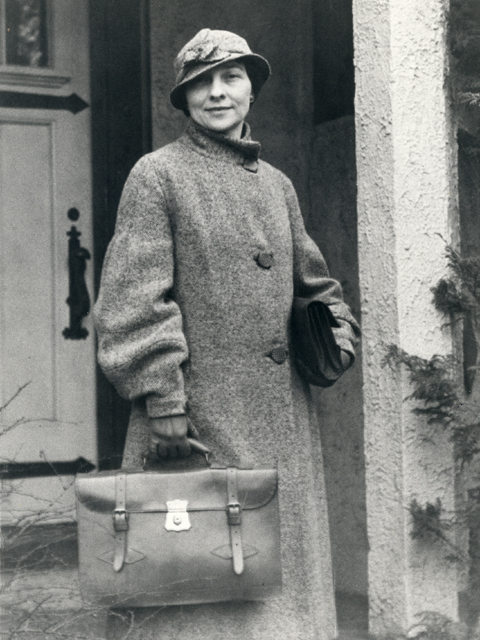
Elizebeth Smith Friedman was born the youngest of nine children in 1892 in Indiana. She graduated in 1915 from Hillsdale College with a major in English and minor in foreign languages. She briefly taught school before being hired at Riverbank Laboratory, a private entity that worked with government agencies to break codes and ciphers. There she met and married William Friedman; the two of them would spend the rest of their careers breaking codes and solving ciphers for the federal government. Although they both worked for the War Department, she left in 1923 to become the head of the code breaking section of the Department of Treasury, Bureau of Prohibition and Customs. Her job was to crack the codes of bootleggers and international smugglers, which she did brilliantly. Her success resulted in her transfer to the U.S. Coast Guard, where she continued to successfully attack the codes used by violators of the Volstead Act, solving over 12,000 coded messages in three years. Her court testimony in criminal trials resulted in convictions of over thirty smuggling ring leaders. In WW II, she testified against “The Doll Lady” who was convicted of being a Japanese spy. Friedman led the team that broke the German code used for their spy network in South America, although J. Edgar Hoover claimed the credit for the FBI. She died in October 1980 at the age of 88; after cremation, her ashes were scattered over her husband’s grave in the National Cemetery. Friedman is the only one of the talented trio to receive some acclaim recently; two biographies about her, plus a children’s book, have been released in the past five years and her accomplishments were lauded in a PBS television special in January 2021.

Genevieve Grotjan Feinstein is the least known of the trio of remarkable lady code breakers, but this does not mean her accomplishments were less impressive. She was born in 1913 in Buffalo, NY and graduated from the University of Buffalo, summa cum laude, with a degree in mathematics in 1938. The following year she was hired by William Friedman in the Army Signal Intelligence Service, which concentrated on breaking the codes of Germany. From then until her retirement from the government in 1947, she would be the linchpin of her unit in breaking whatever codes which they were assigned. In 1940 she made a discovery that enabled her team to break the Japanese “Purple Code”, which was the protection of their diplomatic corps message traffic. This also opened the door to German military plans, which were relayed to the Japanese diplomatic corps. Later, working on Russian codes, she devised a process for recognizing the reuse of its code keys, thereby permitting the decryption of KGB messages. She had married chemist Hyman Feinstein in 1943 and she retired from federal service and became a mathematics professor at George Mason University in Fairfax, VA. This illustrious code breaker died at the age of 93 in August 2006.
* * *
Jack French is a former Navy officer and retired FBI Agent in Virginia. He is a vintage radio historian and the author of two published books on the subject. Jack is a guest lecturer whose topics include: Civil War Heroines, History of Toys & Games, and the Golden Age of Radio.
You ca learn more at his website: www.jackfrenchlectures.com
* * *
Come back on Monday for four questions and an answer with music professor Michael Cooper who is involved in reviving the work of composers Florence Price and Margaret Bonds
Talking About Women’s History with Debby Applegate
Debby Applegate is a historian and obsessive reader whose first book, The Most Famous Man in America: The Biography of Henry Ward Beecher, won the Pulitzer Prize for biography in 2007 and was a finalist for the Los Angeles Book Prize and the National Book Critics Circle Award for biography, and was named one of the best books of the year by the New York Times Book Review, NPR’s Fresh Air, the Washington Post, Seattle Times, Chicago Tribune, San Francisco Chronicle and American Heritage Magazine.
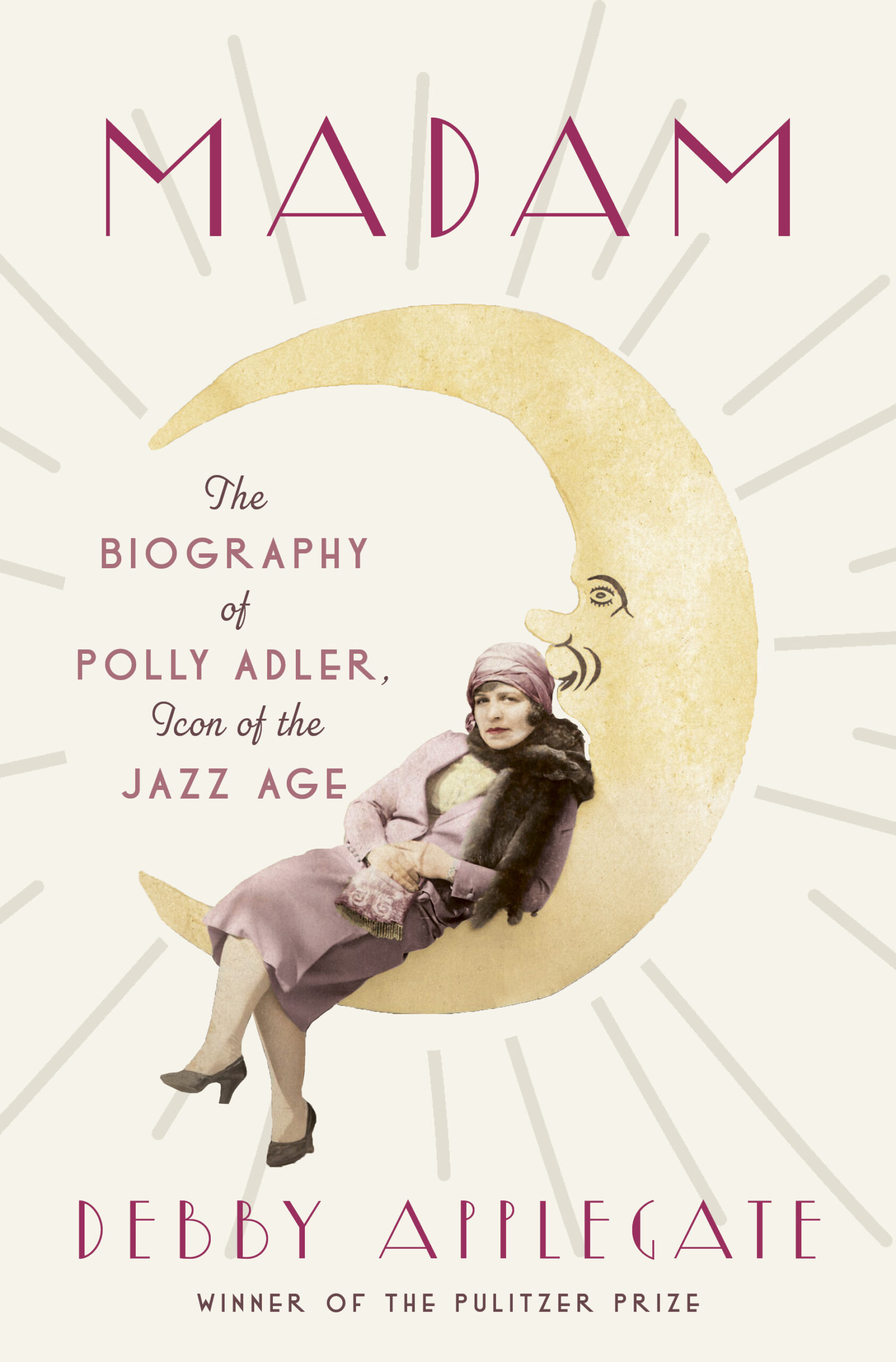
The Most Famous Man in America was an unconventional portrait of an unconventional minister and antislavery activist whose celebrity rivalled Ralph Waldo Emerson and Abraham Lincoln. With her second book, Madam: The Biography of Polly Adler, Icon of the Jazz Age, she plunged from the world of virtue to the underbelly of vice. It took thirteen years of immersion in the archives to research and write and – to give fair warning to all readers — is much racier than the first.
I’m thrilled to have Debby here on the Margins to answer questions about writing, biography, and Polly Adler.
Take it away, Debby!
What path led you to Polly Adler? And why do you think it is important to tell her story today?
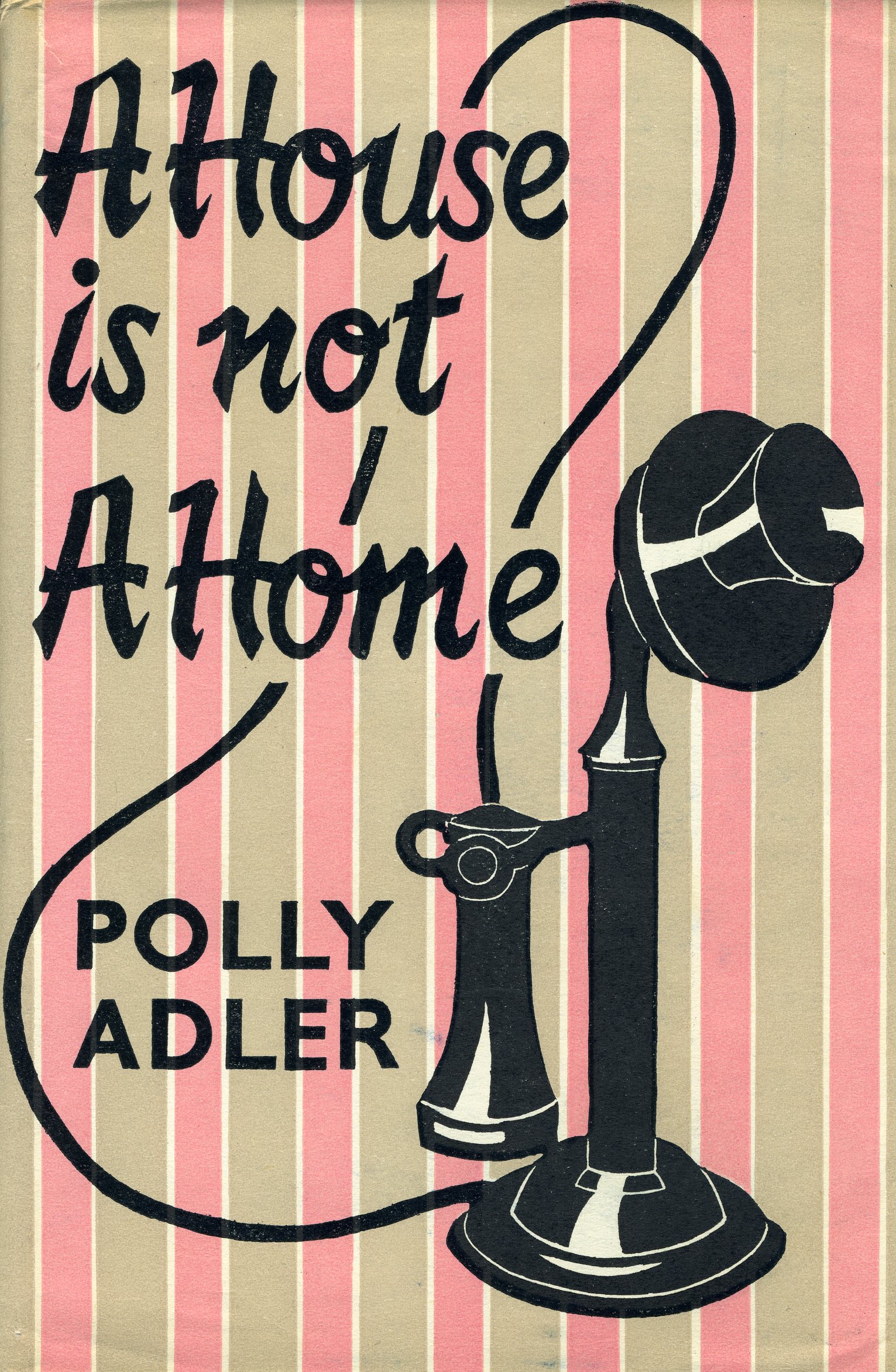
I discovered Polly Adler by accident when I was strolling through the stacks of the Yale library. I was looking at books on the 1920s when this slim red volume caught my eye. This was A House is Not a Home, Polly’s best-selling 1953 memoir of her career as Jazz Age Manhattan’s most infamous and influential madam. I’d never heard of her before but I was captivated by her autobiography, whitewashed though it obviously was.
I’d always enjoyed reading about the Lost Generation, the Algonquin Roundtable, and the explosion of American culture between the World Wars – but Polly presented these familiar stories from a radically different perspective. I think of Madam as telling the secret, hidden history of those formative years, revealing how much the glamorous parties and fabulous creativity of the era were intertwined with corruption, hypocrisy, and our darkest moral impulses.
But I didn’t know when I began, how much Polly’s clear-eyed perspective and hard-boiled career would speak to the cultural zeitgeist of 2022. Her story seems especially suited to a moment when we are increasingly interested in exposing the intersections of sex and power and dismantling the conspiracies of silence that protect powerful people from bearing the full cost of their desires.
It’s an enormous jump from the subject of your first biography, famous preacher and abolitionist Henry Ward Beecher, to infamous madam Polly Adler. Are there common threads in their stories that called to you?
If I’d known just how enormous a jump it would be, I’m sure I’d never have dared to take the leap! It was no small thing to move from would-be saints to unrepentant sinners, from the nineteenth century to the twentieth.
Despite their many differences, however, Polly and Henry share the kind of personality that I like in everyone: open-minded, open-hearted, intellectually curious, clear-eyed but not cynical, ambitious but generous, a wonderful sense of humor about themselves and life in general. Just as important, they were great cultural connectors, who seemed to pop up in all the hotspots of their time and to know everyone who was anyone. So, I could use their lives as a way to tell a bigger story about America.
Writing about a historical figure like Polly Adler requires living with her over a period of years. What was it like to have her as your constant companion?
I really enjoyed her company, just like Henry Ward Beecher. There were many parts of her story that were dismaying, even disgusting – as the “Queen of the Underworld” she knew more than her share of sociopaths and hypocrites. Writing this book did not improve my opinion of human nature. But Polly herself was always a pleasure to be around. There was never a dull moment!
You’ve successfully made the jump that many academics dream of, from writing purely academic work to popular narrative non-fiction based on rock-solid scholarship. Do you have any advice for readers who dream of doing the same?
My transition from academic writing to popular non-fiction was very rocky at the beginning. I had no idea what I was doing and no idea how much I didn’t know. In fact, the contract for my first book was terminated when I turned in the initial disastrous chapters. But I had to repay the advance, which meant reselling the book. So I set myself on a self-study course to learn how to write for a general audience. I read books about how to write thrillers and mysteries, and even a very useful essay about to write pornography.
My biggest insight was that creating suspense is the key to persuading regular readers to turn the page. Readers have to wonder “what happens next?” or “why did that just happen?” I used the practical exercises from these how-to books all the time and I still do when I’m stuck. I am also a big believer in what I call “reverse outlining”. I take chapters from books or essays I admire and outline them paragraph by paragraph – not the content, but the action of the paragraphs (i.e. paragraph 1 introduces the main character; paragraph 2 describes their backstory; paragraph 3 introduces their desire or goal; paragraph 4 introduces a conflict or thwarting of that goal, etc.). This makes it easier to see the structure or scaffolding that creates the effect I admire.
However, it is trite but true: the grass is always greener on the other side of the fence. Many times I’ve wished that I could just lay out my findings for fellow scholars, without having to kowtow to regular readers who aren’t as fascinated by every tiny detail or complex historical argument the way I am.
Your books are praised for reading like novels. Do you consciously use novelist’s tools in writing narrative history?
Indeed, I do. What I like about a good history book, or any kind of book, is the feeling of immersion in that imaginative world. What does is it like to swim in another atmosphere, steeped in foreign ways of thinking? So, whenever possible I try to convey the action through actual or implied points of view, constructing a scene as it would be experienced through an individual’s sensibility rather than by an omniscient narrator. I try to let the characters make the interpretive points, rather than me, and let the characters, in effect, argue among themselves as to whose interpretation the reader should believe. Pungent quotes help with that. But I’m also fond of the novelistic technique of “free indirect discourse” where you as narrator subtly employ the language of the characters and their milieu as your own, as a way to move in and out of various positions.
Frankly, I’ll use any means to make a scene come alive in a reader’s head, as long as there is a factual foundation for it. Sometimes that requires a little sleight of hand – and the judicious use of the passive voice and implication over declaration — but I am scrupulous about making certain that what I’ve written is true to the best of my knowledge. That’s the historian’s chosen game, after all.
One of the questions I’m fascinated with right now is how biographers name their subjects, particularly when writing about a woman. Did you chose to use Polly, Adler, or something else in your book and why?
With my first book, about the Reverend Henry Ward Beecher, I had to use the name “Henry” to distinguish him from all the other “Beechers” in the main cast of characters. But really that was just my excuse. I spend so much intimate time with my characters that I am always inclined to call them by their first names. Any reader who is going plow through a long biography wants to feel that sort of intimacy with the subject, I think. However, I am very careful to make sure that I dole out first names on an equal basis, so that even the highest and mightiest of men are treated as domestic creatures.
There is meaning in the way a person’s name can evolve over the course of a lifetime – from childhood endearments to nicknames to official titles — and you miss all those nuances when you depend only on a last name.
What work of women’s history have you read lately that you loved? (Or for that matter, what work of women’s history have you loved in any format? )
I recently re-read Zelda, Nancy Milford’s 1970 biography of Zelda Fitzgerald, a book that had a huge impact on my thinking when I was a freshman in high school. It was only on rereading it now, as a historian and a grown-up, that I realized how revolutionary it was in 1970 to write a fully fleshed biography of a woman, especially one who’d been written off as merely “the wife of an important artist.” It’s a great feminist book, yet it reads like a heartbreaking novel.
What do you find most challenging or most exciting about researching historical women?
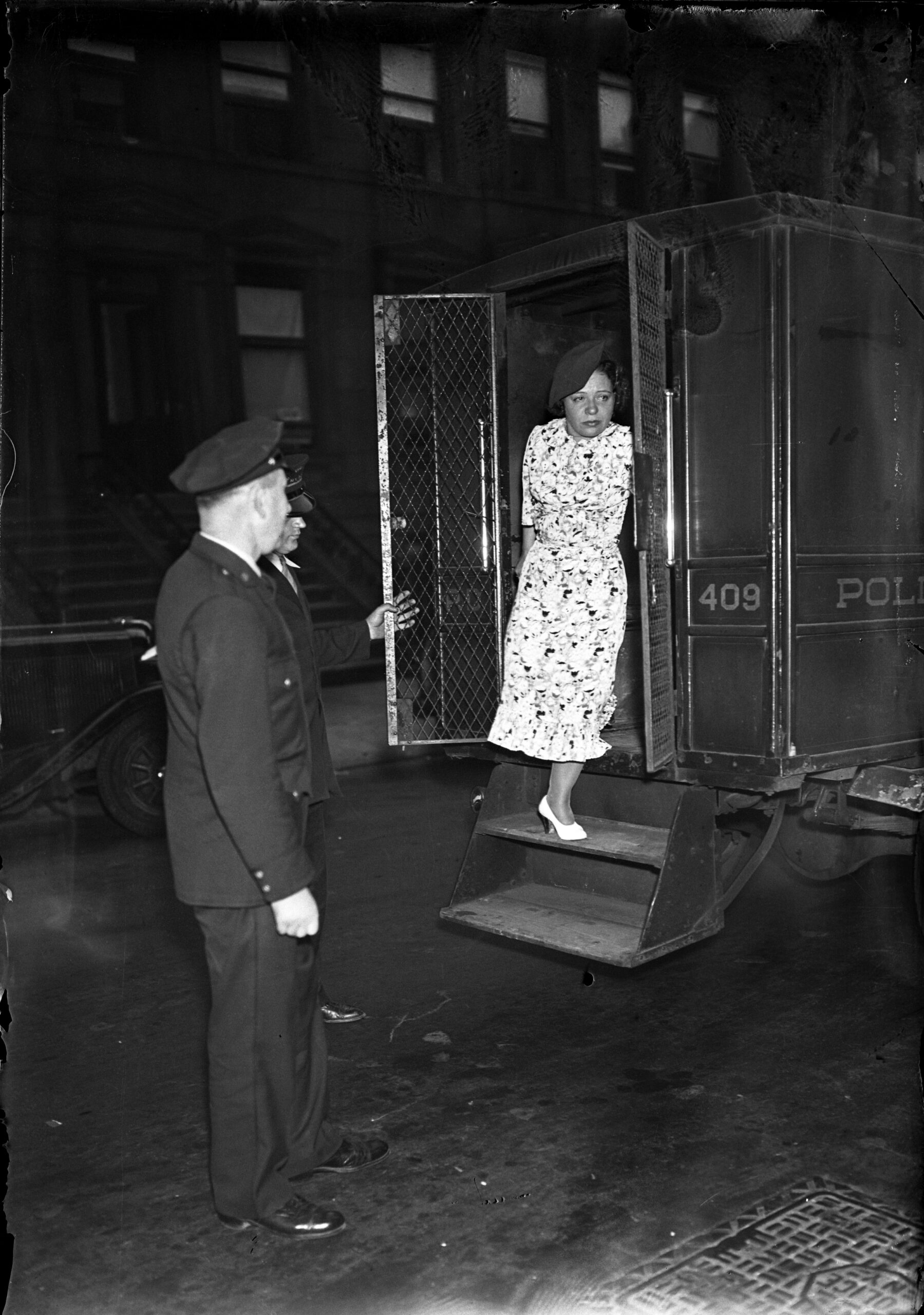
I loved researching women of the underworld and the demimonde because they are so unconventional in the evidence they leave behind. Women who aren’t terrified about compromising their “respectable” status are much candid and surprising in what they reveal. They boldly defy the historical stereotypes that lodge in our heads, even when we know better. Also, counterintuitively, wayward women (as they used to be called) often leave behind more traces than the average, respectable woman who keeps her nose clean and her private life private. Their tangles with law enforcers, moral reformers, and muckraking reporters leave a surprisingly rich record. The down side is that they don’t leave a lot of diaries and letters. (Then again, who writes diaries and letters anymore?)
Do you think Women’s History Month is important and why?
Absolutely! Annual celebrations like Women’s History Month are not just about consciousness-raising or turning on a spotlight — although that is no small thing. They function a little like regular rituals or religious holidays, connecting us to our values and our past, all those things that are so often forgotten in the hubbub of daily life.
What are you working on now?
Absolutely nothing! I do feel a little guilty about that. If someone asks me to write something or contribute my modest might, I’ll happily say yes. But after spending thirteen years on Polly Adler, the idea of initiating a new project to take over my life…well, I’d have to be crazy to do that again, wouldn’t I?
Want to know more about Debby Applegate and her work?
Check out her website: https://debby-applegate.com/
Follow her on Twitter: @Debby_Applegate
* * *
Come back tomorrow for a post on “lady coders’ from regular History in the Margins reader and occasional guest poster, Jack French.