




Road Trip Through History: The National Hobo Museum
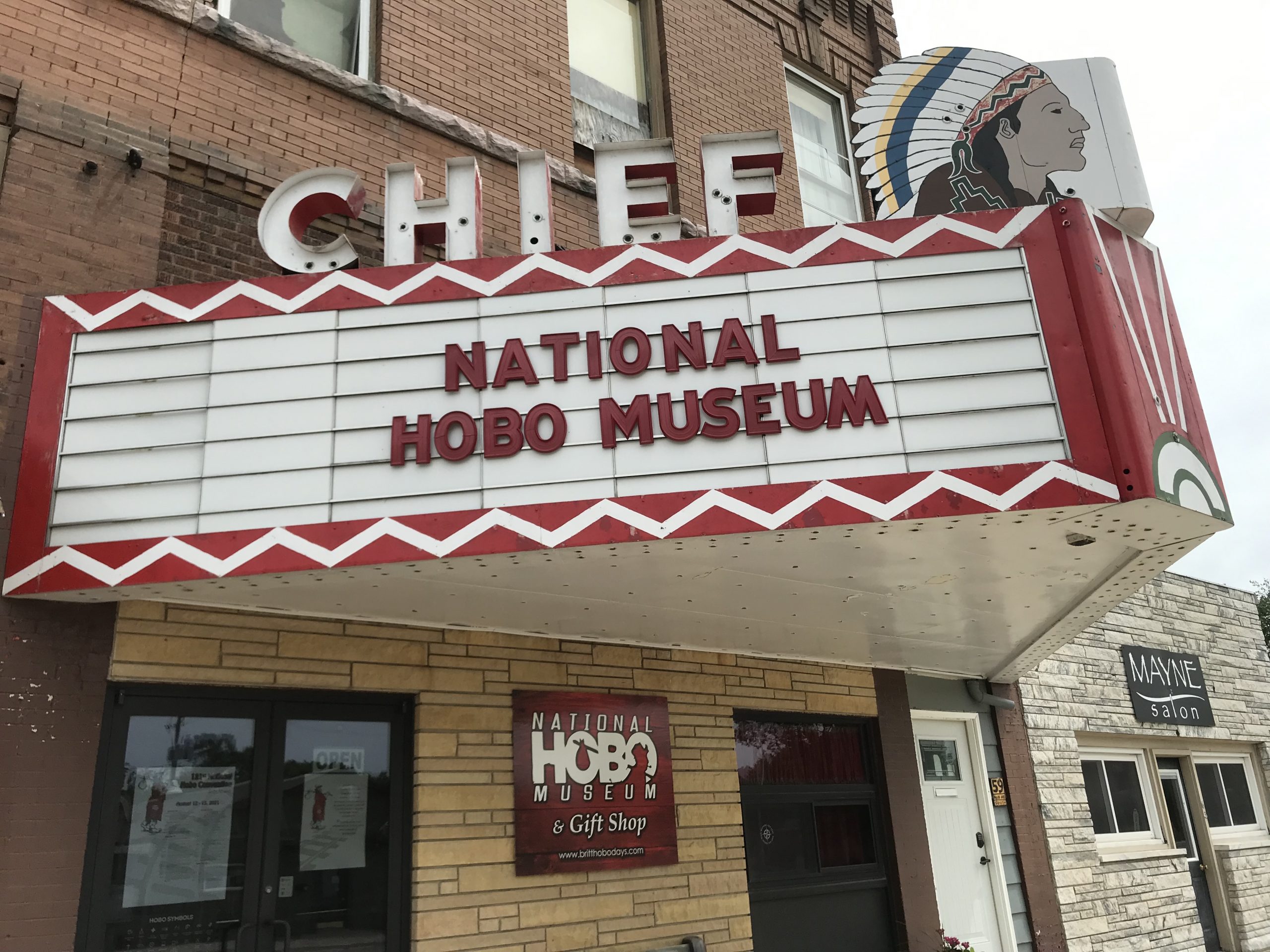
There are some roadside attractions that are impossible to resist. As far as My Own True Love and I were concerned, the National Hobo Museum was one of those attractions. We got off the highway knowing that it would either be dreadful or wonderful. In fact, it was both.
Located in Britt, Iowa, also home to a cemetery where many steam-era hobos were buried, the museum is the offshoot of the National Hobo Convention, which began in 1900 as an annual gathering of hobos and has evolved into a weekend-long celebration.* In the mid-1970s, three former hobos created a foundation dedicated to continuing the Hobo Convention and telling the stories of the hobo life.
The museum itself began with a gift of money and a box of artifacts from a anonymous former hobo. It is now the home for artifacts donated by former hobos and their families from around the world and a large archive of written documents and recorded interviews. (Just waiting for the right scholar to dive in.)
Many of those artifacts are fascinating, but they are not well-displayed. It would be hard for the casual visitor to get much out of them if it weren’t for a series of narrative plaques along the walls and an extraordinary documentary film that is the heart of the museum.** The film combines historical footage of hobos, interviews with a diverse group of former hobos,*** and excerpts of letters from still more former hobos in a gripping and occasionally heartbreaking exploration of the hobo life.
Here are my takeaways:
- Even though we (and by me, I mean I) tend to think of hobos as an outcome of the Great Depression, the movement began in the 1880s in response to the social pressures of industrial growth and the development of the railroads. Hobohemia would have been impossible without the railroads, which provided a network between major cities and the possibility of seasonal work. Traditional hobos were homeless itinerant workers.
- That said, the financial desperation of the Great Depression brought an increase in the number of people riding the rails. In 1932, the Southern Pacific threw 500,000 transients off its cars. That’s one rail company in one year. Multiply that many times over for the whole picture.
- Many of them were very young. A few left looking for adventure. More left untenable home situations. Most left looking for work. One man left after his father told him he was going to have to fend for himself because they couldn’t afford to keep him at home. He was fourteen. (Once he had a job, after the war, he worked to buy his family out of the debt that trapped them in what he described as “sharecropping slavery”.)
- No matter why they left home, it was a hard way of life.
- The Civilian Conservation Corps provided a way out of the hobo life for many young men. A man in the film described the CCC as “social compost” and said one of the most important things it provided to the young men who served was exposure to their counterparts from many different walks of life. Unfortunately, there was nothing similar for young women.
I was left with a question: the film showed clips of riots by the hunger and unemployed. This was a common feature of life in Weimar Germany but I have no sense of such riots here in America during the same period. I have some digging to do.
*****
If you’re in the area, the museum is well worth the stop. Plan on more time than you think it will take: the film is not short. My only regret is that I didn’t buy the hoodie from the gift shop that had one of my favorite quotations across the front: “Not all those who wander are lost.”
*FYI It is scheduled for August 12-15 this year
**Unfortunately, I was too busy watching to write down the name of the film or the filmmaker. I didn’t worry about it because I was sure it would be noted on the website. It’s not.
***My favorite quotation is from a woman who hit the road at fifteen after an argument with her father about “language”: “I was getting cocky and I thought if I had to work like a man I ought to be able to work like a man.” She left with a friend (who she didn’t realize was pregnant) and headed toward Washington State to pick fruit. When they got there, they discovered that it was illegal for women to work as fruit pickers in Washington at the time. After a horrible and often frightening year on the road, she went home. She married at sixteen, joined the Army in WWII, ran a small business after the war, and later became a missionary.
Road Trip Through History: An Unexpected Woman Warrior
Here is the way our road trips work: My Own True Love and I head off with a general plan. We have one or two things we know we want to do. We figure out what we plan to see and where we are staying each night as we go. We stop at every historical marker we pass* and as many historical sites and museums as we can. We especially love the little sites that don’t show up in the state travel brochures and consequently aren’t part of the day’s plan: case in point, Apple River Fort, a state historical site in Elizabeth, Illinois.
The battle of Apple River Fort was a minor incident in the Black Hawk War of 1832,** the sort of skirmish that does not shape the course of events except at the local level. (For that matter, the Black Hawk War was itself minor and local in scale, if not in the way it contributed to the larger picture of conflict between settlers and Native Americans.)
The Apple River Settlement began life as a lead smelting camp. By 1832, it had grown into a considerable village, complete with families. In May of that year, the residents of the settlement learned that Black Hawk and his men had routed the Illinois militia at the battle of Stillman’s Run on May 14th.*** The terrified settlers built a small palisaded fort in eight days.****
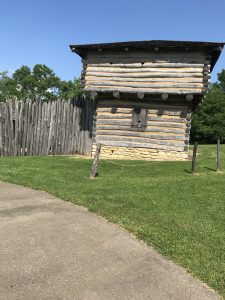
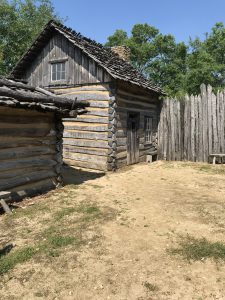
On June 24, four dispatch riders who were traveling from Galena with correspondence for General Atkinson stopped at Apple River for a brief rest. Soon after they had left the fort, they ran into Black Hawk and about 200 of the Sauk, who fired on the dispatch riders, wounding one of them.***** Three of the riders retreated to Apple River to warn the settlement; the fourth rode back to Galena, hoping to return with the militia.
The Sauk besieged the fort. The forty-five residents of the settlement (plus three members of the militia) defended the fort for about an hour.
Up to this point, the story of the Apple River Fort is a pretty standard incident in the Black Hawk war. The historic site tells the story in an even-handed way, using contemporary quotations from both sides of the story.
Now comes the twist: After an hour of battle, the men of the fort were prepared to surrender. The women of the fort, led by one of Elizabeth Armstrong, took up arms, reloaded guns, and continued the fight. One presumes that the men fought on as well.
Finally, Black Hawk withdrew. The Sauk raided nearby cabins for supplies—not surprising given that hunger was their primary motivation—and moved on. The settlers’ casualties amounted to one dead and two wounded. Blackhawk lost none of his men.
The fort was taken down in 1847 and the town was renamed Elizabeth to honor the women who defended the fort. (Elizabeth Armstrong was one of three women named Elizabeth there that day.)
I don’t have enough information to know whether Elizabeth Armstrong actually rallied the fort’s flagging defenders, aided by the other women of the settlement, though I’ve read dozens of similar scenes in accounts of besieged cities. And in fact, the narrative on the website does not include the incident, though it appears in the display at the interpretative center.
I have no doubt, however, that women and children fought at Apple Creek. A letter written by one of the residents after the battle clearly describes young girls making cartridges and running guns and women active in the defense. I’m not surprised.
Over and over while doing my research for Women Warriors — I found instances of ordinary women who fought to defend themselves in cases of siege. In the fourth century BCE Chinese statesman Yang Shang called them “the army of adult women” and he recommended that military commanders use them to help defend a besieged city. Over the centuries, the “armies of adult women” who fought on the walls and in the trenches to defend their cities far outnumber all the other women warriors put together.
I have no doubt that the three Elizabeths and the other women of Apple River Fort fought that day, as so many other women did before and after them.
*Assuming we can find them. Some historical markers are surprisingly evasive.
**If you need a refresher on the Black Hawk War, you can find one here. The Black Hawk War was a recurring theme in our last big road trip, in the fall of 2019.
***A description, not a place name. Attacked by the Sauk, forces under the command of Major Isaiah Stillman panicked and, well, ran.
****Fifty feet by seventy feet, with a cabin in one corner and a blockhouse in the other. To use the cliched size comparison, which I do not find particularly useful since I am not a football fan, less than 1/3 the size of a football field.
*****FYI, I always view estimates of the size of an enemy on the field with caution. The larger the enemy, the grander the victory or the more understandable the panicked rout. Story-building issues aside, many people find it difficult to estimate the number of people sitting quietly in a lecture hall. How much harder would it be to estimate the number of screaming people running at you with weapons?
Gone Fishin’
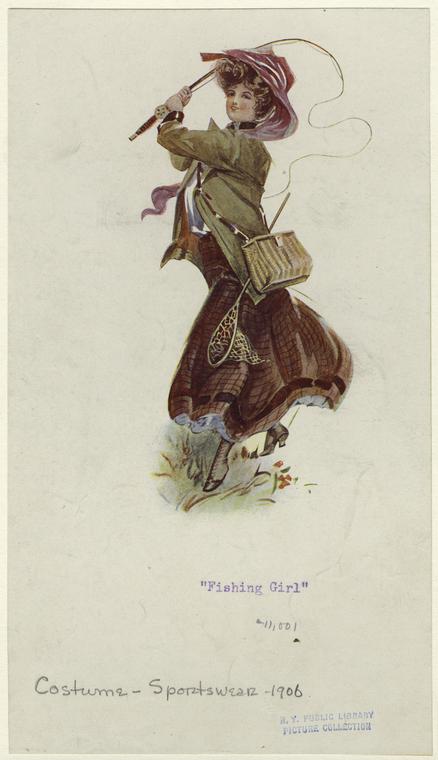
My Own True Love and I are heading off for another adventure. It’s our first road trip since the fall of 2019 and we are thrilled.
This time we’re headed West on U.S. Highway 20. (He’s driven across the Great Plains many times, but I have not. ) We have only the loosest of plans, and no real schedule. The only thing I know for sure is that I will come back with stories to share.
Later y’all.