




Talking About Women’s History: Three Questions and an Answer with Miranda Garno Nesler
Miranda Garno Nesler is unique among the people I have interviewed for this series. She is a rare books dealer who specializes in documents by women, BIPOC, and LGBTQ+ people. When I heard her speak on the What’s Her Name podcast, I wanted to know more.
Miranda earned her PhD from Vanderbilt University and serves as the Director of Women’s Literature & History for Whitmore Rare Books. At WRB, she researches manuscript and print materials through which women, BIPOC, and LGBTQ+ people told their own stories; and she places them with institutional clients around the globe to ensure that students and researchers can access a more diverse swath of history. She has been an invited speaker for a range of organizations including WriteGirl LA, The American Culinary Museum, The Belletrist, WhatsHerName? Podcast, and the Antiquarian Bookseller’s Association of America (ABAA). Past work has been published in The Shakespearean International Year Book, Studies in English Literature, and The Journal of Narrative Theory. Her essay on the 17th century printer Elizabeth Holt is slated to appear in the collection Making Impressions: Women in Printing and Publishing (Legacy Press, 2021).
Take it away, Miranda!

When did you first become interested in women’s history? What sparked that interest?
My early education played a major role. Attending an all-women’s prep school, I was surrounded by brilliant, talented people. Our professors were largely women who’d earned advanced degrees in the 1950s-70s but had been discouraged from pursuing or were denied full time university teaching positions. More often than not, they were open about the obstacles they’d faced in advancing their educations; and they encouraged us as a student body to foster each other’s abilities, collaborate, and generally lift each other up. Despite this, we read very few books by or about women in our classes, which were still modeled on a very Euro-masculine-centric humanist model. It made me curious. We had heard the histories of our professors, but they were certainly not the first generation to fight for education or employment. What were even earlier women doing, what kinds of communities did they form together, what barriers did they face or overcome, and why didn’t we know more about them? Wouldn’t learning about them tell us something about ourselves? And if we reconsidered history with them at the center, might we better position ourselves and the women after us to be at there instead of on the margins?
By the time I made it through college and into my advanced degree, these questions had become the ones that would shape my life and my career. My goal was to use the textual materials women made or used to learn not only about major historical “firsts” – the first woman published in England, the first paid woman dramatist, the first woman admitted to a university – but to find the stories of the women quietly and in their daily lives shaping the world around them. Curators, librarians, and their generosity in sharing knowledge of their collections made this work possible.
How did you get started in rare books?
I’ve always been fascinated by the physicality of history – how material things preserve what we think as well as how we make things, how we use things, how we share things, and what that says about us as individuals and groups. As a child, I remember buying a book of Arthurian legends from a vintage bookshop. I had been drawn to its size (designed to fit easily in a hand or a pocket, as many Victorian books were during the rise of train travel); and I loved the binding (what I now know to be a 19th century publisher’s cloth binding embossed in blind). Reading it, I loved it even more. It had previous owners’ bookplates on the front pastedown. And not only had one person left notes in the margins regarding the sources of those stories or the changes the editor had made, but another reader had left annotations responding to the first set of notes. Even though I couldn’t articulate it at the time, it was an early realization that the people who engaged with this book had become a part of its physical identity – this copy was now unlike any other. These people had also shared their knowledge with me, even though we would never meet or talk. The book as an object connected me to a matrix of other authors and other readers.
My obsession with physical texts and signs of use wove into my interest in women’s history; as time went on, I seemed to find women everywhere. Their ownership signatures and gift inscriptions in books. Lists of the contents of their libraries. Manuscripts they wrote and exchanged. Modern editions and the anthologies I encountered in school might not have women – but women had left their marks all over the world of rare books and manuscripts. Finding them meant that I could connect with them; sharing them meant that others could too. I gained a keen awareness of the fact that we can only teach or research what is accessible. In my role as a book dealer specifically collaborating with faculty and curators at their libraries, I get a chance to place and preserve this material, to give it context, to show that it matters just as much as the holdings that were previously more privileged. I get a chance to ensure that people see themselves represented and can find their history on the shelves.
If you could pick one woman from history to put in every high school history textbook, who would it be?
Belle da Costa Greene. When we think about the material preservation of history and the public’s access to materials that teach it, she’s a critical figure. As the private librarian to J.P. Morgan and the first director of what is now the Morgan Library & Museum, Greene developed a world class collection, preserving rare books and manuscripts that shape scholarship and popular culture today. She overturns the myth that the world’s greatest antiquarian collections were solely built by, benefited, or represented men; and she highlights the importance of diverse people being in these positions of authority. After all, in curating the collection, which required vast insight and knowledge, Greene infused it with her own tastes, preferences, and values. She used her situation to promote the work of women intellectuals; and, likely because of her own background, she was committed to expanding public access to library holdings. Greene is also an example of the powerful and often under-acknowledged influence of Black women in America. Hers is an important story of the social challenges confronted by and the violence enacted on BIPOC communities in a systemically racist culture that privileges a homogenous, white idea of “intellectual.” Greene’s father had been the first Black graduate of Harvard; but she would eventually change her last name, restructure her personal narrative, and begin “passing” as white before taking her first major job at Princeton. It was revolutionary for a woman to rise in the ranks of the rare book world as she did – vying against wealthy men at auction, gaining their respect, dictating institutional policy, conducting and presenting research, building a world class collection. But to do so while being forced to deny part of her identity, which she feared would put her accomplishments at risk (what she called “living behind the curtain of my mind”)? Hers is a story I feel everyone should know. History-makers aren’t all one type. Some heroes make history by preserving it.
…..And a question for you. Among women living today, who is someone you believe will or should be remembered in history books, historical novels and films?
There are some obvious choices here: Kamala Harris, Hilary Clinton, Alexandria Ocasio-Cortez. But I’d like to step outside the political arena and suggest a group of women from the world of STEM: the women who worked at NASA in the early years.
One of my most vivid memories of grade school was carrying my chair to the all-purpose room to watch rocket launches. The (male) astronauts were the main thrust of the story. The engineers and scientists who made the space program possible were seldom mentioned. But when they were, I was left with the impression that they were all men. The women whose story was shared in Hidden Figures were not alone. And I know of at least one nerdy little girl who would have been happy to know about them.
* * *
Want to know more about Miranda Garno Nesler and her work?
Check out this interview: Bright Young booksellers: Miranda Gardo Nesler
Visit the Whitmore Rare Books website: www.WhitmoreRareBooks.com
Follow her on LinkedIn: https://www.linkedin.com/in/mirandanesler/
Follow her on Instagram: @WhitmoreRareBooks
The only full-length biography of Bella de Casta Greene: https://www.themorgan.org/shop/books-and-media/illuminated-life-belle-da-costa-greenes-journey-prejudice-privilege
* * *
Tomorrow it will be business as usual here on the Margins with a blog post from me. But we’ve still got more people talking about women’s history from a lot of different angles next week. Don’t touch that dial!
Talking About Women’s History: Three Questions and an Answer with Janice P. Nimura
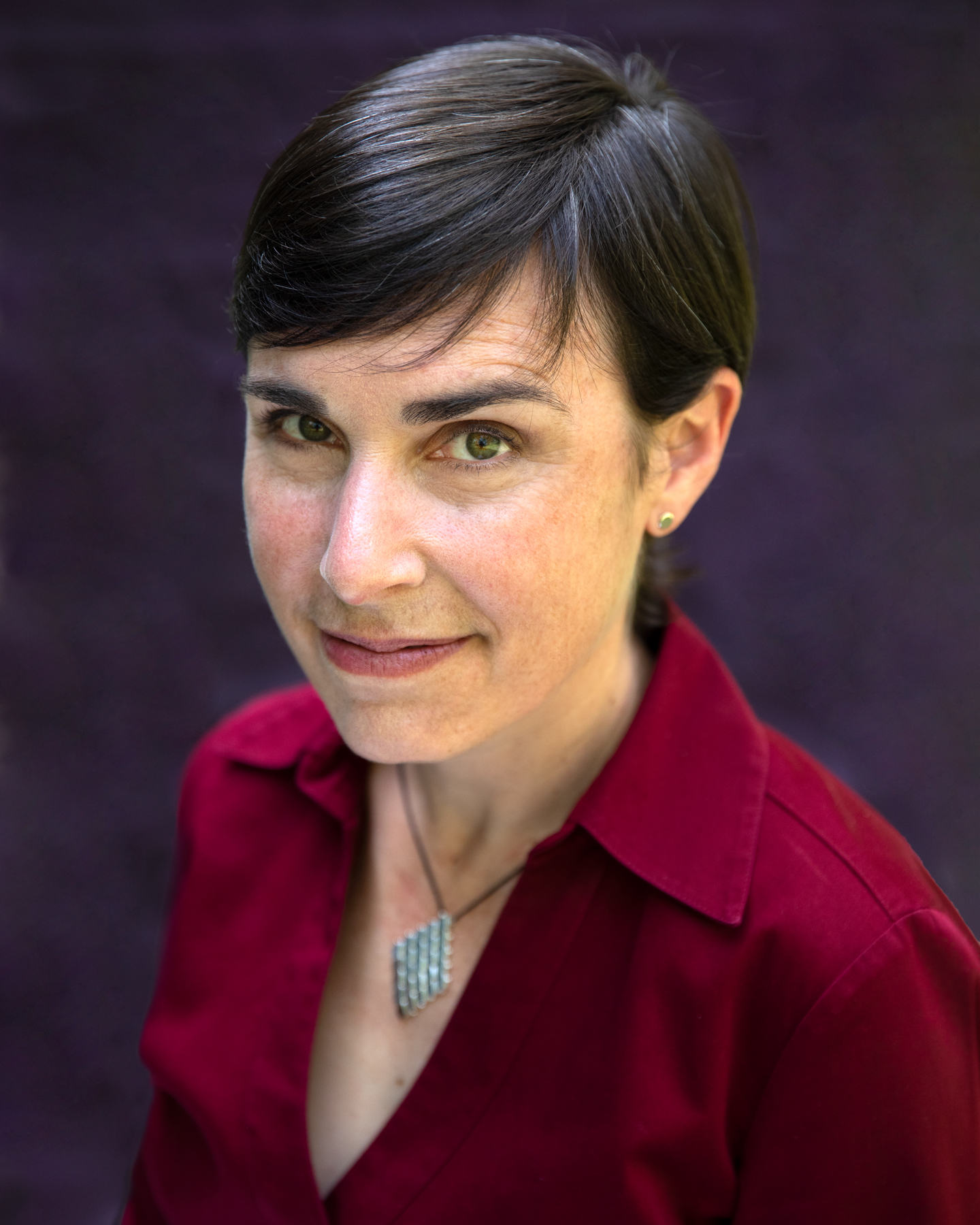
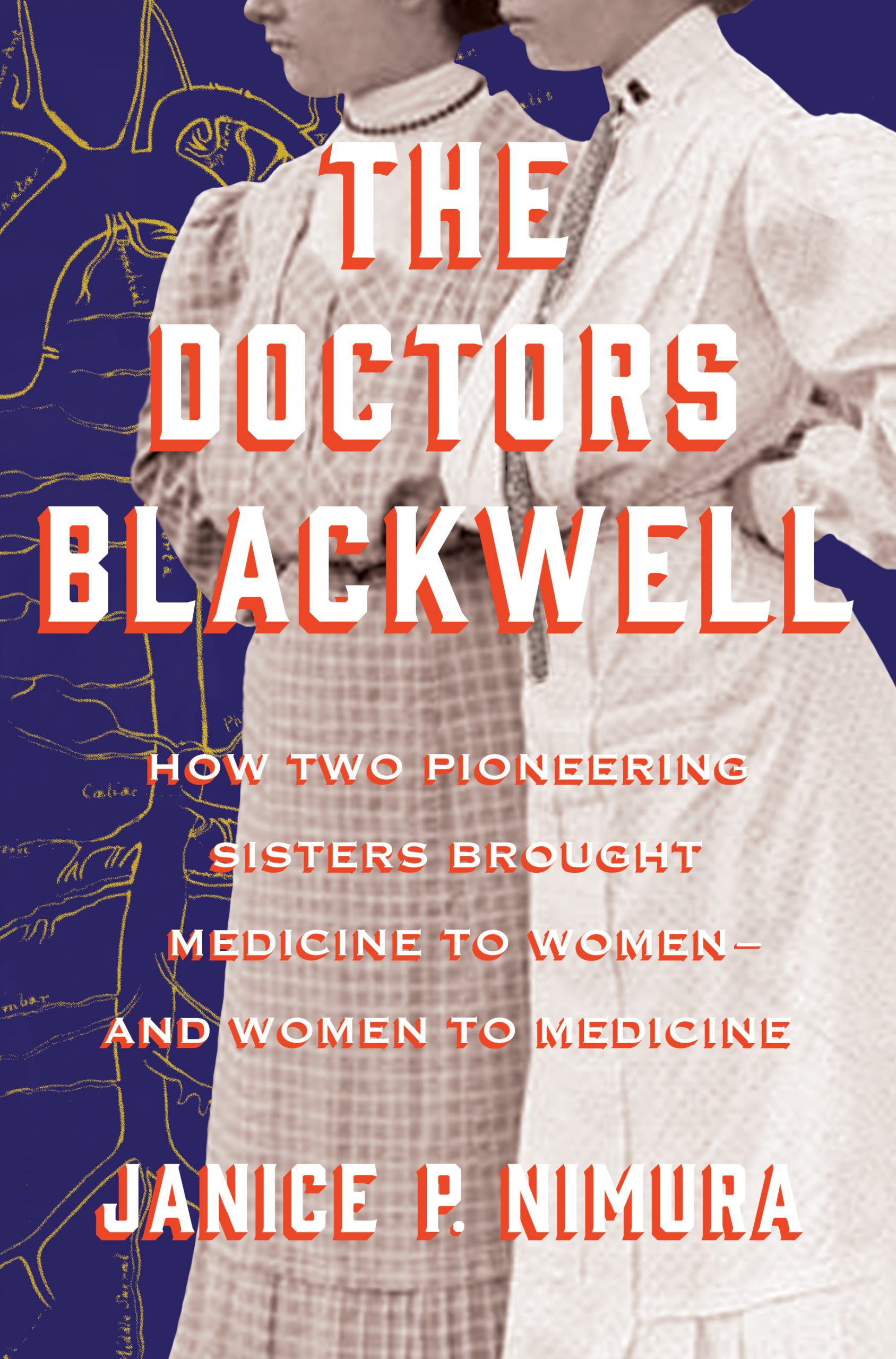
I loved Janice Nimura’s first book Daughters of the Samurai, so I was thrilled when I heard she had a new book on the way. I was even more thrilled when I learned it would be about Elizabeth and Emily Blackwell, whose stories I encountered when I wrote about Civil War nurses several years ago. I have only dipped into The Doctors Blackwell, but I am eager to read more.
Janice received a Public Scholar Award from the National Endowment for the Humanities in support of her work on The Doctors Blackwell. Her previous book, Daughters of the Samurai: A Journey from East to West and Back, was a New York Times Notable book in 2015. Her essays and book reviews have appeared in the New York Times, the Washington Post, the Los Angeles Times, Smithsonian, The Rumpus, and LitHub, among other publications.
I am delighted to have her here on the Margins. Take it away, Janice:
What led you to this story?
My first book-length project, Daughters of the Samurai, grew out of my personal history: my husband was born in Japan, and we lived there for the first few years of our marriage. The story of three young women learning to be at home both in Japan and in America resonated deeply with me. Once that book was out in the world, I knew whatever I took on next also needed to connect to some part of my own identity.
That turned out to be 18-year-old pre-med me. I first encountered Elizabeth and Emily Blackwell about five years ago and was astonished I’d never heard of them. I grew up in the city where they practiced, I went to a proudly feminist all-girls school from the age of 5, I was a math-science kid, and I graduated with the full intention of pursuing medicine. (I was seduced by the humanities in college.) How was it that I’d never heard of the Blackwells?
When I started to investigate further, I learned two things. One, I wasn’t the only one who had never heard of them. The few people who did nod in recognition tended to be women, and they all said the same thing: “oh yeah, I had a book about Elizabeth Blackwell when I was little.” Always Elizabeth, never Emily.
The second thing I learned was that the children’s books left out most of the story. Once I moved deeper into the archives, I discovered two opinionated, prickly, brilliant sisters who didn’t care whether the world agreed with them and didn’t always agree with each other. They weren’t always easy to like, and that was what I liked about them. They were extraordinary and also full of very human contradictions and complexities, and it began to feel important to reintroduce them to the present.
Was your experience of writing about the Blackwells significantly different than that of writing your last book?
My first project, Daughters of the Samurai, was a bit like falling in love: I met a story that captivated me and would not let me go. It felt like I was just the medium, as if these voices from the past were using me to bear witness to their forgotten lives. There wasn’t an enormous amount of material, but there was enough, and the arc of the girls’ journey from Japan to the U.S. and back in the 1870s and ’80s made a natural narrative shape. The whole experience had an ecstatic quality to it.
And then that book was finished and published, and I wanted to do the whole book-writing thing again—but you can’t fall in love on command just because you want to. This time it was more like an arranged marriage. I met the Blackwells, and their story was intriguing, but I was wary. There was a mountain of material—nine siblings writing to each other for most of the 19th century, for starters—and there wasn’t the same kind of neat narrative arc. The story wasn’t nearly as obscure, and featured cameos by such chronicled luminaries as Florence Nightingale, Lucy Stone, Henry Ward Beecher, Lady Byron, even Abraham Lincoln. And Elizabeth and Emily themselves were difficult characters—which probably explained why it was easier to find them on the children’s shelf, where all the rough edges were smoothed away. But in the end, that turned out to be what I loved most about this story: it taught me that heroes aren’t consistently heroic, and it’s important to honor them even while looking squarely at their shortcomings. Doctors was a bigger challenge than Daughters, and a different kind of love.
Elizabeth Blackwell shows up here and there in Historyland, but Emily is generally reduced to a side note to the career of her better known sister. Are there special challenges to writing about a historical team in which one person is overshadowed by the other in historical accounts?
From the beginning, I knew I wanted to write this as the story of both sisters, and bring Emily out from Elizabeth’s shadow. She wasn’t first, and she hadn’t published the volumes of memoir and opinion that Elizabeth had, so I knew that the sources on Emily would be thinner. But there were plenty of letters, including intense exchanges between her and Elizabeth at key moments, and there were wonderful journals. At moments when Emily was doing something particularly interesting—for instance, while she was training in Edinburgh with the flamboyant physician James Young Simpson—I took special care to go deep into the world around her and make the context as rich as possible. I went to Edinburgh and followed in her footsteps, noting everything she had described. And though there are several chapters in the book that focus heavily or exclusively on Elizabeth, I made sure to weave in Emily’s voice or her perspective wherever possible, so that the reader is always holding both sisters in mind. I firmly believe that Elizabeth Blackwell would not have made it to the children’s biography shelf without Emily at her side in medicine.
Question for you: How do you feel about Women’s History Month? Is it necessary? Will it—or should it—become obsolete?
I am so ambivalent about Women’s History Month.
It has its roots in the fact that school history curricula didn’t include women. A group of women in California decided to change that. A wildly successful Women’s History Week in Sonoma Country, California in 1978 grew into what is now Women’s History Month. The ways in which it is observed seem to grown year after year. But I fear that its success makes it harder to solve the underlying problem. Turning women’s history into a special unit that is taught in March, means that women’s history remains a side bar in many classrooms, despite the efforts of hard-working teachers to integrate women into the historical story.
As long as women aren’t integrated into textbooks, Women’s History Month remains necessary. I’d love to think it will become obsolete, but in the meantime I intend to share as many stories about women’s history as I can.
* * *
Want to know more about Janice P. Nimura and her work?
Check out her website at: www.janicenimura.com
Follow her on Twitter: @janicenimura
* * *
Come back tomorrow for three questions and an answer with rare book specialist Miranda Garno Nesler
Talking About Women’s History: Three Questions and an Answer with Daphne Palmer Geanacopoulos
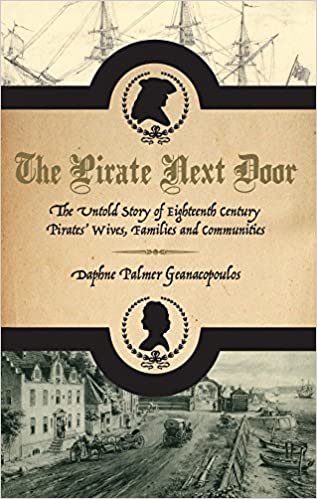
As soon as I heard the title of Daphne Palmer Geanacopoulos’s first book, The Pirate Next Door, I was hooked.
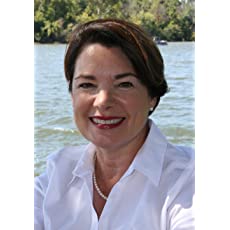
Daphne is an author, historian and journalist. She has published over 40 articles in newspapers and magazines. Her work has appeared in The New York Times, The Washington Post, Southern Living, Virginia Business and The Georgetown University Liberal Studies Journal Writing Across the Curriculum. As a regular contributor to The New York Times’ “Lifebeat” column, her stories have been published both nationally and internationally. She writes on a variety of subjects, including Science, Philanthropy, Health, Lifestyle and Trends and E-commerce.
A former congressional aide, she holds a Doctor of Liberal Studies degree and a Master of Liberal Studies degree from Georgetown University. She also holds a Master’s degree in Business Administration from The George Washington University.
During her studies at Georgetown University she focused her research and writing on issues concerning women, families, and communities, with a special focus on pirates of the eighteenth century. Her dissertation and book, The Pirate Next Door: The Untold Story of Eighteenth Century Pirates’ Wives, Families and Communities (Carolina Academic Press, 2017) shed new light on women in 17th and 18th century maritime history.
Her upcoming biography, The Pirate’s Wife: The True Story of the Remarkable Mrs. Captain Kidd will be published by Hanover Square Press, an imprint of Harper Collins, and is expected to be released in 2022.
Take it away Daphne:
What led you to Sarah Kidd’s story?
As I was researching my dissertation-turned-previous-book, The Pirate Next Door: The Untold Story of Eighteenth Century Pirates’ Wives, Families, and Communities, I kept encountering evidence of this mysterious woman who seemed oddly on the periphery of the story of the notorious Captain Kidd. Even the influential and authoritative early source book on pirates, A General History of the Robberies and Murders of the Most Notorious Pyrates by Captain Charles Johnson, did not include Sarah in the lengthy chapter on Captain Kidd. Sarah was alive at the time the book was published in London in 1724, and it would have been possible for the author to interview her or people who knew her. Finding Sarah’s initials scratched on a colonial document at the Massachusetts Archives in Boston started me on a thrilling journey to learn more about her.
You are writing about a woman who is most easily described as the wife of the famous pirate Captain William Kidd. Are there special challenges in writing about a woman whose biography is overshadowed by that of a famous man?
Yes, there are special challenges. Sarah Kidd, like many women who lived in the 17th and early 18th centuries, could not read or write making them invisible in history. Early pirate history, recording the misadventures and exploits of sea roving rogues, was written by men. Even though Sarah Kidd played a vital role in the drama that unfolded on and off the high seas with her husband, Captain Kidd, she has been all but erased from history. My job as a historian is to piece together her history based on historical facts and supporting records from wills, trial documents, marriage licenses, early town records, genealogy, Admiralty court records, and witness accounts to reconstruct her life. I have consulted the firsthand accounts left by those who knew Sarah and participated in the extraordinary events she was a part of. Captain Kidd, for example, wrote many documents in his flourishing handwriting.
Writing about a historical figure like Sarah Kidd requires living with her over a period of years. What was it like to have her as your constant companion?
It has been a wonderful, fascinating and illuminating experience to have Sarah Kidd as my constant companion for the last five years. One of the most important things I have learned from her is how she navigated through the colonial period as a wife and mother. She married Captain Kidd when she was twenty-one-years-old and she was already twice widowed. They had two daughters and she bravely overcame tremendous adversity. I, too, am a wife and mother of two daughters and every so often, when I come upon a challenge in my own life that I am unsure of how to handle, I think, “Now, what would that amazing Sarah Kidd do?”
Question for Pamela: You have written on a wide variety of topics in your eight books and uncovered fascinating details. I know this is like asking a mother who is her favorite child, but did one of your books particularly speak to you and teach your something you didn’t expect to learn?
It probably means I’m not a good book mother, but Women Warriors is my book in a way that none of the others have been so far. (Ask me that again when the next book comes out and it may be harder to choose.)
I had been collecting stories about women warriors for a long time when I started writing Women Warriors. I went in knowing a lot about traditional heroines, and warrior queens, and women who fought disguised as men, and women in the modern world who were able to enlist without disguising themselves as men. To my surprise, it turned out that the most common type of women warriors throughout history were ordinary women who fought to defend their homes. In the fourth century BCE Chinese statesman Yang Shang called them “the army of adult women” and he recommended that military commanders use them to help defend a besieged city to the full extent possible. And in fact women have helped defend besieged cities for as long as there have been cities under siege. Over the centuries, the “army of adult women” has outnumbered many times over the combined forces of queens, commanders, women who fought disguised as men, and women who fought undisguised alongside men.
Somehow that realization made me believe that there is a little woman warrior in all of us.
* * *
Want to know more about Daphne Geanacopoulos and her work?
Check out her website at: www.Daphnepalmergeanacopoulos.com
Follow her on Facebook: Daphne Palmer Geanacopoulos
* * *
Come back tomorrow for three questions and an answer with Janice Nimura, author of the New York Times bestseller The Doctors Blackwell.