




Poland’s “May Coup”–1926
These days I am deep in the history of the years between the two world wars. Some of it was familiar at the point that I began, at least in broad outlines. But the fact of the matter is that a whole lot of history happened across Europe in those twenty-one years that never popped up in my historical studies, formal or otherwise.* Some of those stories are inherently small. (*Coughs: Free State of Fiume. *) Others, like the story I’m going to share today, are not so small. I’ll share as many of them as I can here over the coming months. Taken as a whole they create a much richer picture of just how unsettled Europe was between 1918 and 1939. **
Let’s go:

At the end of World War I, the Republic of Poland was established as an independent country after more than a century of being divided at various times and various ways between France, the Austro-Hungarian Empire, Prussia, and the Russian Empire. Independence was not all beer and sausages. Under the leadership of nationalist hero Jozef Pilsudski,*** the new country was faced with a ravaged economy, extensive war damage, border conflicts with the Russian Red Army and a political blank slate.
In 1921, Poland adopted a constitution modeled on that of the French Third Republic, with a president and a two house legislature. Like its contemporary, the new Weimar Republic, the Republic of Poland was unstable, with supporters of a democratic republic challenged by the nationalist and antisemitic National Democracy party. The country’s first president was assassinated by a supporter of the National Democracy party only five days after taking office. Pilsudski helped stablise the country through a second set of elections, and then retired from active politics. What he did behind the scenes was another story.
By 1925, public unrest was increasing thanks to the government’s inability to solve problems of hyperinflation and mounting unemployment. At the same time, some terms of the recently signed Locarno Treaties appeared to threaten Poland’s independence, or at least leave it without allies in the face of potential German aggression. Pilsudski became increasingly critical of the elected government and eventually issued statements demanding the elected cabinet’s resignation.
On May 12, 1926, Pilsudski marched on Warsaw at the head of several units of the Polish army. His forces captured bridges over the Vistula River, effectively isolating the city, and demanded the resignation of the cabinet. After three days of urban fighting, the president and prime minister resigned in order to keep the coup from escalating into a full-scale civil war. A new government was formed in early June, with two of Pulsudski’s cronies as president and prime minister. Pilsudski refused to form a government in his own name, taking the position of minister of defense instead. In fact, he was the most influential politician in Poland until his death in 1935 and did his best to protect his country against a German invasion.
There are echoes in this story of things that were happening in Germany, in Italy, in Fiume. No wonder Sigrid Schultz and her comrades regularly reported that there were rumors that war was in the air.
*While there are plenty of holes in my historical education that I find shocking, that’s not what I’m talking about here. The simple fact is that the more you learn about history, (or anything else for that matter), the more you realize you don’t know.
**There will still be holes, because that is the nature of the beast.
***There should be several diacritical markers in his name, but the last time I tried to be correct about Slavic language markers the software that sends blog posts to email subscribers went on strike.****
****You didn’t know you could subscribe? There are subscription blocks for both this blog and my bi-weekly newsletter at the top of the sidebar if you read this on a computer. I haven’t figured out to make them work on a telephone yet.
Women in the Soviet Army in World War II? Let Me Count the Ways
Recently a fascinating story about a real life woman warrior appeared in the Wall Street Journal. To summarize the story: Ukranian-born Olha Tverdokhlibova fought against the Germans in World War Two. She was a skilled markswoman, served as a scout behind German lines, fought her way to Berlin with the Red Army, and was highly decorated for her service, When Putin invaded Ukraine in February, she called the Ukrainian recruiting office and offered her sharpshooting skills. To quote the WSJ article: The recruiter sounded enthusiastic, Ms. Tverdokhlibova recalled, until she revealed her age: 98.” It’s worth tracking down the article if you want more details about her story, and about her response to the Russian invasion.*
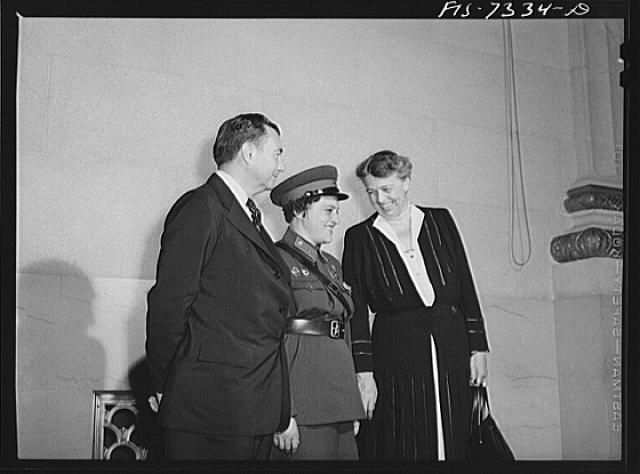
Lyudmilla Pavlichenko was one of the most successful snipers in World War II, with 309 confirmed kills. (Almost 50 percent more than the acclaimed Audie Murphy.)
Tverdokhlibova was one of 800,000 women who served as soldiers in the Red Army in the Second World War. Most, like enlisted women in the United States or Britain, worked in support positions, but several hundred thousand fought at the front as snipers, machine gunners, tank crews, antiaircraft personnel,** and three regiments of female bombers, fighter pilots, and airplane mechanics. Between 100,000 and 150,000 Soviet women were decorated for bravery during the war. Ninety-one women were awarded the Gold Star Hero of the Soviet Union, their nation’s highest military honor. *** More than half of them received the honor posthumously.
* James Marson. “Red Army Veteran Turns Against Putin.” May 10, 2022. P. A7. The WSJ has a serious paywall, so this link will only help if you have a subscription, or access to one: https://www.wsj.com/articles/she-was-a-soldier-in-the-red-army-now-shes-a-torch-bearer-for-ukraine-11652119269 (It’s worth clicking the link even without a subscription, just to see her picture.) My personal access to the paper comes through the My Own True Love Clipping Service, a very efficient operation that delivers articles of interest to my place at the dining room table.
**One German pilot testified to the effectiveness of women in Russian antiaircraft units: “I would rather fly ten times over the skies of Tobruk [over all male British ack-ack] than to pass once through [Russia where] the fire of Russian flak [was] sent up by female gunners.”
***In a breathtakingly explicit act of erasing women from history, after the war the Soviet government instructed its squadrons of female fighter pilots not to speak of their wartime experiences.
In search of “Heinrich the Fowler”
This morning, while working through Sigrid Schultz’s articles from 1936, I stumbled on a creepy story. There are, of course plenty of creepy stories from Berlin in 1936, but this was creepy in a different way.

The article opened this way:
“A mystical ceremony in honor of the 1000th anniversary of the death of King Henry, founder of the Germany monarchy, was held today in the 1000 year old crypt of the Dom of Quedlinburg by the most militant fighters for the purely Nazi creed and Weltanschauung [world outlook].*
“They gloried Field Reichfuehrer Hitler as the reincarnation of King Henry who ‘united the Germans and refused to accept anointment by the Christian church.’ Their speeches sounded like so many appeals to the Fuehrer to assume the royal purple prepared for him by Henry.”
Schultz went on to describe thousands of Nazis gathered in the hall of the medieval abbey, which had been decorated to look like the “a royal hall of a German king”, where they received a history lesson about the reign of King Henry from Heinrich Himmler, the leader of the dreaded SS. According to Himmler, Henry pulled together the remnants of a Germanic empire that had been damaged by Christianity, created a disciplined army from what were formerly “rough youths”, and conquered neighboring countries. Not surprisingly, Himmler’s Henry sounded a lot like Hitler. **
The whole thing felt to me like a scene from an Indiana Jones movie. And it made me wonder about King Henry. ( For some reason, I didn’t trust Himmler as a historian. Go figure.) So off I went to see what I could find.
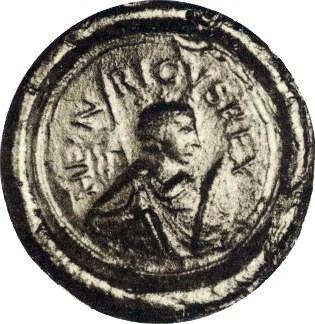
It turns out that Henrich I (c. 876 – July 2 936) was important.***
Charlemagne’s empire had crumbled into political chaos after his death in 814 thanks in large part to the Frankish custom of dividing kingdoms between their sons. As a result, his descendents fought for control over smaller and smaller kingdoms. Heinrich, also known as Heinrich the Fowler,**** reversed the process, melding the warring duchies of Germany into an uneasy confederation.
Heinrich was still trying to bring order to political chaos when he faced a new enemy: the formidable Magyars of Hungary invaded and repeatedly laid waste to Saxony. In 926, He got lucky. His army captured a Magyar prince. With the prince as a bargaining chip, Heinrich was able to make a deal: he would return his captive and pay tribute to the Magyars for nine years, during which time the Magyars would not raid German lands.
I don’t know what the Magyars thought Heinrich would do with that nine-year respite, but he put the time to good use. He built fortified towns along the frontier. He revived an old Saxon tradition of a peasant militia—the agrarii milities. And he modernized the Saxon army, creating a formidable cavalry that he led against the Slavic tribes on his borders. At the end of the nine years, Heinrich refused to pay additional tribute. When the Magyars resumed their raids, he routed them in a decisive victory on March 15, 933.
With the Magyar threat at an end, Heinrich continued to expand and consolidate his territory. Perhaps the most important political decision he made was adopting the then unusual principle of primogeniture. As a result, his oldest son, Otto, inherited the entire kingdom, which became the foundation for the Holy Roman Empire.
*The gloss is from the newspaper article. I would have assumed that most modern Marginalia know the term. And if they don’t, it would be easier for them to look it up than it would have been for the typical Chicago Tribune reader in 1936.
**I must admit, I am curious about Schultz’s sources for the story. Was one of her secret sources from the Nazi party in the crowd? Or did Himmler invite the foreign press to attend? Issue a press release?
*** It also turned out that he had crossed my path before in Paul Collin’s The Birth of the West —a book jam-packed with historical figures I was unfamiliar with and did not subsequently remember. This is why I seldom weed my non-fiction shelves. I never know when I will need to remind myself of something.
****According to popular stories, he was mending his bird nets, or alternately setting bird traps, when he learned that he had been elected King of Franconia It is an appealing story, but Collins rightly wonders why he wasn’t at the conclave where he was elected.